
May 28, 2026

The Big Swing: Inside the new golf economy
Happy Women's Golf Day to all who celebrate! The women's golf boom is real, permanent, and increasingly hard to ignore -- but why would you want to? Ahead of the U.S. Open, we take a deep dive into who's winning the arms race in the billion-dollar women's golf apparel market (hint: it's not the big players), and what brands you should be paying attention to.

This and that...
Mollie Cahillane & Michael LoRé
The PGA Tour’s 2027 schedule takes shape (with a glaring sponsor gap)
The 2027 PGA Tour season will open January 21 at the American Express, with Hawaii gone and a reshuffled Florida and spring swing now taking shape — the Cadillac Championship moves to early March, the Arnold Palmer shifts to mid-March, and both the Truist Championship and PGA Championship slide back one week. The schedule changes were not officially announced by the Tour, instead tournament sites posted their own dates, and players received a memo outlining the moves. Notably, Farmers Insurance ended its sponsorship of the Torrey Pines event (the home of two U.S. Opens, Tiger Woods lore, one of the most iconic venues in American golf) after this year, leaving the season's second tournament without a title partner. More details are expected from PGA Tour CEO Brian Rolapp at the Travelers Championship next month.
Our Take: We’re paying the most attention to the Farmers exit at Torrey. If the Tour can't hold a title sponsor at one of its marquee venues, it raises real questions about appetite for non-signature event sponsorship — especially as brands wait to see where those events land in the 2028 two-tier structure before committing. Sponsors aren’t going to want to buy into a property that could be reclassified as Track 2 before their deal expires ... Rolapp's Travelers presser can't come soon enough.
Blades Brown makes the case for the other side of the college debate
Blades Brown turned 19 during the first round of the CJ Cup Byron Nelson last week, celebrated with a 66, and finished the tournament tied for 14th — his fourth top-20 finish in seven PGA Tour starts. The result gave him special temporary PGA Tour membership, including unlimited sponsor exemptions for the remainder of the 2026 season. Brown now needs the equivalent of a top-70 finish in the FedEx Cup Fall standings to earn a full 2027 card via that route, and he's 562 points away — requiring, as one report put it, "some seriously good golf." He's also sitting 13th on the Korn Ferry Tour points list, where the top 20 earn cards. "I'm unsure of where I want to go as of right now," Brown told CBS' Amanda Balionis. "It's a pretty cool spot to be in."
Our Take: Brown is the direct counterpoint to last week’s NIL story. Where Sargent and Koivun ran the numbers and stayed in school, Brown made the same calculations at 17 and went the other way — skipping college entirely to turn pro. Four top-20s in seven Tour starts later, that decision is looking increasingly justified. Brown is doing it without a college platform, without a NIL infrastructure, without the brand runway that three years at Vanderbilt or Auburn would have provided. The question for agents and brands is now whether his trajectory changes the calculus for the next wave of top junior talent, or whether the NIL era has made the college route so financially attractive that Brown's path stays the exception rather than the rule.
One day wasn’t enough
Women's Golf Day, now in its 11th year, runs May 26 through June 2, with more than 1,350 golf facilities, resorts, governing bodies, brands, and communities across 85-plus countries participating. This year’s theme “Women Golf Daily” emphasizes a push from a single activation to year-round engagement, with facilities of every type, from private clubs to simulator venues to municipal courses, participating in ways that fits their business and local audience. As women continue to represent golf's fastest-growing participation segment, the platform generated 406 million social media impressions in 2025. The PGA of America — a longstanding WGD partner — is running a co-branded facility registration program this year, and Golf Inc. joined as a new industry partner for 2026.
Our Take: Eleven years in, Women's Golf Day has earned its place on the golf business calendar. The shift toward year-round programming and digital infrastructure is where the real business value is — for facilities trying to hold onto new female golfers past their first round, and for brands looking for sustained engagement rather than a one-week spike.
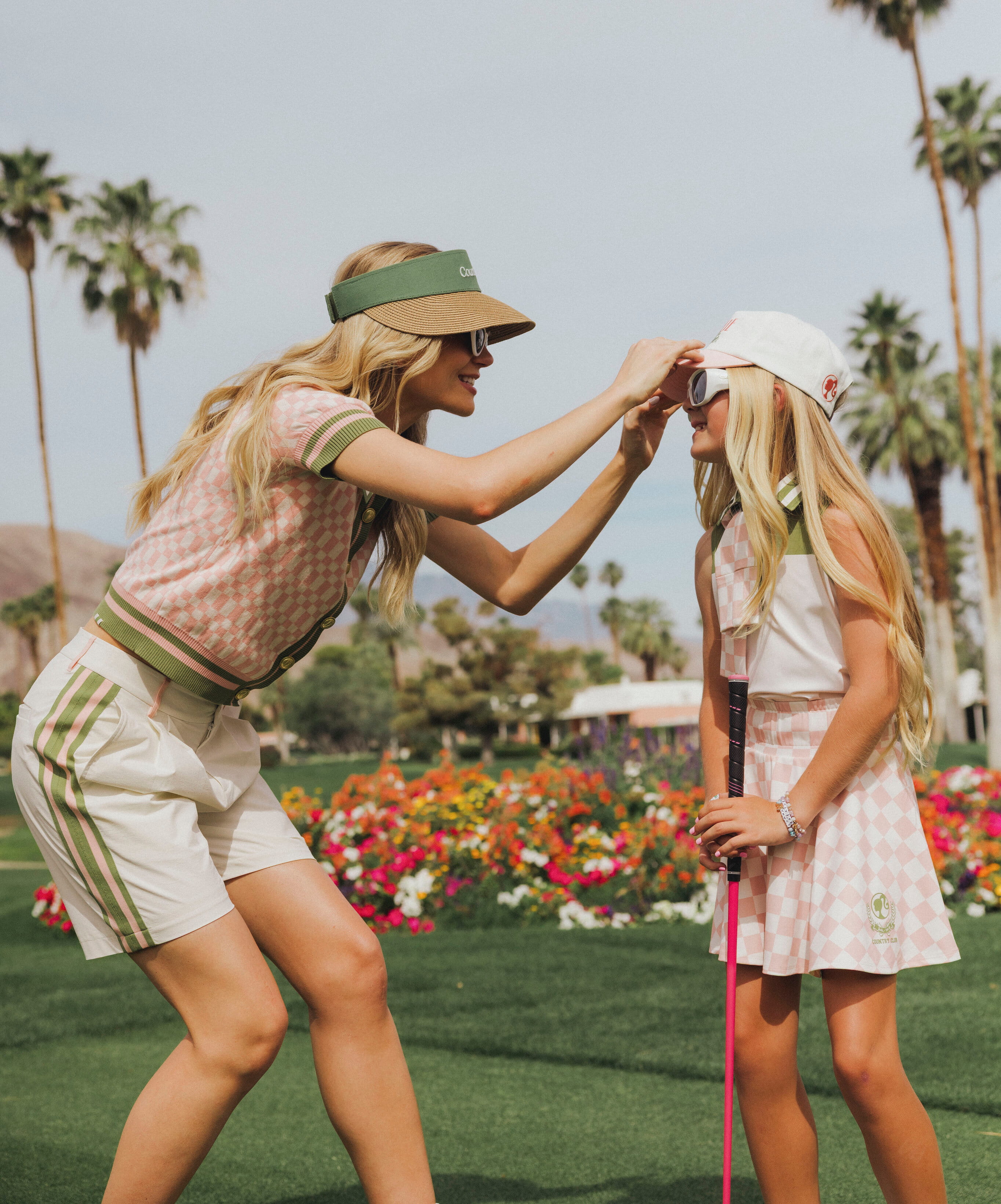
The Billion-Dollar Wardrobe: Women’s Apparel Is Outpacing the Golf Industry
Challenger brands like Fore All and ALYN Golf are taking on legacy companies — and winning
May 28, 2026
Mollie Cahillane | mollie@bigswingmedia.news
For decades, the women’s section of a golf pro shop was an afterthought – maybe a few racks of boxy (probably pink) polos wedged between the full wall of men’s shirts and the register.
But now, more than 8 million women and girls are playing on-course golf, an all-time record and a 46% increase since 2019. According to the National Golf Foundation, women are now the highest proportion on record (28% of all golfers), contributing to nearly half of all post-pandemic growth.
Several years removed from the pandemic, that surge has proven to be a permanent market realignment rather than a temporary spike. Retail is where it’s showing up most visibly, with multiple research firms putting the women’s golf apparel segment between $1.5 billion and $3.5 billion in 2026, creating a previously untapped market for golf retailers and pros.
“Women’s golf has been booming the last few years; it’s still the fastest growing segment in golf across all categories,” said Jess McAlister, a golf marketing consultant and founder of CATALYST9. “People are waking up to the fact that golf is truly for everyone, no matter your gender, race, age. Style is so intimate, and I think that for women, the reason why apparel is beating the race is that you’re talking about women in everyday life that treat apparel that way – and now they’re in golf.”
The ‘everywhere’ shift: from performance to lifestyle
Looking at data from the 2026 PGA Buying Summit, the “golf-only” outfit is on its way out, with women golfers more interested in purchasing “everywhere” golf apparel, which can be used on the green and socially or professionally.
Part of the reason for such high interest in “everywhere” apparel is multi-channel engagement, with women making up 43% of the 19 million off-course-only-participants.
The industry is seeing a rise in technical fabrics that don’t appear as such, with “soft tailoring” designs like tailored joggers, cropped blazers, and performance knit dresses proving to be popular, replacing boxy polos and the like. The PGA data suggests that around 52% of women golfers now prefer the “everywhere” golf style.
“Golf isn't just a sport, it's a lifestyle, so it's all these components that go into it, and fashion is a big piece when it comes to the female demographic, no matter what your style is,” said McAlister. “The challenge for a lot of these newer and legacy brands is making sure you know who your archetype is.”
Boutiques vs. the Big Three
For decades, the women’s pro shop represented a satellite of the men’s section, dominated by Nike, Adidas, and Puma. While the “Big Three” collectively hold a 31% share in the global women’s golf apparel sector in 2026 (according to market analysts), the more interesting story lies in the remaining 69%, split among boutique and challenger brands.
“Legacy brands work three years ahead, so it’s really hard to get on the product/trend standpoint in real time. Some of the legacy brands are starting to get it, saying, okay, we need to maybe have some drops in between our annual collections,” said McAlister, naming Adidas as one that has done a particularly good job in modernizing some of its products this past year.
Unlike the Big Three’s common one-size-fits-most approach, challenger brands like Fore All, LemonRose Golf, A. Putnam, and Tisha Alyn’s ALYN Golf have a variety of styles and fits.
“New-age brands are doing really, really well, and are also very different from each other, which is really hard to do. But they’re all led by women, so go figure,” said McAlister.
Challenger and new brands are also moving much faster than the legacy brands. Fore All is publicly unveiling its Barbie/Mattel collection next week, honoring the women’s game's impact just as the U.S. Women’s Open descends upon the Riviera Country Club for the first time. It marks the latest chapter for CEO and co-founder Jen Clyde, who helped grow the brand by more than 300% in the last two years, according to the company.
While major players like Nike and Adidas still hold significant influence, the global golf apparel market—projected to reach $9.89 billion in 2026—is seeing a shift as synthetic and "eco-friendly" materials are set to capture nearly 47% of the total market share, according to Fortune Business Insights.
That can be seen with brands like ALYN, which just launched its new summer Geraldine Collection, inspired by [Tisha] Alyn’s aunt Geraldine. The drop also marks a new chapter for ALYN, with updated fits, greater lifestyle versatility, and a more fashion-forward evolution of the brand overall.
“These [challenger] brands are really sharing the diversity that’s out there and playing that up against these legacy brands that refuse to understand what women really want,” said McAlister.
“I’ve had several brands in this space that are trusted and respected, that are run by men, come to me quite literally asking that question. ‘Okay, fine, we’re throwing our hands up, we get it; what do women actually want?’ I’m glad that’s happening – it’s not a knock to them; it’s that realization of the power of the female consumer.”
Capturing the spend
A pro shop made up of 80% men’s polos isn’t serving the new demographic and, rather, is leaking thousands in potential revenue.
Based on PGA Buying Summit recommendations, pro shops would benefit from moving to tactile merchandising, allowing customers to feel the fabric and material. Trends for this year are leaning into monochrome looks, meaning visual depth is created through fabrics.
The same holds true for larger retailers like Dick’s Sporting Goods and the PGA Tour Superstore, with McAlister referencing Golf Galaxy (owned by Dick’s) as an example of a retailer that has “really taken it up a notch” in investing in the women’s space.
Looking to 2030 and beyond
The numbers tell part of the story, and also confirm what many operators felt on the ground: women’s golf apparel is projected to grow at a strong CAGR through 2035, outpacing the broader market, as brands scramble to serve a demographic that didn’t exist at this scale five years ago.
The global golf apparel market — projected at $9.89 billion in 2026 — is being reshaped by it.
But McAlister's framing is the one that should land in every boardroom in the industry."You're talking about a trillion-dollar consumer that's now in a billion-dollar marketplace,” she said. The next 8 million women golfers are already out there — playing simulators, watching on TikTok, buying Barbie x Fore All at Coachella. The brands that meet them where they are, in apparel that works at the range and at dinner, will define what golf looks like for the next generation. The ones still making those uncomfortable boxy polos won't.

One last thing... Jimmy Roberts
Welcoming Women
Editor’s note: This one was written a long time ago (2013!) but the message still rings true. Originally published in the Met Golfer Magazine, June, 2013
At first glance, this isn’t going to read very well, but here goes.... Golf is a man’s game.(Gulp!) Please, let me explain. According to the National Golf Foundation, 78 percent of American golfers are men. And it’s not just the numbers. If you were to ask a random sample—men or women—to name a professional golfer, how many would say Stacy Lewis or Inbee Park, the last two women’s world number ones? My guess is more women could pick the dashing Masters champion Adam Scott out of a lineup than would ever recognize Annika Sorenstam, maybe the greatest female player ever. That’s crazy. That’s sad. But that’s probably true.
When was the last time you saw four women checking clubs at LaGuardia and heading off on a buddy trip? (And if you have any doubt about the target demographic for all those buddy trips, check the Yellow Pages to see how many... ahem ... “gentlemen’s clubs” populate the areas surrounding certain popular buddy-golf destinations.)
“Golf doesn’t speak female,” says ex-PGA Tour VP Donna Orender, who wrote the PGA of America’s new initiative “Connecting with Her,” a guideline for growing the game among women.
Historically, golf courses have been places where men gathered. There are certainly exceptions, but which are you more likely to find at the halfway house, cigars or lip gloss? Women, though, are now the fastest-growing segment of the new golfer population, and there’s the challenge—and there’s the rub.
“Women are intimidated by the whole thing,” says two-time major champion Dottie Pepper.
“The country club thing. The game. You know, it’s a pretty hard game!” There’s irony in what she says, because I’ve never known Pepper to be intimidated by anything. She played on her high school golf team—the boys’ team. “Think about trying something new,’” she says. “If you don’t know how it works, you’re not going to step out of the box to try when failure could happen pretty easily.”
Part of overcoming this issue, Pepper believes, involves “letting women know that it’s okay to screw up.” Golf is, after all, a game of rules and customs, and there’s an expectation that when you show up, you’ll know the drill.
“Women feel dismissed when they walk into a club,” says Orender. “Women are more stressed than men about playing by the rules, and they judge themselves more harshly.” And that, Orender says, is a good way to think about making the golf club experience a more welcoming one for women. She suggests assembling a group of like-minded ladies to meet with the club’s professional. Let him (or her...but most likely him) know that you’d like to participate more, and share the things that might make you feel more comfortable in doing so.
“Why as a group?” I ask.
“C’mon,” Orender says—I’ve clearly demonstrated male ignorance of the female perspective—“we’re women. We don’t even go to the bathroom alone.”
Point taken. Men and women are different. Why should we expect different in golf? “Men want to win,” says Orender. “Women want an experience.” Golf didn’t start out as a gender-specific game. It’s just kind of veered in that direction. And as anybody who plays—man or woman—certainly knows, golf is best played not “veering” anywhere. One of the things so many of us love about this great and terrible game is that it’s played in vast wide open spaces, which leads me to wonder: Isn’t there enough room out there for all of us?
I hope so.
Past Briefs



Monthly and Annual Membership Options Available.
Member Pricing
$9.99 per month, OR $99 for one year.
Cancel Anytime.
Available for a limited time only, subscribe to our twice-weekly Golf Business Intelligence Brief for a discounted rate of $9.99/month or $99/year. Subscription renews at the same price each month or year, depending on the subscription selected.
Purchase Disclosure
By completing your purchase, you agree to enroll in a monthly or annual subscription to The Big Swing Golf Business Intelligence Brief at the current rate of $9.99 a month or $99 a year.Your subscription will automatically renew monthly at $9.99 or annually at $99 unless canceled prior to the renewal date.
You may cancel at any time through your account settings or by contacting customer support. All sales are final and non-refundable except where required by law.
Offer valid for a limited time and may not be combined with other promotions. Limit one per customer.
By subscribing, you agree to our Terms of Service and Subscription Terms.