
October 29, 2026
The Big Swing: Inside the new golf economy
Equipment Week continues here at Big Swing.
First, what’s happening elsewhere. LIV Golf’s restructuring has entered its next phase with a hire from the equipment world, a new operating model is taking shape around municipal golf in England, and a Sunshine Tour championship has won back a title sponsor it lost 12 years ago.
Then the main event. Monday’s edition looked at what Titleist’s launch move did to its own numbers. Today we look at where the rest of the industry has ended up, and the answer is no longer one calendar.
Let’s get into it.

This and that...
LIV Golf Brings in Mark King as Restructuring Enters Next Phase
LIV Golf has brought former TaylorMade CEO Mark King into its restructuring. King joins as senior adviser, effective immediately, and is expected to recruit, build and serve as chairman of the league’s new advisory board. LIV filed for Chapter 11 protection in September and is working to complete a recapitalization with BC Partners Advisors L.P., with the court-approved agreement providing $300 million in loans and investments for the restructured league. A separate $53.6 million facility in debtor-in-possession financing, the loans that keep a company running while it is in Chapter 11, is funding the league through the process.
Our Take: The money is the story and King is the signal. LIV is trying to come out of restructuring with a different capital structure and a different operating model at the same time, and hiring an operator rather than another financier tells you which half it thinks is harder. King spent decades building relationships across golf. The league’s immediate problem is no longer funding tournaments, it is holding players and building something commercially durable around them, and LIV itself says player conversations are central to completing the transaction. If the next version is going to look materially different from the one PIF funded, King is the kind of hire you make to build it rather than to sell it.
An English Town Is Handing Its Municipal Course to a Private Operator
Sefton Council, the local government for an area just north of Liverpool in northwest England, has agreed to hand long-term operation of Bootle Golf Course, its municipal course, to a private developer while keeping ownership of the land.
The developer, Lumira Group, was founded by Victor Anichebe, a former striker for Premier League club Everton. It has filed plans for a roughly £20 million ($27 million) development on vacant council-owned land next to the course: a hotel, clubhouse, padel courts, small-sided soccer pitches and community recreation space.
The golf side still needs final council approval. Under the arrangement, the course stays in public ownership, green fees for existing members, local residents, juniors and seniors are to remain affordable, and public footpaths across the site will be maintained.
Our Take: The ownership split is the part worth watching, and it travels. The U.S. has nearly 3,000 municipal golf courses, according to the National Golf Foundation, and for public owners facing the cost of maintaining and improving them, this is one version of the answer: keep the asset public and write affordability protections into the deal, bring in a private operator to run the course, and use adjoining public land to attract private capital around it. Worth noting what is going in next door, too. Padel courts and soccer pitches alongside a municipal golf course, privately funded, are unlikely to be a one-off.
Telkom Returns to South African PGA Championship After 12-Year Absence
Telkom is returning as title sponsor of the South African PGA Championship after a 12-year absence. The telecommunications company sponsored the event from 2002 through 2014 and returns for the Nov. 5-8 tournament at Country Club Johannesburg, which carries a R2.5 million prize fund, about $150,000.
Our Take: Sponsorship returns can be more revealing than new ones. Telkom already knows the championship, having put its name on it for more than a decade, and after 12 years away has decided the asset is worth buying again. At an event that size, this isn’t about a huge prize purse. It’s a reminder that domestic golf properties can still have value to major consumer brands when the audience, hospitality and association make sense.
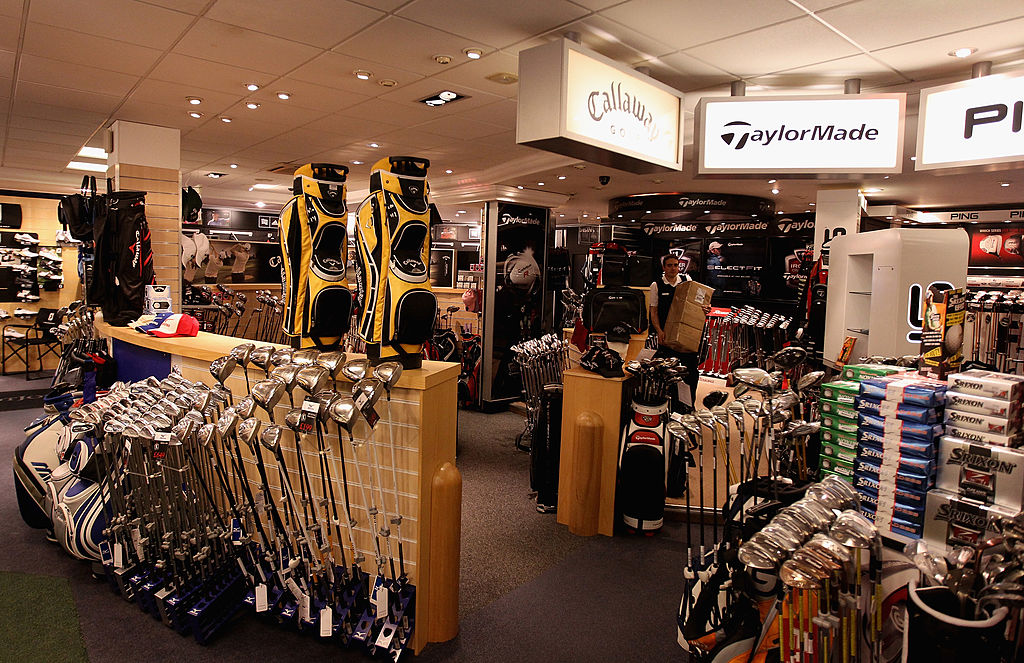
Acushnet Put Titleist’s New Driver Calendar in Writing. Titleist, PING and Srixon Now Sit in Three Different Windows.
Titleist’s shift to a second-quarter driver launch, alongside Srixon’s move to fall and PING’s continued January schedule, reveals how golf’s major equipment brands are diverging in their product launch calendars, with implications for inventory, retail sales and revenue timing.
October 29, 2026
Gianni Magliocco | gianni@bigswingmedia.news
Nearly 11 weeks before Titleist announced GTS, Acushnet had already told investors where it wanted the next driver launch to land.
Acushnet is publicly traded, so once a year it files a 10-K: a detailed annual report to US securities regulators. The 2025 edition, filed Feb. 27, placed Titleist drivers and fairways in the second quarter of even-numbered years and irons in the second quarter of odd-numbered years. GTS was announced May 13.
A year earlier, the same section of Acushnet’s 10-K placed both categories in the third or fourth quarter.
Acushnet confirmed the position directly. “We do not disclose future product launch dates, but our goal would be to launch metals and irons in the second quarter moving forward,” a spokesperson told Big Swing.
But Titleist’s move is part of a wider split in the longer-cycle calendar.
Srixon, after three generations aimed at the January selling season, announced its new ZXi RKT woods in September and launched them in October. PING, meanwhile, has stayed in January.
The calendar has split in two: the annual launch pattern stayed stubbornly consistent through 2026, while the established longer-cycle group became less uniform.
The Annual Calendar Stayed Remarkably Fixed
For Callaway and TaylorMade, the pattern did not vary.
Callaway announced MAVRIK on Jan. 14, 2020. Epic Speed followed on Jan. 15, 2021. Rogue ST, Paradym, Paradym Ai Smoke, Elyte and Quantum all followed in January in each of the next five years.
TaylorMade did the same. SIM, SIM2, Stealth, Stealth 2, Qi10, Qi35 and Qi4D were all introduced publicly in January.
That gives both brands seven consecutive January announcements each, 14 in total, across the period studied.
The intervals underline how fixed TaylorMade’s calendar was. Its announcement gaps were 379, 350, 371, 364, 364 and 366 days. Different names, different technology stories, same month. January never blinked.
TaylorMade’s part of that pattern is now ending. In a Golfweek Q&A by David Dusek, the company confirmed it was moving its metalwoods to a two-year product cycle, with Qi4D remaining its flagship through 2027 and the next major driver expected in 2028.
For those two brands through 2026, January was effectively immovable.
Titleist: 693, 693, 650
Titleist’s calendar tells a different story.
TSi was announced on Oct. 15, 2020. TSR followed on Sept. 8, 2022, 693 days later. GT arrived on Aug. 1, 2024, exactly another 693 days later.
693 days. Then 693 again. That is not roughly the same cadence. It is the same cadence.
The calendar movement was almost equally neat. TSR arrived 37 days earlier in the year than TSi. GT arrived 38 days earlier than TSR.
Then the pattern changed.
GTS was announced May 13, 2026, 650 days after GT. Instead of moving another five weeks earlier in the calendar, Titleist jumped 80 days.
Acushnet’s filings establish the two-year, even-year rhythm underneath those launches. What they do not explain is why the first two intervals landed exactly 693 days apart.
Titleist did not change which years it launched drivers. It changed where those launches sit inside those years.
That makes GTS more than another point in a sequence. It is the first driver launched under the calendar Acushnet had already put in writing.
The Long-Cycle Group Has Split Across the Calendar
Among the five brands examined, Titleist, PING and Srixon are the three that recorded multi-year flagship intervals during the period. They now occupy three different parts of the calendar.
PING is the counterweight. G425 was announced Jan. 11, 2021, G430 on Jan. 10, 2023 and G440 on Jan. 14, 2025. Its intervals were 729 and 735 days, essentially a two-year cycle with January preserved every time.
Srixon spent its first three generations around the same selling window. ZX was announced Dec. 7, 2020 for a Jan. 15 retail launch. ZX Mk II was announced Jan. 5, 2023 for Jan. 20 retail, while ZXi was announced Jan. 13, 2025 for a Jan. 24 launch.
ZXi RKT changed that. Srixon announced the new generation Sept. 22, 2026 and gave Oct. 16 as the launch date. The company described it as a “complete reimagination” of its metalwood lineup rather than a simple evolution of the previous generation.
Its announcement gaps had already been shortened, from 759 days to 739. The move to RKT compressed the interval much more sharply, to 617 days.
They got there differently. Srixon’s cycle had already compressed once and then compressed much more sharply. Titleist held its interval twice before breaking it.
In effect, they are passing each other on the calendar. Titleist is moving out of its customary second-half window toward Q2. Srixon, after three generations selling into January, has moved into the fall.
PING has remained where it was.
That matters because it separates product frequency from launch timing. A broadly two-year strategy does not require January. PING shows a brand can remain there. Nor does a longer cycle point manufacturers toward one obvious alternative.
The sample is deliberately narrow: five major brands, not every manufacturer in golf. But within those five, the three above are the entire longer-cycle group rather than a selection from it. TaylorMade’s newly announced two-year cycle has not yet produced its first longer interval, which is why it is treated separately here as the 2028 test.
That does not prove that longer cycles caused the divergence. It does show where the divergence is occurring. The annual launch pattern remained highly standardized through 2026. The established longer-cycle group did not.
Why Timing Matters
Acushnet has explained its calculation.
“The reason to move the GTS launch into June was to align with the peak selling season of golf more closely,” an Acushnet spokesperson told Big Swing.
Move the launch date and plenty else moves with it: inventory, closeouts, reorders and, eventually, revenue.
Acushnet’s filings spell it out: product introductions generally stimulate sales as the golf retail channel takes on inventory. Rapid product changeovers create a need to monitor and manage closeouts of older products at retail and in Acushnet’s inventory. And second-quarter sales are significantly affected by how much product actually sells to golfers rather than into stores, which drives reorders.
Acushnet’s second-quarter numbers show where that shift landed.
Titleist golf equipment sales, which include golf balls and golf clubs, increased 20.3% in the second quarter. Acushnet said that increase was primarily driven by higher sales volumes of GTS drivers and fairways and the latest-generation T-Series irons, along with higher average selling prices for Pro V1 golf balls.
Within that segment, golf-club sales reached $272.0 million in Q2 2026, up 42% from $191.6 million a year earlier.
The 42% increase should not be read as meaning that moving GTS to June created 42% growth. Acushnet has not said that. What the numbers do show is where substantially more golf-club revenue landed after the launch calendar moved.
Acushnet also confirmed to Big Swing that 2026 was the first year operating under the new cadence.
“The cadence changed this year for the first time with the launch benefit falling in the first half instead of the second half, that will continue moving forward based on our targeted launch dates,” the spokesperson said.
Whatever a product ultimately earns over its full life, changing the calendar changes which selling season, inventory cycle and reporting period captures the reset.
2027, Then 2028
The first test is Titleist’s, and it comes next year. Acushnet’s filing points to irons in the second quarter of 2027, a change that has not happened yet: the last two T-Series generations were announced in the third quarter, on Aug. 3, 2023 and July 10, 2025, matching the older filing.
In 2028, TaylorMade’s next flagship is expected to arrive while Acushnet’s cycle points to the next Titleist driver. Titleist has said where it wants that launch to land. TaylorMade has not publicly specified a month in the sources reviewed for this piece.
Does TaylorMade keep its next launch exactly where its previous seven landed, following PING by maintaining January on a longer cycle? Or does it land in a different month, as Titleist and Srixon now do?
For seven straight years, TaylorMade’s answer was January.
When the next driver arrives, we find out whether January was habit or conviction.
How This Was Measured
Big Swing tracked the flagship driver families launched by Titleist, Callaway, TaylorMade, PING and Srixon from 2020 through 2026, using the date on a manufacturer-issued public launch announcement as the common measure.
For most rows, that is the manufacturer’s press-release dateline or a contemporaneous publication of the manufacturer’s launch announcement. TaylorMade is the main sourcing exception: its 2020 through 2024 dates come from dated launch or first-look pages on TaylorMade’s own site because the corresponding newsroom releases could not be retrieved. Retail availability is included only when stated by the manufacturer.
One date warrants a note: some coverage of Srixon’s ZX Mk II woods appeared on Jan. 4, 2023, while Srixon’s manufacturer-issued GlobeNewswire release is dated Jan. 5. Big Swing uses the manufacturer’s Jan. 5 dateline, consistent with the sourcing standard applied elsewhere in the table.
Tour seeding, pre-orders, fittings and third-party reported retail dates were excluded.

Retail dates are manufacturer-stated only. PING did not state a general retail date in any of the three releases examined. Blank TaylorMade rows reflect dates not confirmed from an accessible manufacturer source.

One last thing... Jimmy Roberts
Arthur Blank: There Is No Finish Line
Last week in Chicago, Arthur Blank … a man most people likely know as the owner of the Atlanta Falcons, or the guy who co-founded Home Depot … was given the National Golf Foundation’s highest honor … the Graffis Award.
Yes, Blank owns an NFL team and a professional soccer franchise, but if you were to make a list of the people in GOLF who were MOST invested … both literally and in terms of their commitment to the game … it’d be hard to find anyone with more impressive credentials.
Blank owns the PGA Tour Superstore chain … and not only a TGL franchise, but he was also one of the first investors in the WTGL.
He’s the owner of a golf course in Montana … and probably, most significantly, he is one of the primary figures in SSG, the investment consortium that has backed the PGA Tour to the tune of $1.5 billion.
At 84, his energy level is staggering, but it’s how he has always gone about his business that should make people take notice.
When Blank and Bernie Marcus first co-founded Home Depot … he would stand out in the parking lot and talk to people who came out empty-handed.
“What did we do wrong?” he would ask. “How could we have served you better?”
He made a habit of listening more than he talked.
What started as two Atlanta stores in 1979 … has now grown to nearly 2,400 worldwide.
Whatever business he has run … they operate on five core values he believes relate to everything: Put People First … Listen and Respond … Include Everyone … Innovate Continuously … Lead by Example … and Give Back to Others.
He’s walked the walk on all of them, including the last: Through his family’s charitable foundation, he has given away millions.
Yes, Blank has money … but more than that, he has gravitas. Someone I know who’s served with him on the PGA Tour’s board says that when Blank speaks, the room gets quiet. Respect … well-earned.
In the end, though, the most impressive thing about Blank is his perspective. Eight decades into a life of accomplishment and philanthropy, his favorite saying is that there is no finish line. Impressive man.
That’s it for us. We’re here every Tuesday on Golf Channel, then starting Wednesdays on YouTube, or wherever it is you enjoy your podcast content. I’m Jimmy Roberts. Hope to see you next week, back here on The Big Swing.
Past Briefs



✓ Exclusive reporting and business intelligence
✓ Insights from 16-time Emmy winner Jimmy Roberts
✓ Expert perspectives from industry leaders
✓ Exclusive quarterly briefings with Jimmy Roberts
Available for a limited time only, subscribe to our twice-weekly Golf Business Intelligence Brief for a discounted rate of $9.99/month or $99/year. Subscription renews at the same price each month or year, depending on the subscription selected.
Purchase Disclosure
By completing your purchase, you agree to enroll in a monthly or annual subscription to The Big Swing Golf Business Intelligence Brief at the current rate of $9.99 a month or $99 a year.Your subscription will automatically renew monthly at $9.99 or annually at $99 unless canceled prior to the renewal date.
You may cancel at any time through your account settings or by contacting customer support. All sales are final and non-refundable except where required by law.
Offer valid for a limited time and may not be combined with other promotions. Limit one per customer.
By subscribing, you agree to our Terms of Service and Subscription Terms.