
October 1, 2026
The Big Swing: Inside the new golf economy
It’s officially October. Leaves are changing colors, people are dusting off their North Face vests and pumpkin spice lattes are consumed more frequently than water.
October also means the PGA Tour has restarted its 2026 FedExCup fall schedule after the Presidents Cup with the Bank of Utah Championship, while the LPGA enters its penultimate month of competition for the year, culminating with the CME Group Tour Championship in mid-November.
To all our subscribers in the Northeast, get out and play as much golf as you can before it gets too cold. Afterall, winter is coming.

This and that...
Five Iron unveils new growth model: Five Iron Studio
Golf and entertainment brand Five Iron unveiled its next chapter: Five Iron Studio. This smaller-footprint format compresses the Five Iron model allowing franchisees to replicate it in new markets and real estate footprints. The self-service venues would feature private simulator rooms, contactless entry, grab-and-go counter and lounge. A franchise fee is $40,00, with an estimated total development cost currently ranging from $632,400-$926,800. Pricing will vary by market, similar to Five Iron’s existing model, so there won’t be one universal membership or simulator rental rate across locations.
Our take: Nineteen million Americans age 6+ participated exclusively in off-course golf activities including traditional and tech-enabled driving ranges, indoor golf simulators and golf entertainment venues like Topgolf in 2025, according to the National Golf Foundation. With golf more popular than ever and alternative forms like Five Iron, Topgolf and Puttshack lowering the barrier to entry for newbies and novices, creating a compressed version of a successful product already boasting 50+ venues across 20+ States and in seven countries, Five Iron is making golf even more accessible. Both the company and the game will benefit from it.
LPGA CMO Chad Coleman steps down after less than a year
Chad Coleman, who was hired as LPGA Chief Marketing Officer in January, stepped down from his role on Sept. 28, the LPGA announced. The former Dude Perfect Chief Brand Officer is leaving to “be present with his family,” according to the organization. Coleman was responsible for heading global marketing, brand, communications, content and fan engagement tasked with accelerating audience growth, increasing relevance among younger audiences and storytelling of LPGA players. An LPGA spokesperson said the tour is not filling Coleman’s job title while Taylor Strick was hired to lead the marketing team as a senior VP.
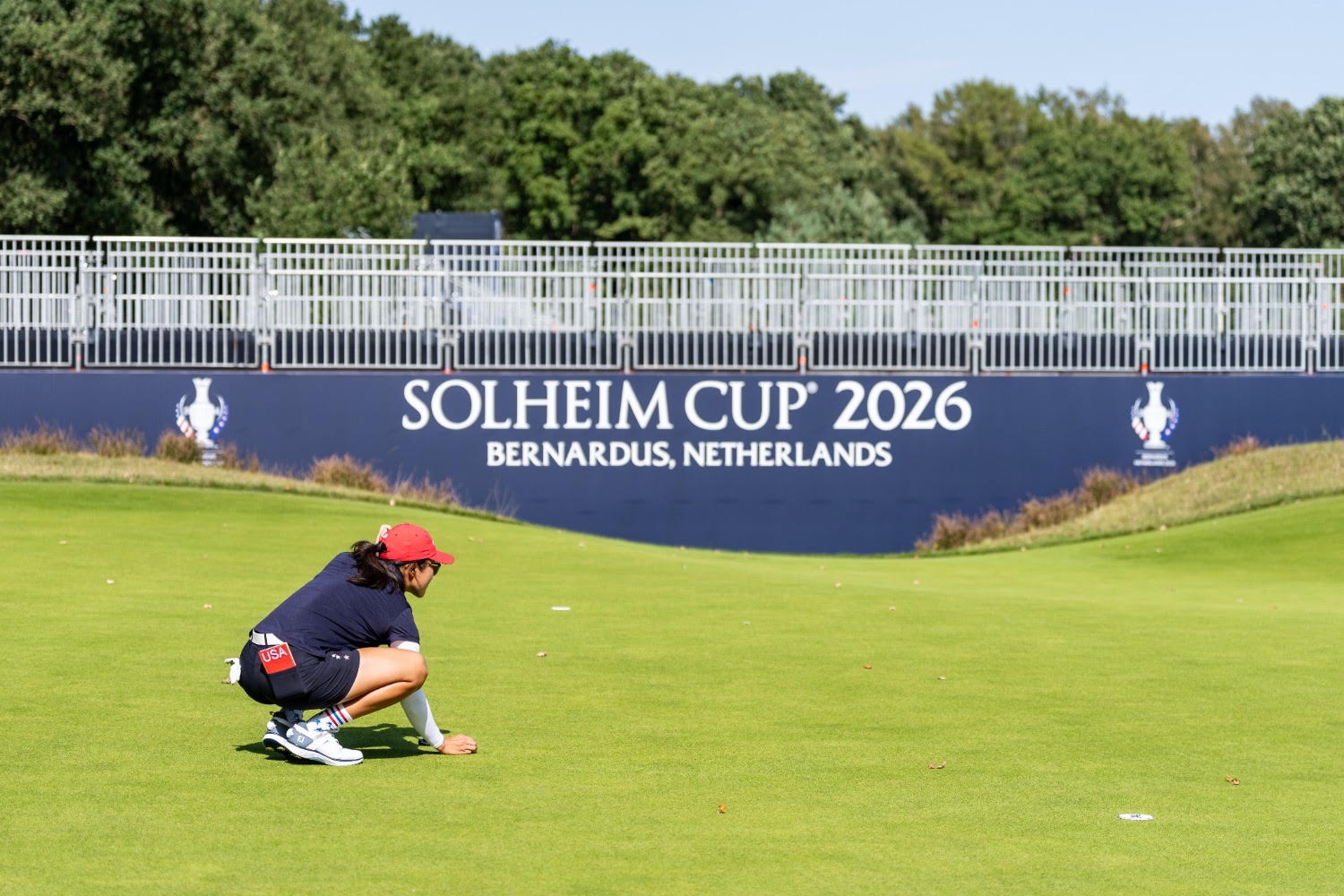
Our take: This departure leaves the LPGA in a precarious position. Coleman was hired with much fanfare for his development of sports and comedy group Dude Perfect into one of the most successful social-first platforms after the YouTubers scored a $100-$300 million investment from Highmount Capital in 2024. The tour has seen growth in storytelling and social media, but has hardly figured out the perfect formula for exponential growth. Strick, who spent more than 10 years at Aon having most recently served as Global Head of Partnerships, will need to keep the momentum going as the LPGA enters the final two months of the 2026 season and following less-than-favorable Solheim Cup viewership figures.
Presidents Cup on NBC draws highest viewership since 2017
While Solheim Cup viewership took a hit, the Presidents Cup saw an increase in viewers for its most recent playing at Medinah Country Club. The biennial team event pitting the PGA Tour’s best U.S. players against its top non-European international players, drew 2 million viewers for the final round on NBC, up from the 1.37 million viewers the network averaged in 2024. It’s the event’s highest final-day viewership total since recording 2.3 million in 2017 at Liberty National in Jersey City, N.J.
Our take: The Presidents Cup is always a highly contested topic of conversation, even if it hasn’t always been so between the ropes. The U.S. Team’s record comeback by winning 9.5 out of the possible 12 points in Sunday singles to come from behind to secure its 11th consecutive Presidents Cup clearly played a significant part in the viewership boost. While the International Team dropped to 1-1-14 in the event that debuted in 1994, the event was more than competitive with the biennial underdogs putting up another solid fight. Predictability and one-sidedness can negatively impact interest, engagement and viewership, but as we reported last week, the Presidents Cup is still very valuable to the PGA Tour and its partners.
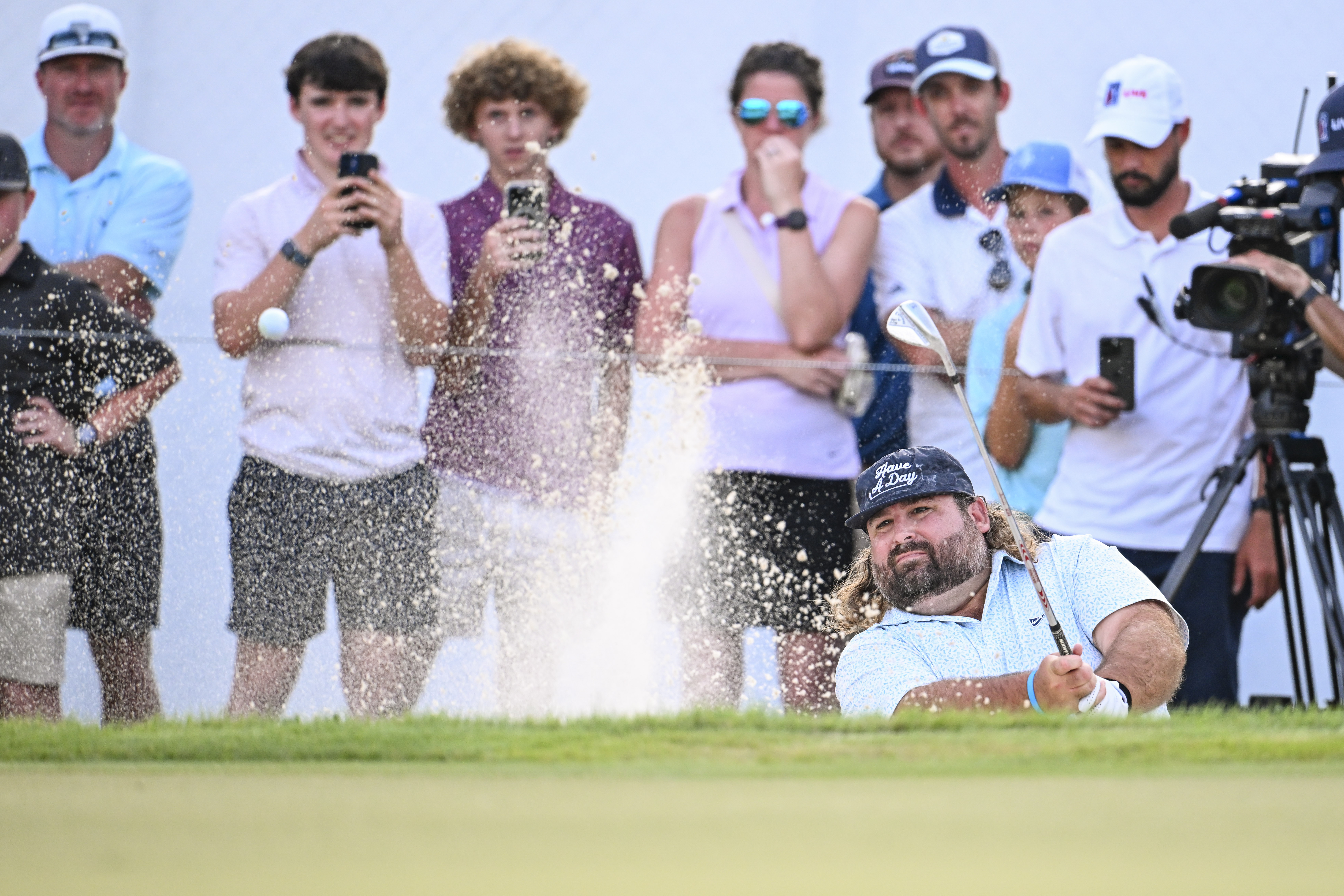
After Good Good x Callaway Controversy, Creators Remain Valuable Asset in Golf
The PGA Tour is relying on its Creator Council and creators to usher in its new entertainment era geared toward younger audiences under CEO Brian Rolapp.
October 1, 2026
The PGA Tour is relying on its Creator Council and creators to usher in its new entertainment era geared toward younger audiences under CEO Brian Rolapp. On September 30, 2020, Roger Steele posted a video on Instagram that would change his life.
Talking to the camera “like I was talking to one of my homies,” Steele didn’t mince words or limit his profanity as he spoke about golf—the good, the bad, the ugly and everything in between. Warning people getting into the game for the first time during the Covid-19 pandemic they’d be “trash for a long ass time,” the former civil engineer offered other honest realizations, observations and anecdotes in an eight-minute rill talk monologue.
Steele’s bluntness, relatability, humor and authenticity struck a positive chord in and out of the golf community as the video started going viral. Buoyed by the backing of a newly formed social media community and larger follower count, Steele took his second swing: he slid in Callaway’s DMs.
Six years later, Steele is one of the most recognized faces in golf. He co-hosts “Mornings @ the Masters” with Hally Leadbetter. He is on the PGA Tour’s Creator Council. He’s the in-venue host for TGL. He hosts events and creates content with brands including Callaway, Lululemon, SoFi, Dewar’s, AT&T, KemperSports, Topgolf, Five Iron, Cutwater and BMW.
“One thing I have to applaud myself on is that I’ve always sought people that were smarter than me in every aspect and I’ve clung to that,” Steele said. “I also don’t consider myself a greedy person so I’m not out there looking for ways to maximize every single opportunity and deal. The way my life is and the way my family is, I get to say ‘no’ to things and I don’t have to do everything. I don’t have to be everywhere. Nor do I want to be everywhere.
“Everybody on my side, we’re constantly looking at: ‘Is it worth doing? Is this worth saying? Does this make sense?’ and we’re constantly asking questions. Up until this point we’ve done a decent job at getting most of the things right with the people we work with and the things we go to.”
The popularity and influence of golf creators and influencers like Paige Spiranac, Grant Horvat, Bob Does Sports, Tisha Alyn and Steele has caused brands and organizations to adjust their content strategies and reprioritize marketing dollars in recent years.
What’s more valuable: a traditional TV ad buy or a paid piece of social media content with a popular creator?
With brands, broadcasters and organizations focused on engaging younger audiences and demographics, they’re investing heavily in the latter.
But finding the perfect match isn’t necessarily as easy as it seems in the wild west of chasing likes, clicks, comments and shares while constantly adjusting and evolving strategies and campaigns in a never-ending quest to capitalize on ever-changing algorithms, viral trends and digital dependency.
The wins can be priceless. The consequences could be catastrophic.
Creators and influencers have come under scrutiny and criticism lately following a pair of headline-causing controversies in late August.
Major companies and retailers cut ties with and dropped merchandise from Good Good Golf as a result of a controversial video promoting a new co-branded driver with multi-year partner Callaway.
Not only did Callaway sever ties with Good Good, but Golf Galaxy pulled its title sponsorship of “Big Break x Good Good,” a reboot of the popular Golf Channel competition reality show; the show’s premiere on Aug. 25 was initially postponed a week before being canceled. Their merchandise was pulled from shelves and online at major retailers including Dick’s Sporting Goods, Golf Galaxy, PGA Tour Superstore and Golf Town. Good Good also had to withdraw as title sponsor of a November PGA Tour event in Texas.
Good Good CEO Matt Kendrick and President Joe Flannery stepped down. Alex Upegui, Callaway Director of Content and Production, departed as well.
To make matters worse for influencers and creators, they received negative press at the U.S. Open for interrupting play and drawing the ire of fans who were unable to attend the popular tennis tournament in New York City due to significantly increased ticket prices.
“It was a harsh reality that I wasn’t quite aware that the stakes were that high for mistakes,” Steele said. “I did not know that the stakes were that high if creatively you bit off more than you can chew, had unintended impacts and triggered a sentiment you weren’t intending to.
“I think a lot of creators had that visceral jerk reaction where it’s like, ‘Man, I had no idea that a mess up or that my primarily positive intentions in a different context could land me in this type of trouble.’ … And I don’t think that’s the way that we want the game to go. I also think that creators do have a responsibility to lean into their resources and try to be deeply collaborative with the brands that they’re working with to understand what’s the best way to go about it.”
A month later, how individual brands and organizations work with creators and influencers from this inflection point is a case by case basis. Some are doubling down, while others are withdrawing as they reevaluate opportunities, going over everything with a fine-tooth comb from contracts to creative briefs and vetting talent.
“It’s all a risk. It always has been a risk,” said Jess McAlister, a golf marketing consultant and founder of Catalyst9. “... I think with the issue that arose, there was clearly a lack of alignment in communication and maybe some legal stuff in there. I think a lot of that is coming to light (in the industry) like revisiting contracts, revisiting purpose, vetting creators properly and asking, ‘What are we actually trying to accomplish here?’”
“When you’re an established consumer brand operating in a fairly traditional sport like golf, you have to ask how far you’re willing to push those boundaries before you alienate your core consumer,” Jeff Hunt, founder of brand and reputation consulting firm Legend Labs, told The Athletic. “The advertisement exposed that underlying tension, and the response afterward compounded it. But I think the bigger issue was whether there was enough alignment between these two brands from the beginning.”
While each side of the relationship is in the midst of self reflection, creators have hardly been cast aside.
McAlister, who reps Alyn, said the PGA Tour is one of the organizations set to double down in this area. As we addressed in a previous issue of the Golf Business Intelligence Brief, the Creator Council is still alive and well as it’s poised for further involvement in ushering in the Tour’s new entertainment era under CEO Brian Rolapp.
Not only is Rolapp bringing in some of his former NFL colleagues like Dhruv Prasad (CCO), Will Deng (SVP Media Strategy) and Paul Hicks (EVP Strategic Communications) to guide the modern-day PGA Tour, the organization also hired former Overtime and Under Armour creative and brand exec Tyler Rutstein as Chief Marketing Officer.
Golf is younger, cooler and more mainstream than ever before. But the PGA Tour’s audience skews significantly older than the diverse demos spearheading the game’s record amateur participation and interest.
That certainly bodes well for endemic and non-endemic creators, most of whom possess their own unique communities of predominately younger, social-first followers that the Tour and, quite frankly, every brand on the planet is desperately fighting for the attention of.
Love them or hate them: creators in golf are here to stay. Just expect a slightly more calculated approach as brands like the PGA Tour avoid repeating another’s missteps, especially immediately so quickly after.
“As a league right now, we are certainly looking to evolve and innovate,” said Alex Dorsch, VP of Demand Marketing at the PGA Tour. “And I think (the Creator Council) can very much be a big piece of that as well as how we look to the group as a whole. It’s something that is very, very top of mind as far as how we can continue the success of the group as well as expand the reach to creators as a whole.”

One last thing... Jimmy Roberts
What Happened to College Sports?
Golf and the governing bodies have faced some brisk headwinds lately on getting their house in order when it comes to some pretty serious governance issues. Agreement has been tough. But should that really be a surprise?
Look at Congress. We’ve got a million serious issues to try and solve in this country … the cost of living … the war … AI. They can’t seem to agree on anything. Oh wait. There actually is one thing that seems to have captured truly healthy bipartisan support.
The Protect College Sports bill passed the Senate last week 77-22. But despite all the senatorial self-congratulation … in true Washington fashion, nothing is going to happen for a long time … if ever. The House won’t come back into session till after the midterms, and there are some powerful groups with some legitimate concerns.
All of that said, the one thing everyone should agree on is that college sports is profoundly broken. What’s the point anymore — at least in the revenue sports — of attaching teams to universities?
The notion of actual students competing to represent the university where they are engaged in the ongoing pursuit of a degree — at least in the revenue sports — now seems insanely quaint.
I’m all in favor of athletes getting compensated. They should. For too long, the equation was perversely tilted.
Progress is good, but by definition it means moving forward. Just a question: is that actually where we’re headed with college sports?
Under the current system, the talented basketball player P.J. Haggerty is about to play for his 5th team in 5 years; that’s a lot of fight songs to learn. And there’s a player at the University of Montana who is playing in his 9th year of college football. 9th! He’s 26. You should see the Reddit page. It’s pretty funny. One entry says: “A lot of people go to college for 9 years. They’re called doctors.”
And it’s making its way far beyond the revenue sports. NIL has given us a softball player at Texas Tech with a million-dollar deal … and golfers who haven’t even registered for their first class yet earning more than that.
And the NCAA … What do they even do anymore?
March Madness? What’s to stop some big agency or private equity firm from stepping up with a giant purse for their own invitational and calling it “the national title” or something like that?
Or … what’s to stop a bunch of the biggest schools from making their own rules?
That’s basically what happened in the early 1980s with something called the College Football Association … and it went all the way to the Supreme Court, where the NCAA lost.
There used to be a joke about SMU football back in the ’80s before it got the so-called death penalty. This was in the days of Eric Dickerson and Craig James … the “Pony Express.” The joke was: What’s the difference between playing at SMU and playing in the NFL? The answer, of course, when you turn pro, you have to take a pay cut.
So back to golf … If you think the governing bodies are having problems figuring things out … they don’t even have starter problems compared to college sports … which is totally broken.
The old joke about the Pony Express is no longer a joke.
Past Briefs

Monthly and Annual Membership Options Available.
Member Pricing
$9.99 per month, OR $99 for one year.
Cancel Anytime.
Available for a limited time only, subscribe to our twice-weekly Golf Business Intelligence Brief for a discounted rate of $9.99/month or $99/year. Subscription renews at the same price each month or year, depending on the subscription selected.
Purchase Disclosure
By completing your purchase, you agree to enroll in a monthly or annual subscription to The Big Swing Golf Business Intelligence Brief at the current rate of $9.99 a month or $99 a year.Your subscription will automatically renew monthly at $9.99 or annually at $99 unless canceled prior to the renewal date.
You may cancel at any time through your account settings or by contacting customer support. All sales are final and non-refundable except where required by law.
Offer valid for a limited time and may not be combined with other promotions. Limit one per customer.
By subscribing, you agree to our Terms of Service and Subscription Terms.