
August 31, 2026

The Big Swing: Inside the new golf economy
Scottie Scheffler did it again. The world No. 1 was the last man standing as Scheffler won his second-career FedExCup title, joining Tiger Woods (2007, 2009) and Rory McIlroy (2016, 2019, 2022) as the only players to win multiple FedExCup titles.
The 30-year-old Scheffler, who also won in 2024, earned $10 million to overtake Woods on the PGA Tour’s all-time career money list at $130,390,661. Woods is now second with $120,999,166, while McIlroy is third at $119,555,514.
Woods turned his on-course success into even more success off it as a savvy investor, whose estimated net worth is currently $1.5 billion. We’ll see what Scheffler’s second act entails, though it’s hard to imagine he’ll supplant Woods again as no golfer has had more mainstream pop culture crossover and popularity than Tiger.
Kudos to Scottie nonetheless.

This and that...
Three-time major champ Anna Nordqvist retires
Three-time major champion Anna Nordqvist shot a final-round 72 to finish T38 at the FM Championship (-1) in the final round of her professional career. The 39-year-old Swede announced on Aug. 26 she was retiring after the tournament at TPC Boston because she wanted to “finish my career at a note when I was enjoying the game, and I felt like it was in a good place on and off the course.” Nordqvist concludes an 18-year career on the LPGA with nine wins, including three major titles, and nine Solheim Cup appearances as a player and this year as the European captain.
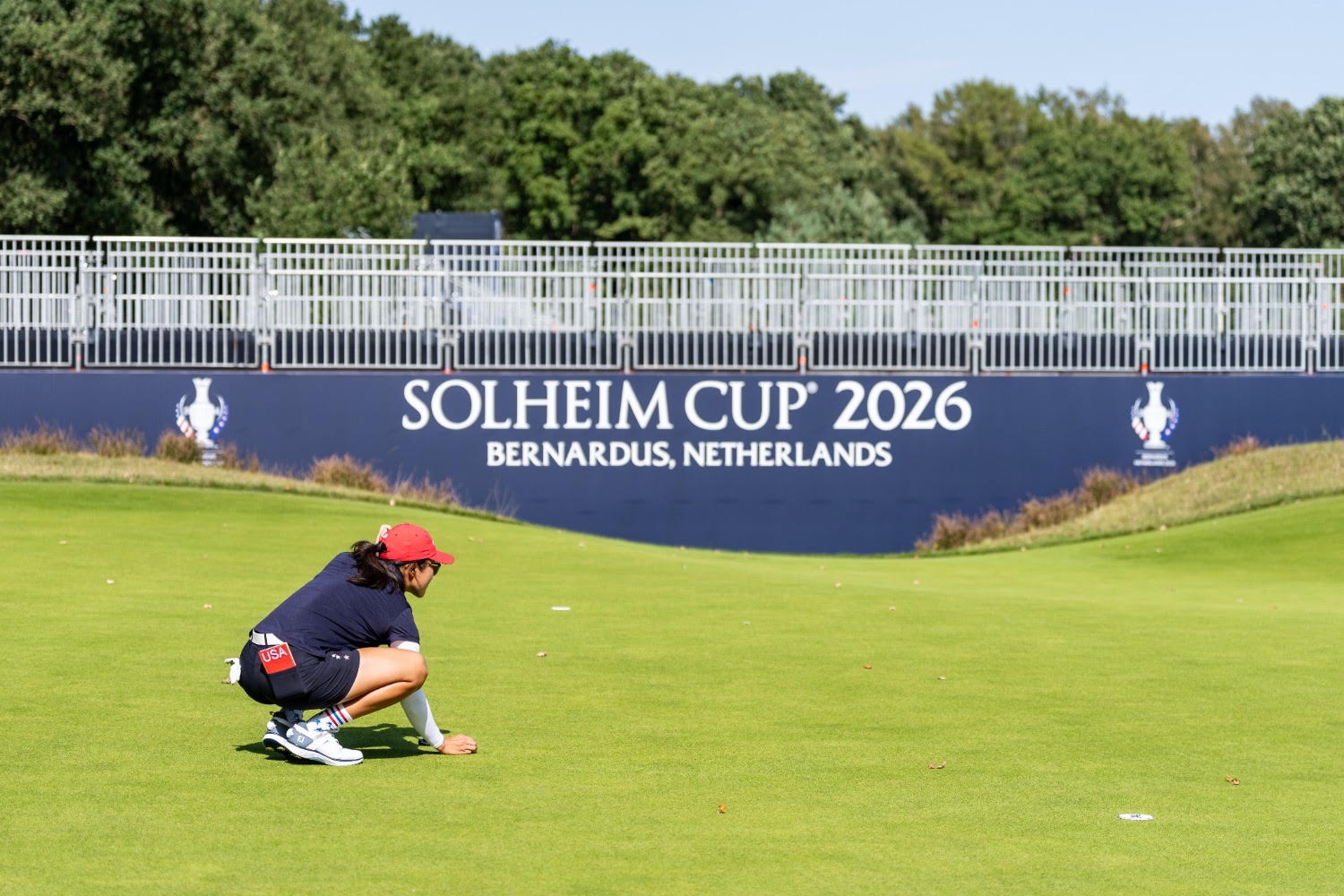
Our take: It’s always sad to see players retire, but it’s great Nordqvist is going out on her terms. Nordqvist calls it quits having earned more than $14 million in her pro career. Not only has she battled on the course, Nordqvist’s faced recent heartbreak and struggles off it, including the death of her husband, Kevin McAlpine, in 2023 as well as stomach surgery in 2024 for a benign cyst and tumor. While golf fans won’t see her tee it up anymore, she will be back in the spotlight in two weeks as European captain for the 2026 Solheim Cup from Sept. 7-13 at Bernardus Golf in Cromvoirt, Netherlands. She couldn’t have summed up her career any better than this: “It’s been really cool to call this my job because it doesn’t feel like I worked a day in my life so far.”
Six automatic qualifiers for International Presidents Cup team finalized
Si Woo Kim, Hideki Matsuyama, Ryan Fox, Tom Kim, Min Woo Lee and Adam Scott were finalized for Captain Geoff Ogilvy’s International Presidents Cup team Sunday after the Tour Championship. While Kim leads the list, 46-year-old Scott will be playing in his 12th Presidents Cup from Sept. 24-27 at Medinah’s No. 3 course outside Chicago. His appearance will be a record for the International squad as well as tie Phil Mickelson for the most appearances in the event’s history. The top-6 qualifiers for the U.S. Team were finalized at the BMW Championship a week prior: Scottie Scheffler, Cameron Young, Wyndham Clark, Sam Burns, Russell Henley and Collin Morikawa.
Our take: The International Team is hoping these six players along with Ogilvy’s six captain’s picks to be announced Sept. 1 can help turn this one-sided biennial competition into a bit more of a contest. The U.S. Team is 13-1-1 in the Presidents Cup’s 15 editions dating back to the event’s inaugural event in 1994. The International Team’s lone win came in 1998 while the two tied in 2003. Competition would certainly help drive interest in the event as 1.37 million people tuned in for Sunday's final day on NBC, marking a 28% decline from 2022’s audience of 1.89 million.
LIV Golf prepares for imminent bankruptcy filing: report
LIV Golf may file for bankruptcy protection as early as next week according to the Financial Times as the league prepares for its next iteration without the financial backing of Saudi Arabia’s Public Investment Fund (PIF). According to people with knowledge of the situation, the challenger league sent settlement offers to current LIV players who are owed millions of dollars in guaranteed payouts past 2026, with initial offers at just a few cents on the dollar. According to FT sources, the PIF is expected to fund a bankruptcy loan known as a “debtor-in-possession” financing of under $100 million, adamant about committing no other new funds.
Our take: LIV Golf has been on life support since the PIF announced in late April it was severing funding to the upstart league. Not only has LIV had to cancel multiple events, including its season-ending team championship, but it’s run into a slew of financial issues off the course as well, highlighted by multiple lawsuits for unpaid invoices for services rendered. The league is reportedly laying off a significant portion of its staff this week as it begins its post-PIF era. Without the unlimited cache of funding from PIF, it’s no surprise LIV 2.0 will try to start with a clean slate, with a source telling the Financial Times: “PIF wants a clean baton toss.”

Climate Change Impacts How Course Architects, Owners and Operators Work—and Costs Them More to Do So
From water scarcity to rising temperatures, and more frequent and severe weather, Mother Nature is making course development, ownership and maintenance more expensive with costs ultimately trickling down to golfers.
August 31, 2026
Michael LoRé | mlore@bigswingmedia.news
July 2026 was the hottest month ever recorded in the contiguous United States.
The average temperature for the 48 contiguous states last month was 76.9°F—3.3°F above the 20th-century average, marking the warmest month since record keeping began in 1895, according to the National Centers for Environmental Information (NCEI).
While the increased temperatures resulted in below-average precipitation across the contiguous U.S., certain parts of the West and Southwest, central Plains, Mid-Atlantic and lower Northeast still experienced heavy rainfall, including major flash flooding events in the Texas Hill Country and eastern New York.
As Americans grapple with rising temperatures as well as the increased frequency and intensity of extreme weather events, golf course architects, owners and operators are also seeking solutions to combat climate change and weather unpredictability.
“Sometimes you’re just a victim of it and there’s not much you can do,” said Jay Karen, National Golf Course Owners Association (NGCOA) CEO. “But when you’re an entirely outdoor-dependent business, you obviously have to figure out ways to prepare for things like water shortage issues or catastrophic hurricanes every 15-20 years. Do I cross my fingers and risk that we make it through or do I spend incredible capital to try to prepare for that once-in-a-generation catastrophe?
“These are tough decisions as a golf course owner. … It’s really the water issue that is the existential threat to golf and who gets access to water when it’s running out.”
Arguably the biggest battle for water is in the Southwest. The seven states that comprise the Colorado River basin and benefit from the water and power generated from the 1,450-mile river and associated reservoirs failed to meet a February 2026 deadline for an agreement that defines how water rights are managed.
With no agreement in place, the Bureau of Reclamation, the federal agency managing reservoirs and dams across the West, announced an outline of its cutback plans in July, giving the agency the ability to cut water for Arizona, California and Nevada by up to 40% each year through 2028.
The announced cuts will reduce the states’ annual water supply by about 20%. Arizona’s supply will be reduced by 760,000 acre-feet per year, while California’s will be reduced by 440,000 acre-feet per year and Nevada’s by 50,000 acre-feet per year.
Not only will major Arizona cities like Phoenix and Tucson be hit the hardest, but the state’s golf industry will have to deal with decreased gallons in the desert. The Arizona golf industry is responsible for more than $6 billion in economic impact annually, while supporting more than 325 facilities and 650,000 in-state golfers as well as many more through tourism.
An average 18-hole golf course in the U.S. uses approximately 150-200 million gallons of water a year—roughly 300,000 gallons per day—though usage varies on climate and region.
Initiatives and programs are already underway to combat water shortages, highlighted by the USGA’s 15-30-45 Initiative—a 15-year, $30 million investment announced in 2023.
U.S. golf facilities applied a projected 1.63 million acre-feet of water in 2024, representing a 3.2% reduction since 2020 and a 31% reduction since 2005, according to a 2025 survey of nearly 1,700 courses by the Golf Course Superintendents Association of America (GCSAA). The Southwest and Upper West/Mountain regions reported the highest reductions in water usage from 2020-24 at 16.9% and 7.8%, respectively.
“California and Arizona and those areas were the first really to put in more defined irrigation systems where you’re not watering areas and you’re turning those areas into more natural vegetation that doesn’t require water,” said Mark Mungeam, President of the American Society of Golf Course Architects (ASCGA). “That’s moving to the Midwest and East and even here in New England, where we’re refining our irrigation systems and not watering areas, so we’re creating more native rough areas and fescue areas.”
As golf courses in certain parts of the country are grappling with water shortages and drought, others are trying to mitigate excessive water, whether through heavy rainfalls or coastal erosion.
Farm Neck Golf Club on Martha’s Vineyard features multiple holes on a brackish pond abutting the ocean. Rising tides and increasing water levels have already swept away 40-50 feet of bank with concerns over the course losing its 14th green entirely if erosion continues.
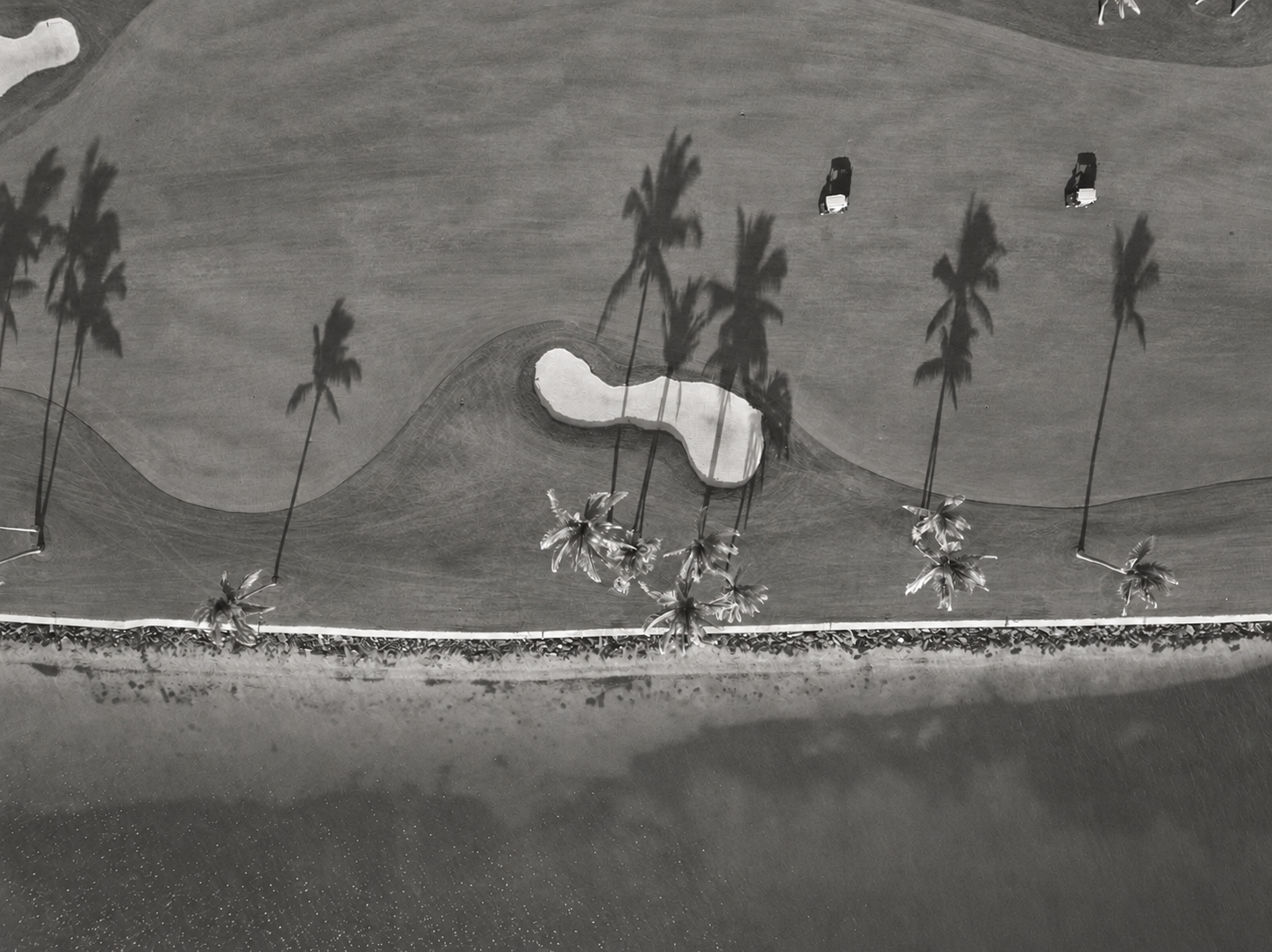
TPC Louisiana, home to the PGA Tour’s Zurich Classic of New Orleans, needed 10 months to reopen its doors following Hurricane Katrina in 2005. Asheville Municipal Golf Course (N.C.) is still recovering from the devastating effects of Hurricane Helene in 2024 as FEMA allocated $7.77 million to repair the historic Donald Ross course. Because 60 percent of Seminole Golf Club (Fla.) sits at a foot or less above sea level, the private club is in the middle of a significant two-phase renovation and restoration process to raise 14-20 acres of ground 8-12 inches to stave off a rising water table.
While golf course architects, owners and operators can’t predict future weather phenomena, they can do their best to prepare for it—at a significant cost. Irrigation systems can cost anywhere between $1.5 million to $3.5 million, with some eclipsing $4 million. Comprehensive drainage systems typically range between $200,000 to $500,000.
That’s just the cost to keep the course functioning whether it has too much or too little water. Add on top of that regular maintenance and operational costs including fertilizer and chemical applications, fuel for mowers and other equipment, and seed, sand and soil, and your municipal/public course is spending $500,000 to $650,000 annually just to operate. Costs only increase further for private clubs and at luxury resorts.
In 2023, the nationwide average maintenance budget for an 18-hole golf course was $999,585. In the Southwest, that figure jumped to approximately $1.5 million due to water scarcity and cost.
“The biggest difficulty is the cost—of land, of design, of construction and of maintenance,” Mungeam said. “The more we can make courses more naturalized and require less inputs, the better we will be in the future in my opinion.”
Despite varying climate change complexities resulting in greater financial investment from course owners and operators—and thus higher green fees for golfers—that has hardly deterred people from playing.
Peak 18-hole public playing fees in the U.S. have increased by approximately 29% between 2019-25 as golf participation continues to reach unprecedented heights. The average 18-hole green fee for municipal and daily-fee courses (just over $41) has risen 27% since 2019, according to the National Golf Foundation.
Overall play through the first seven months of 2026 continues to trend 2.5% ahead of last year’s record-setting rounds trajectory, per a recent NGF report. Rounds in July, the highest-volume month of the year for play, were down 3.6% on a national level, with some of the biggest year-over-year declines in Arizona (-7%), California (-6%), Michigan (-9%), New Jersey (-8%), New York (-13%) and Texas (-11%).
A 49% increase in precipitation in New England resulted in a 6.1% decrease in rounds played in July 2026 compared to July 2025, while a 2.9°F increase in July temperature in states like Colorado, Arizona, Utah and Nevada resulted in a 5.6% decrease in rounds played YoY.
“Even though we had the hottest July on record, I didn’t hear about golf courses closing,” Karen said. “Avid golfers are going to play if it’s 96 or 98 degrees out. If it’s hotter by half a degree, what does that mean to the golfer?
“If it’s a degree or two, that’s the frog boiling in the pot, possibly, and we just don’t feel it. It’s probably not going to change behavior unless the government says you shouldn’t be outside or the human condition won’t allow for it. Golfers are nuts.”

One last thing... Jimmy Roberts
It’s an interesting time to think about golf: Where it is … what it’s about … and where it’s going.
The week before last at the end of the BMW Championship … Wyndham Clark was hitting a tee shot, and no sooner did the ball leave the club than the only thing you could hear was some idiot screaming, “Get in the bunker!”
That was followed a day later by Good Good and Callaway’s disastrous commercial that quite justifiably lit the golf world … and beyond … on fire.
In the latter example, both companies fell on their sword and apologized. Sorry to say, but the cynic in me can’t help wondering if it might not have been more motivated by their comptrollers than their conscience.
As for the former … Wyndham Clark owned the mistake that turned so many people against him. That loser who thinks screaming that kind of crap is cool or funny? My guess is someone like that would never think it was a mistake, so he’d never apologize.
To him I would say: You might want to be careful. In life, what goes around comes around.
The timing here for all of it—I think—is drenched in irony. We’ve just completed a week at a place built by a man who was a champion of decency. I’m glad Tom Cousins wasn’t around to see all this nonsense. I don’t think he would have been angry as much as he would have been sad.
Tom Cousins helped thousands of people—THOUSANDS … the vast majority of them when he was an old man. But let me ask you something: Does it make you out of touch if your default mode is to treat people with respect?
And does it make you a fossil if you abide by the old carpenter’s maxim: “Measure twice—cut once”? In other words: THINK before you take action!
I don’t think so.
When did kindness, decency, and a measure of consideration become outdated?
Golf is getting younger and shedding some of the stuffy cultural bonds that have encumbered it for a very long time. I am all for that.
But neither of these examples falls into that category. The first is just buffoonery … the second was a really stupid mistake.
Oh, and if you want to say this is just another “get off my lawn” speech, it’s not. It’s just a reminder that no matter where golf goes and no matter how fast … I only hope it will always be different than a lot of the things we see and accept elsewhere.
As my friend Tom Cousins, I’m sure, would have told you: It’s OK to believe that some of the old ways … aren’t really so bad after all.
Past Briefs

Become a member
*Available for a limited time only, subscribe to our twice-weekly newsletter for a discounted rate of $150 for your first year. Subscription renews at annual rate of $175 at the end of the first year.
Purchase Disclosure
By completing your purchase, you agree to enroll in an annual subscription to The Big Swing – Inside the New Golf Economy at the current rate of $150 for the first year (founding member offer). Your subscription will automatically renew annually at $175/year unless canceled prior to the renewal date.
You may cancel at any time through your account settings or by contacting customer support. All sales are final and non-refundable except where required by law.
Offer valid for a limited time and may not be combined with other promotions. Limit one per customer.
By subscribing, you agree to our Terms of Service and Subscription Terms.