
August 3, 2026

The Big Swing: Inside the new golf economy
Can you believe it’s August already?
Not only did this weekend signify a change in the calendar, but the end of the year’s major seasons as Shiho Kuwaki outlasted Esther Henseleit in a two-hole playoff to win the 50th AIG Women’s Open at Royal Lytham & St. Annes Golf Course.
Nelly Korda (-2) and Haeran Ryu (-1), winners of the first four majors this year, were in contention, but the 23-year-old Kuwaki will take home $1.5 million of a record $10 million purse.

This and that...
U.S. courses on pace to set record for rounds played in 2026
Midway through 2026, nationwide play is trending approximately 4% ahead of the same time in 2025, when U.S. courses finished with a record-setting number of rounds for the third straight year, according to the National Golf Foundation. Year-over-year play in 2026 is up nearly 6% in May and 1% in June. Rounds-played totals so far this year have been ahead of or on par with last year’s record-setting pace in every month so far in 2026. That means we may see a new record for rounds played in the U.S. for the fifth time in six years.
Our take: Just when you didn’t think golf could get anymore popular, the industry is on pace for another record-setting year. Yes, all golfers don’t necessarily play 18-hole rounds, but the fact that a) more golfers are hitting the course and b) existing golfers are playing more frequently, obviously bodes well for the industry and game. New course openings are at their highest point since 2013, according to the NGF, meaning that this increased demand is being met without overbuilding and oversaturation. Barring any significant disruptors, golf participation in 2026 will raise the bar yet again.
2027 Ryder Cup tickets sold out despite hefty price
General admission tickets for the 2027 Ryder Cup at Adare Manor in Ireland are officially sold out following the conclusion of the ballot process. General admission ticket demand was more than 12 times oversubscribed with fans from 80 countries who will be in attendance in celebration of the Ryder Cup’s 100th anniversary. Being played from September 13-19, 2027, the overall attendance at the next Ryder Cup is expected to exceed 250,000 with a daily site capacity of 55,000.
Our take: This comes as no surprise as golf is more popular and mainstream than ever. Add on top that it’s the 100th anniversary of the game’s most prestigious and historic event, and you have a perfect scenario to create demand; not to mention the European Team’s dominance in winning seven of the last 10 playings. What is somewhat surprising is that high ticket costs originally announced in April haven’t negatively impacted interest. General admission tickets for competition days cost €499 ($586). Despite being cheaper than the $750 tickets for the three competition days at the 2025 Ryder Cup at Bethpage Black, golf fans, like World Cup fans, have not been deterred.
Sunshine Protection Act can benefit golf industry, according to NGCOA CEO
The U.S. House of Representatives on July 14 passed H.R. 139, the Sunshine Protection Act to establish permanent Daylight Saving Time (DST) nationwide. If enacted, permanent DST would deliver more evening daylight, boosting outdoor recreation, tourism and local economies, according to the National Golf Course Owners Association. NGCOA CEO Jay Karen testified before a Senate committee in Spring 2025, highlighting the benefits for the golf industry, which include: 23 million additional annual rounds, $1 billion in potential annual direct revenue and an increase of $250,000 in average annual benefit per golf facility. Passed 308-117 in the House last month, the legislation moves to the Senate for approval before the President can sign off.
Our take: We all know that the Covid-19 pandemic provided a big boost for golf. The Sunshine Protection Act will only add fuel to that fire if it gets passed. With golf more popular than ever and U.S. courses estimated to host more rounds played than ever before this year, adding additional money-making opportunities will only help address unprecedented demand. Tee sheets are already packed to the brim, so having additional hours to make available is a win-win for both golfers and courses/facility operators and owners. It will be interesting to see if courses amend twilight hours and discounts, though it will most likely be dictated by demand. Obviously none of this matters if the Senate doesn’t pass the legislation.
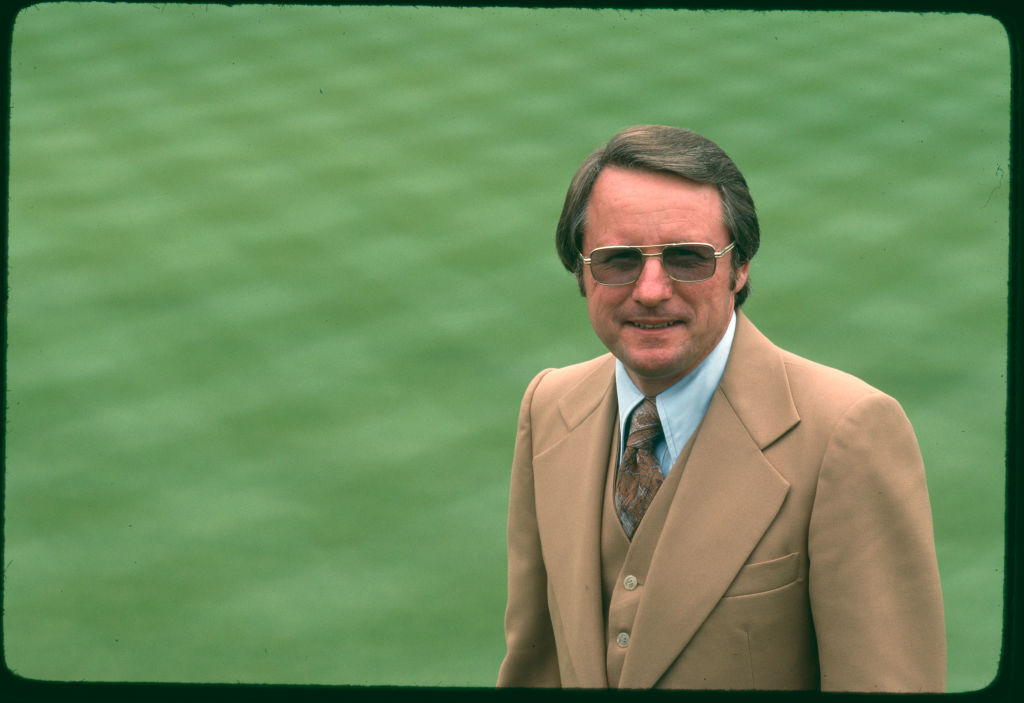
Deane Beman’s Financial Foresight Paying Dividends for Today’s PGA Tour Pros
Former PGA Tour commissioner introduced pension plan in 1983, laying foundation for a lucrative and incentive-laden retirement plan available to today’s Tour player with more money in the game than ever.
August 3, 2026
Denny McCarthy has amassed $22.95 million in career earnings on the PGA Tour.
Even more impressive considering McCarthy has yet to win since getting his Tour card in 2018.
Despite coming agonizingly close in a pair of playoff losses at the 2024 Valero Texas Open and 2023 Memorial Tournament, the 33-year-old has proven that consistency on the course can still lead to a financially fruitful career. McCarthy has made 72% of cuts (168/233) over the course of his Tour career and boasts 71 top-25 finishes in those 233 events (30.5%) to etch his name in the top-100 all-time Tour money earners.
Not only are golfers like McCarthy able to have profitable pro careers without winning, more importantly, they are able to further secure their financial futures by leveraging the PGA Tour’s advantageous retirement program.
“I think it’s very favorable,” said Wealthspire Managing Director Frank Marzano, who advises many Tour players. “Players who have tenure on the PGA Tour and make cuts tend to have—if it’s invested appropriately, paid attention to and maximized—nice balances that could be allocated towards their retirement when they’re ready to retire.”
Financial foresight
Former PGA Tour commissioner Deane Beman introduced the Tour’s membership pension plan in 1983 that was developed with Victor Ganzi, then the Tour’s tax advisor, who would serve on the policy board from 1994-2022.
Despite the Tour still being in its infancy after breaking away from the PGA of America in December 1968, the pension plan laid the groundwork for a lucrative, incentive-laden retirement plan available to today’s Tour pro with more money in the game than ever.
While a traditional employer may encourage employees to add to their plans by offering a contribution match, the PGA Tour incentivizes players to play—and play well.
The cuts-made contribution plan rewards golfers for—you guessed it—qualifying for weekend rounds at Tour events. Members who play at least 15 approved events earn one credit for each of their first 15 cuts made and then two credits for each additional cut made.
At the end of the season, the Tour reviews how many players qualified for the plan then divvies up its $15 million of annual contributions to the plan accordingly. Last year, contributions for the roughly 170 players who qualified topped out at approximately $185,000 with an average of $88,000 as one credit was valued at just over $5,200.
These benefits are payable over a 20-25 year period after the age of 50 once the member starts playing fewer than 15 events across the PGA Tour and PGA Tour Champions.
A golfer’s success is further rewarded should they qualify for the 125-man FedExCup Playoffs. A portion of the bonus pool goes into player retirement accounts based on where they finish in the standings.
The top-5 each receive $1 million with this performance-based contribution scaling down to the 125th-ranked player who receives $100,000. The average contribution across the FedExCup plan is approximately $246,000 with the program’s total funding at just under $31 million for 2026.
Those benefits are payable over five years after the age of 45 once those players play less than 15 events a year.
It’s hard to project what an individual player can have in their account given various contributing factors including length of career, cuts-made, market returns, etc.
Golf Digest previously asked a large brokerage firm to model out an average Tour player’s retirement:
The player stayed on Tour for 10 years and made 10-12 cuts each year, which is the average. Each year $60,000 was contributed to the cuts-made plan and the rate of return was set at 7% with inflation at 3%. After 10 years of playing, this theoretical player had $754,674 in the account. With no further contributions, he would have $2.55 million when he began drawing on his retirement 25 years after that.
“If you look back on it today, it’s been incredible and so I’m so glad that (the pension plan) was put together by Commissioner Beman and Vic Ganzi,” said seven-time PGA Tour winner Peter Jacobsen, who was on the policy board in the early 1980s. “They had such great foresight to what this plan could become.”
The Tour’s retirement offerings have only become more valuable with the introduction of the PGA Tour Player Equity Program. In April 2024, the Tour awarded a total of $930 million in equity grants to 193 players in PGA Tour Enterprises, which controls the commercial businesses and rights for the PGA Tour and DP World Tour.
Backed by Strategic Sports Group (SSG), PGA Tour Enterprises has a valuation of $12 billion according to the Tour. The grants come with an eight-year vesting period where they will be worth 50% of their value after four years, 75% after six and the full amount at the end of eight years.
While the future value of those stakes in PGA Tour Enterprises and how they can be sold is still unknown, the Player Equity Program was the Tour’s response to the gaudy guaranteed payouts LIV Golf was offering when it first launched in 2021.
Future financials
Certainly a lot to unpack and understand for a golfer laser-focused on not only getting on the Tour, but keeping his card, and hopefully having success (while managing everything in between), the PGA Tour has a dedicated team that speaks regularly to members—especially rookies—regarding various programming offerings from its retirement plan and healthcare subsidies to Member Support Program.
The player support team will certainly be busy over the next year as the PGA Tour prepares to unveil its latest iteration featuring a two-tiered competitive structure with the Championship Series and Challenger Series debuting in 2028.
While the new schedule and structure was “built upon a foundation of meritocracy,” how will it impact existing Tour support programs? Will players on the Challenger Series who rely more on the cuts-made plan contributions still have the same amount of opportunities to earn the qualifying number of cuts as they would in the past structure and format?
A PGA Tour executive confirmed retirement plan incentives, health benefits and other member support programs are something they’re “evaluating as we speak.” With a goal of not taking a step back in terms of what’s currently offered, the exec said we’ll probably see “enhanced investment” in some of those areas as opposed to a decrease.
Confident the Tour will head into 2028 with a very clear idea of what those programs look like in the Tour’s next era, the executive said the details should be hammered out in the back half of 2027, if not sooner.
At the end of the day, the Tour’s goal is to attract, retain, support and promote the game’s biggest, brightest and best names in order to strengthen its product.
With golf more popular and mainstream than ever before, the PGA Tour is hardly resting on its laurels, regardless of LIV Golf’s future.
“We want our guys to show up. We want them to play,” the Tour executive said. “So we’ve got some incentives out there to align which we think is important and the membership understands.
“Generally speaking, I think we’ve got a really healthy retirement program and benefits package that we provide to members outside of a significant amount of cash compensation and bonus compensation they’re earning.”

One last thing... Jimmy Roberts
Go Ahead, Argue With Me: New York Golf Is the Best
I live in New York, and I grew up around here too. So before I say what I have to say next, consider THAT as my attempt at full disclosure because I KNOW what I’m about to say is really going to thoroughly annoy a lot of people … but here goes:
When it comes to golf, there’s no place like the NY metropolitan area. NO place.
Before you blow a gasket and start cursing me out like you would someone who just cut you off on the Long Island Expressway, hear me out.
Let’s start with the history: First golf club in America? Here. First municipal course? Yep. The USGA and the PGA of America? They were founded in NY.
The Nassau bet … how you take money from your buddies on Saturday mornings? It was invented here. So was the mulligan.
OK, so big deal you say, that’s ancient history. What does that have to do with the game today?
More than 40 modern major championships have been played in the NY area, likely because it’s such a target-rich environment. 19 courses in Golf Digest’s most recent top 100 are within a stone’s throw of Times Square.
In fact, I don’t think there’s anyplace on earth that has more great golf in a concentrated area than what is known as the Metropolitan Section.
I know that’s gonna have a lot of people rolling their eyes … thinking about that famous cover art from The New Yorker.
Scotland is the birthplace of the game, and there’s no denying what you’ll find when you get there. It’s an amazing experience, but I really think this place associated in the minds of so many with the concrete jungle is the world’s greatest show on turf. There you have it. Now, let the hate begin.
Past Briefs

.jpg)
Become a member
*Available for a limited time only, subscribe to our twice-weekly newsletter for a discounted rate of $150 for your first year. Subscription renews at annual rate of $175 at the end of the first year.
Purchase Disclosure
By completing your purchase, you agree to enroll in an annual subscription to The Big Swing – Inside the New Golf Economy at the current rate of $150 for the first year (founding member offer). Your subscription will automatically renew annually at $175/year unless canceled prior to the renewal date.
You may cancel at any time through your account settings or by contacting customer support. All sales are final and non-refundable except where required by law.
Offer valid for a limited time and may not be combined with other promotions. Limit one per customer.
By subscribing, you agree to our Terms of Service and Subscription Terms.