
October 5, 2026
The Big Swing: Inside the new golf economy
Happy Monday, everyone. If your weekend involved playoff baseball, football and maybe nine holes squeezed in before sunset, you’re in good company. October is the month golf has to share.
The PGA Tour has left Utah behind and heads to Yokohama Country Club this week for the Baycurrent Classic, so anyone planning to watch live is setting an alarm they will regret. The LPGA gets a week off after Hawaii before beginning a four-event Asian swing in Shanghai, with the CME Group Tour Championship waiting in November.
To everyone squeezing in a twilight nine before daylight saving time ends: We see you, and we respect it.

This and that...
Reef turns seven golf destinations into one membership network
Reef Capital Partners has launched Reef Destinations, an umbrella brand spanning seven resort, club and residential properties.
Five are in the Mountain West: Black Desert Resort in Greater Zion, Utah; Marcella in Park City, Utah; Cormont at Deer Valley East Village, Utah; The Albion in Park City, Utah; and Cornerstone Club in Montrose, Colorado. The collection also includes Tributer Resort at Lake Anna, Virginia, and Sweetens Cove in South Pittsburg, Tennessee.
The company has also introduced Reef 365, a membership program for eligible investors, club members and property owners. Benefits include preferred rates across participating destinations, priority access to Sweetens Cove and a year-round events calendar featuring the Reef Summit, Reef Cups and professional golf and pickleball tournaments. Premier members also receive access to Reef Houses at each destination.
“For me, it starts with golf. That’s the anchor, the best golf in the world, with everything else at Reef Destinations built around it,” said Reef CEO Jared Lucero.
Our take: Reef is converting a set of separate real estate developments into a connected membership ecosystem, where benefits that travel across the portfolio keep spending inside the network and give the company another instrument for selling homes.
The timing says plenty. The announcement landed on October 2, while the PGA Tour was playing the Bank of Utah Championship at Black Desert, putting a portfolio-wide membership brand in front of a national golf audience already being shown Reef’s flagship resort.
Sweetens Cove is the clever part, because access to a scarce and highly recognizable golf property is far more persuasive than reciprocal rates. What remains unanswered is the cost, which destinations fully participate and how much access members actually receive. The existence of a premier tier suggests access is segmented and the best benefits are reserved for an upsell. The network is only as valuable as the availability behind it.
ESPN extends its bet on TGL
ESPN and TMRW Sports have signed a multiyear extension of their U.S. media-rights deal for TGL, with neither the duration nor the financial terms disclosed.
The agreement keeps the technology-led league on ESPN beyond its first two seasons. TGL returns on December 27 with seven teams, including the new Motor City Golf Club, while the five-team women’s competition, WTGL, launches on November 8 in partnership with the LPGA.
The most commercially interesting number came from TGL’s own audience research: more than 30% of its viewers say they do not regularly watch other professional golf. The league now has distribution across 152 territories.
Our take: New sports properties find it far easier to land an initial broadcast partner than to keep one, but this renewal did not come on the back of audience growth.
Comparisons are awkward because Nielsen measured season two using its Big Data + Panel methodology, while season one was panel-only. The newer system generally produces higher audiences for sports programming, meaning the headline comparison likely flatters TGL. Season two averaged 488,000 viewers across ESPN platforms against 498,000 in season one, a reported decline of 2%.
That makes the 30% claim central to the commercial case. It offers ESPN incremental reach even as overall viewership softens, although TGL is both the source and beneficiary of that research. With no rights fee disclosed, the renewal demonstrates platform stability rather than proving TGL’s value as a rights property.
Foresight cuts the price of entry by more than $5,000
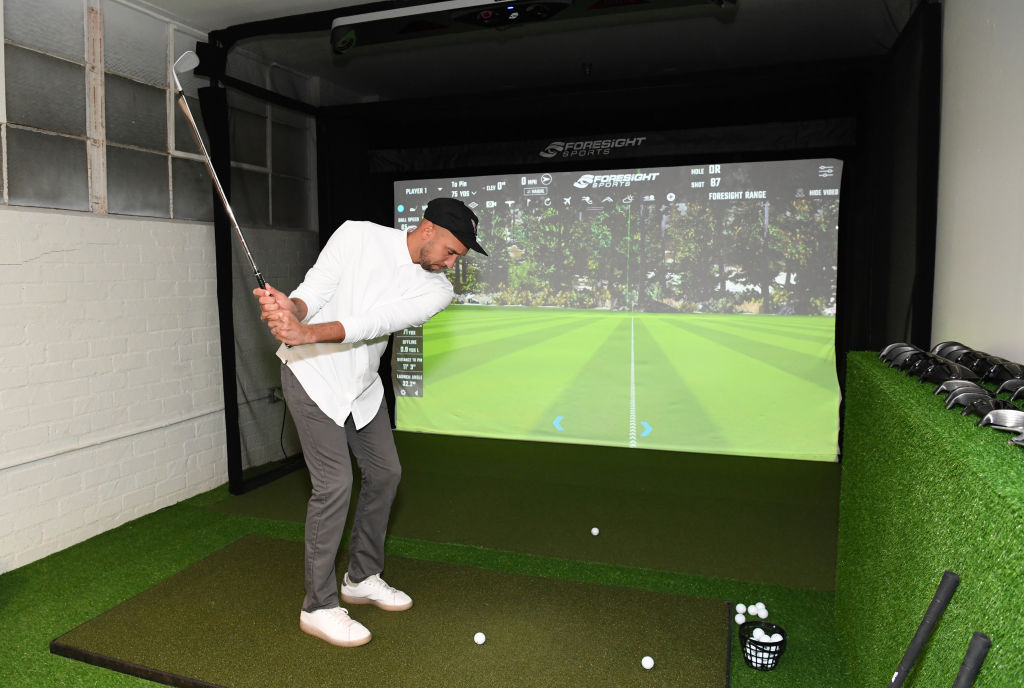
Foresight Sports has revived its GC2 launch monitor at $1,699, with preorders open, shipping from October 9 and retail availability from October 15.
The portable unit uses two high-speed cameras to photograph the ball through impact and returns 14 ball-data measurements, including ball speed, spin axis and descent angle. It works with Foresight’s simulation software and includes a 30-day Foresight+ trial. Club data is not included. By comparison, the GC3 starts at $6,999 and the GCQuad at $15,999.
“With GC2 our goal is simple, we want to remove barriers that prohibit golfers from experiencing the Foresight difference,” said Jeff Foster, president of Revelyst Golf Technology.
Our take: This is a customer-acquisition play rather than simply a cheaper launch monitor. Foresight has cut the hardware barrier by $5,300 and directed the resulting audience toward a subscription product, trading a lower upfront price for the chance to generate recurring revenue.
The ownership matters. Foresight sits inside Revelyst Golf Technology alongside Bushnell Golf, GolfLogix and PinSeeker, combining hardware, software, GPS and data products under one roof. Expanding the installed base at the entry level and monetizing it across that ecosystem is precisely the strategy such a portfolio enables.
Withholding club data protects the premium range, but the gap is now very wide. At $1,699 against $6,999, plenty of home buyers will ask whether club-delivery numbers are worth another five grand, and Foresight has just invited them to ask it.
Four of Golf’s Six Biggest Brands Have Quit the Annual Driver
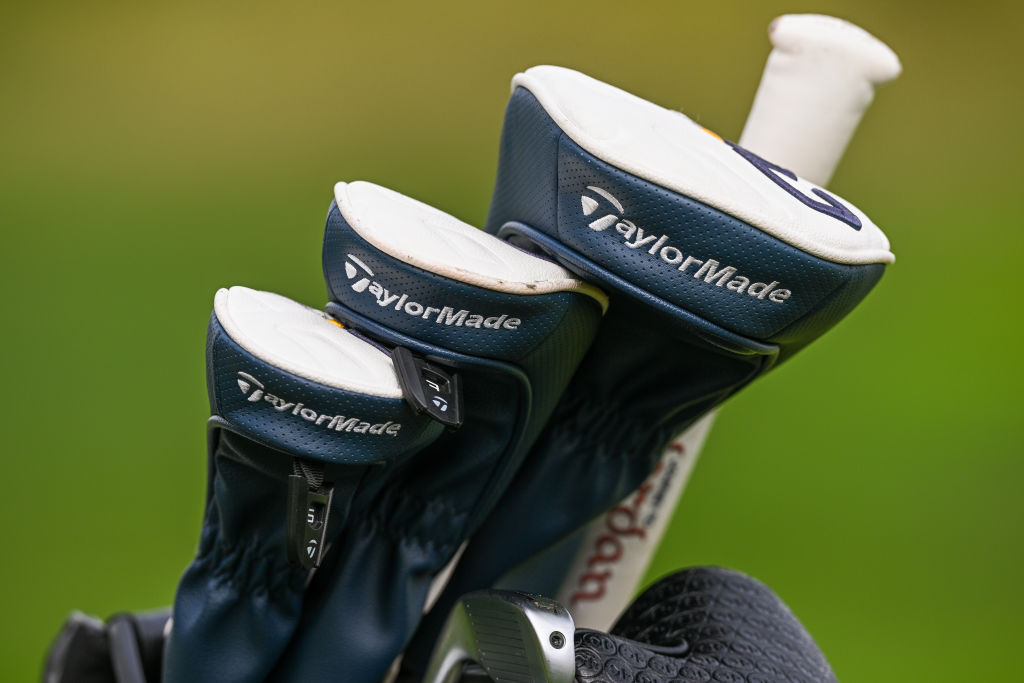
Four of golf’s six biggest equipment brands have moved away from annual driver launches as slower replacement cycles, rising development costs and tougher performance gains force manufacturers to rethink the economics of the traditional January reset.
October 5, 2026
Why are so many major manufacturers deciding that a new driver every January no longer makes the most business sense?
For most of the past two decades, TaylorMade has entered each new season with a fresh flagship driver.
That annual reset became part of the wider equipment business: manufacturers built launch campaigns around it, retailers cleared space for it, and golfers were conditioned to expect that last year’s flagship would soon be replaced, regardless of how well it still performed.
TaylorMade is now stepping away from that calendar.
In May, the company announced it would move its metalwoods to a two-year product cycle, with 2027 expected to become the first year since 2001 without a new TaylorMade driver. That move makes TaylorMade the fourth of golf’s six largest OEMs, alongside Titleist, Ping and Srixon, to operate on a two-year metalwood cadence. Callaway and Cobra remain the annual holdouts.
TaylorMade vice president of product creation Brian Bazzel described the annual cycle as one “made for a different era,” when year-to-year performance gains were easier to produce. TaylorMade’s tour players, as Rory McIlroy would later confirm, were pushing in the same direction.
The annual driver created a predictable moment to reset pricing, inventory, marketing and consumer attention.
In 2027, that model gets tested.
Why the Calendar Existed
Golf’s biggest manufacturers fell in love with the annual launch for a reason.
A new driver creates a fresh sales event: a new technology story to market, something for tour players to put in the bag, new inventory for retailers to promote and, ultimately, another reason for a golfer whose current driver likely still works perfectly well to consider spending $600 on another.
Callaway’s own forecasts show how much that calendar can matter.
At the midpoint of its guidance, the company projected second-half sales roughly $70 million below the same period in 2025. Management said more than $50 million of that decline was explained by fewer new products to launch, including an iron release pushed into 2027.
In other words, product cadence doesn’t just determine when engineers finish designing a club. It also helps determine when revenue arrives.
For years, the annual driver cycle gave manufacturers a dependable reset: January brought a new flagship, full-price selling resumed, marketing attention returned, and retailers had something new to put in front of golfers.
The calendar wasn’t irrational excess. It was an extremely effective demand-generation machine. That is why the industry’s willingness to dismantle it matters so much.
Why the Math Changed
Speaking to Golf Digest, Bazzel explained that year-on-year equipment improvements are simply getting harder to demonstrate.
The main reason is the constraints engineers currently face. Face spring effect? Capped. Head size? Restricted to 460cc. Heel-to-toe MOI? Limited.
Therefore, OEMs can’t endlessly make the center hotter, the head larger, or forgiveness infinitely higher. Meaningful technological advances year on year are getting harder to show.
Engineers have adapted rather than stalled, but the nature of the gains has changed: the challenge is less about making the best strike better and more about making the bad strike less bad.
Each launch carries R&D, tooling and marketing costs, while simultaneously shortening the full-price life of the model already on shelves.
Moving to two years gives manufacturers longer to earn back that investment, gives retailers more time to sell through inventory before markdowns begin, and reduces the pressure to manufacture a new commercial story every January.
The Structural Mismatch
The annual launch cycle is increasingly out of step with how golfers actually buy equipment.
Golf Datatech research suggests avid golfers now replace their drivers roughly every five years, up from 3.4 years in 2012. At the same time, custom fitting has become more prevalent, giving golfers greater confidence that the club in their bag suits their swing and potentially reducing the incentive to replace it simply because a new model has arrived.
That creates an obvious mismatch: manufacturers have traditionally refreshed their flagship products every 12 months, while customers are holding onto them for far longer.
Retail economics make it worse. A new launch does not just introduce another product; it immediately pushes the previous model down the value chain. Remaining inventory becomes harder to sell at full price, increasing the likelihood of promotions, markdowns, and closeouts even when the underlying product is still highly usable.
Replacement demand may also be cooling. Golf Datatech reported wood-unit sales down 15% year over year in March 2026, with year-to-date volumes down 12%, even as rounds played are at historically high levels.
TaylorMade’s move therefore does more than give engineers another year of development time. It matches a broader reality: golfers are extending the life of the clubs already in their bags.
Annual launches create more sales opportunities. A two-year cycle bets that each product can make more money by staying current longer, rather than being replaced and discounted after just 12 months.
The Players Wanted It Too
There was another constituency pushing TaylorMade toward a longer cycle: its own tour staff.
Asked at the Tour Championship whether TaylorMade players had influenced the decision, Rory McIlroy was unequivocal. “Yeah, I think all of us have a big say in that. I think all of us really want it.”
The reasoning goes beyond player preference, as Tour drivers can have a finite working life. Repeated impacts, particularly at elite swing speeds, can make the face more flexible over time, commonly known in the industry as CT creep. A driver that conforms when new can eventually move beyond the permitted Characteristic Time threshold and become non-conforming.
McIlroy put it more simply: “These drivers only last for about 18 months anyway. The heads go.” He also directly addressed what happened at the 2025 PGA Championship, saying: “I’ve obviously fallen foul of that at the PGA last year, Scottie as well.” Scheffler confirmed at Quail Hollow that his Qi10 had failed testing after more than a year of use.
The more revealing detail is that neither player treated the arrival of a newer model as an automatic reason to switch. McIlroy tested Qi35 before returning to Qi10 and went on to win the Masters with the older model. Scheffler’s own transition was hardly automatic either. He began 2026 with Qi10, put Qi4D into play at Bay Hill in March, switched back to Qi10 the following week at The Players, and returned to Qi4D at the FedEx St. Jude in August.
In effect, two of TaylorMade’s most important players had already demonstrated the limits of the annual cycle. Once they found a driver they trusted, the arrival of something newer was not enough on its own to force a change.
That player preference arrived at the same conclusion as TaylorMade’s business case. When Brian Bazzel explained the move in May, he pointed to Qi4D’s strong start at retail and on tour, increasingly complex innovation cycles, the time required for fitters to learn new products and changing consumer behavior. Tour-player preference was not among the four stated reasons.
TaylorMade reached the same answer from both sides of the business: consumers were already holding equipment longer, and its best players wanted more time with theirs too.
The Callaway Contradiction
Callaway continues to buck the trend, at least with the driver.
The brand is one of only two major OEMs out of six still launching a driver annually; however, it follows a longer cycle for irons. So why does Callaway appear to accept the margin case for longer product lives while still launching drivers annually?
Callaway CEO Chip Brewer told analysts on the company’s Q2 earnings call:
“In certain instances, when we can lengthen the product life cycles, we can increase the overall profitability of that product through the life cycle.”
However, Brewer then made the counterpoint, saying:
“It’s certainly a balancing act there, because the market also does respond well to new innovation and new launches and the energy that comes with those.”
And interestingly, Callaway is gaining driver share while holding the annual cadence, with its U.S. driver share around 25% year to date, up 110 basis points.
Callaway’s approach suggests it still believes that drivers benefit disproportionately from launch buzz, tour visibility and the regular reset of consumer attention that comes with a new flagship product.
So why does Callaway approach iron launches differently? Golfers are generally more willing to keep irons in the bag longer, giving manufacturers more scope to extend the product lifecycle.
Callaway is effectively saying: longer cycles make sense where they improve economics, but annual launches still make sense where they can win share. The result may be a future where product cycles are increasingly category-specific rather than company-wide.
Callaway declined to comment beyond its quarterly earnings calls. Cobra also declined to comment.
The Gap Year
That leaves 2027 as the first real stress test of TaylorMade’s new model.
For the first time in more than two decades, the company is expected to enter a new season without a fresh driver launch to reset attention around the category. Qi4D will instead have to carry its momentum into a second year, while Callaway and Cobra, the only two of the six largest OEMs still launching annually, are expected to arrive with something new.
That makes the key question less about whether Qi4D remains competitive on performance and more about whether it can remain commercially current. TaylorMade will need retailers to keep giving it meaningful floor space, fitters to continue recommending it and golfers to resist the pull of newer alternatives simply because they are newer.
The most revealing numbers are likely to be less obvious than launch-week sales. Full-price sell-through, discounting, fitting activity and the rate at which Qi4D holds share through the first half of 2027 will offer a clearer picture of whether a second-year flagship can compete without a new-product reset.
And even then, market share will only tell part of the story. TaylorMade could give up some volume and still decide the strategy works if a longer selling window improves the product’s economics over its full life.
That is what makes 2027 so interesting. If Qi4D remains commercially healthy deep into year two, the case for annual launches weakens even more. However, if it fades quickly once newer products arrive, Callaway and Cobra will have stronger evidence that novelty still carries real commercial weight in drivers. That’s the game and the gamble.
The Secondary Market
The annual cycle effectively speeds up depreciation. The moment a new flagship arrives, the previous model becomes old inventory, and retailers discount remaining stock while used values come under pressure from both the new release and cheaper, still-new versions of the outgoing model.
A two-year cycle slows that depreciation. With half as many flagship resets, each model stays current longer, helping support both retail pricing and second-hand values. A golfer who bought TaylorMade’s Qi4D in January, for example, now has an extra year before a replacement model arrives to put fresh pressure on its trade-in or resale value.
The trade-off lands on the bargain hunter. The golfer who waits a year for the clearance price on a TaylorMade driver may find the discount smaller, or later, than it used to be.
The Industry’s New Bet
The broader shift points to an uncomfortable reality: the annual driver cycle was always as much a commercial calendar as an innovation one. New technology mattered, but so did the dependable January reset, fresh marketing, fresh inventory and another opportunity to bring golfers back into the buying cycle.
That model is now being questioned from inside the industry itself. Callaway CEO Chip Brewer has acknowledged that extending a product’s lifecycle can, in certain cases, improve its overall profitability. TaylorMade, Titleist, Ping and Srixon have gone further, building longer cycles directly into their metalwood strategies.
That does not make Callaway and Cobra laggards. They are making a different calculation: drivers remain unusually responsive to novelty, and the attention generated by a new flagship every year can still justify the costs of replacing the old one. Recent share gains give Callaway little reason to abandon that bet simply because its competitors have chosen another route.
The risk now sits on both sides.
A manufacturer that stretches a flagship into year two could discover that retailer enthusiasm and consumer sell-through depended more heavily on the January reset than expected. A company that keeps launching annually could find itself discounting increasingly capable products into a market where golfers are buying less frequently. Retailers sit in the middle, carrying the inventory and pricing consequences of whichever assumption proves wrong.
That is why 2027 matters beyond TaylorMade.
For years, the January driver arrived because the calendar said it should. The industry is now testing whether golfers ever needed the calendar in the first place.

One last thing... Jimmy Roberts
A Confidence Game
Essay originally published in The Met Golfer, May 2014. Special thanks to the Metropolitan Golf Association.
A few years back, I was at the PGA’s annual merchandise show and doing a story about new equipment. As usual, the event at the Orlando Convention Center was an overwhelming spectacle featuring thousands of new products, including dozens of club choices.
“How could you possibly know what’s right for you?” I asked the two-time major champion Mark O’Meara.
“To start with,” he said, “that club head sitting in back of the ball has to look right to you, because if it doesn’t, you’re probably not going to hit a good shot.”
A lot of golf, he went on to say, is about belief. Amen.
No matter what your physical skills, confidence is the bedrock of performance.
We’ve all had those days on the course when we seem to be able to do (mostly) no wrong. One smooth drive begets one crisp approach. Throw in a few sure putts . . . a languid, unhurried bunker shot or two . . . and we end up looking at a card we’re convinced must belong to someone else. In the parlance of the day, we are “feeling it.”
What we are actually feeling is confidence. No matter what your physical skills, confidence is the bedrock of performance.
“I actually think confidence is 80% of performance,” said Michael Jordan.
Number 23 was fresh off the course and a second-place finish in a recent member-guest (with his partner Keegan Bradley). We were talking confidence because of all the hullabaloo 23-year-old Patrick Reed stirred up while winning the World Golf Championship at Doral a week earlier.
Saturday night after his third round, in an interview with NBC’s Dan Hicks, Reed said he considered himself one of the five best players in the world – an opinion he reiterated after dressing in Tiger Woods-like black and red on Sunday and winning his third PGA Tour event in his last 14 starts.
As much as the sports world focused on Reed’s win – it put him at number three on both the PGA Tour money list and the Ryder Cup point standings – there seemed to be as much commentary about his bravado. For his part, Reed was amused.
“You know when it comes down to it,” Reed said before his next start, “you have to have that belief in yourself. If you don’t, you’re not going to play like it, and you’re definitely not going to be contending on Sundays.”
“What’s he supposed to say?” Jordan asked. “He’s in the top 45? If he didn’t take that type of mentality, then he wouldn’t be successful. You have to think that way.”
But if confidence – in whatever you do – is essential, what do you do if you’re just . . . not feeling it?
“Sometimes, you just have to fool yourself,” the 18-time tennis major champion Chris Evert once told me.
Evert once endured a perplexing stretch of futility against her chief rival, Martina Navratilova.
“I went onto the court with her thirteen times in a row knowing I was going to lose, so I lost.”
But the fourteenth time, Evert convinced herself she was going to win. She admits it took some “mind games,” but it worked.
It might be hard to recognize the point of intersection between the brilliantly talented and the rest of us, but the essential nature of self-belief – no matter what your game – is certainly that coordinate.
David Duval has been the number one golfer in the world, and he’s struggled to make cuts. Here’s how he boils down what he’s learned about the difference:
“Protect your confidence at all costs.”
Past Briefs
.jpeg)

Monthly and Annual Membership Options Available.
Member Pricing
$9.99 per month, OR $99 for one year.
Cancel Anytime.
Available for a limited time only, subscribe to our twice-weekly Golf Business Intelligence Brief for a discounted rate of $9.99/month or $99/year. Subscription renews at the same price each month or year, depending on the subscription selected.
Purchase Disclosure
By completing your purchase, you agree to enroll in a monthly or annual subscription to The Big Swing Golf Business Intelligence Brief at the current rate of $9.99 a month or $99 a year.Your subscription will automatically renew monthly at $9.99 or annually at $99 unless canceled prior to the renewal date.
You may cancel at any time through your account settings or by contacting customer support. All sales are final and non-refundable except where required by law.
Offer valid for a limited time and may not be combined with other promotions. Limit one per customer.
By subscribing, you agree to our Terms of Service and Subscription Terms.