
June 18, 2026
The Big Swing: Inside the new golf economy
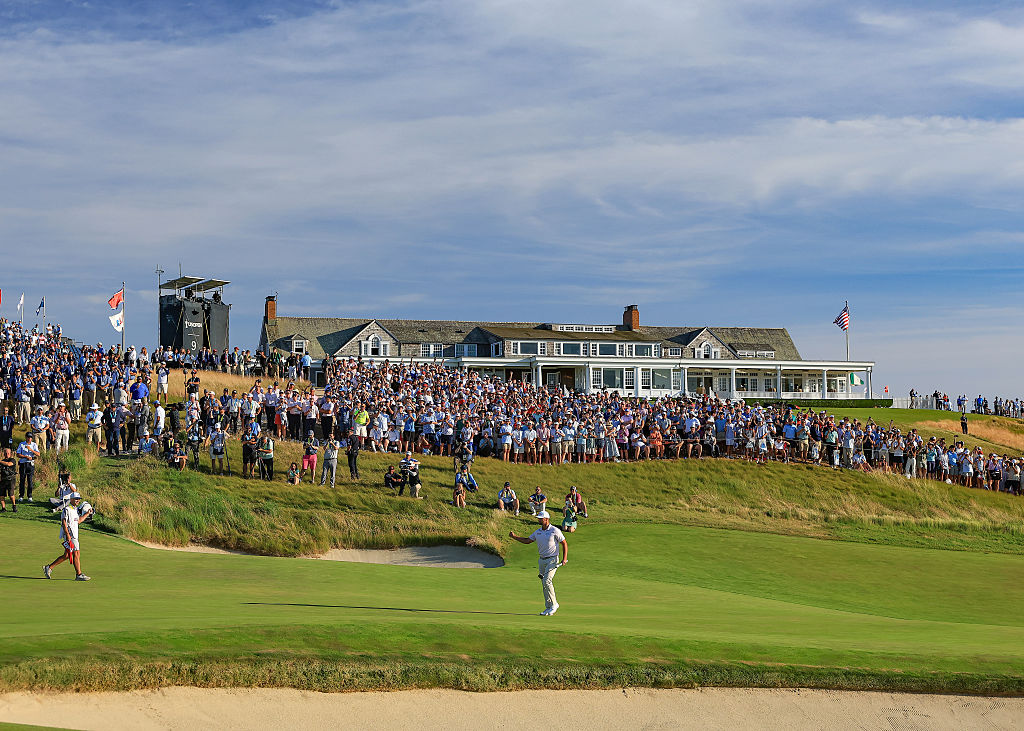
Happy U.S. Open week!
We’re coming off a successful first event ahead of today’s start – thank you to everyone who attended our breakfast hosted in partnership with Old Tom Capital.
While all eyes are on Shinnecock Hills this weekend, it’s also Father’s Day. So many of us inherited our love of the game from our dads. If you can, don’t forget to give him a call.

This and that...
Ball Rollback Plan Takes Shape, with Rare Consensus from Governing Bodies
The USGA and R&A, alongside the PGA Tour and DP World Tour, issued their first-ever joint statement on the proposed golf ball distance rollback issue. The proposed rollback will now take place as a single-date implementation in January 2030, instead of a staggered rollout to elite players in 2028 and all golfers in 2030 in the original plan. The new agreement is also the first formal acknowledgement by the PGA Tour that golf has a distance problem. Alongside a commitment to work together to find an approach that more meaningfully slows distance gains at the elite level without disrupting the broader market.
Our take: The governing bodies pulled back from a fight that they couldn’t win on multiple fronts, with equipment companies threatening litigation and Tour players largely opposed, not to mention the sitting president and his administration reportedly working backchannels to kill the initiative. The $1.4 billion golf ball market gets a cleaner runway to 2030, but language in the statement around reconsidering “alternative approaches” may point towards bifurcation – what the USGA wanted all along.
WTGL Adds Motor City Golf Club as Fourth Franchise
Motor City Golf Club is joining WTGL as its fourth team, bringing Detroit into the new women's team golf platform launching in partnership with the LPGA. The franchise is led by principals Michael Hamp, Peter Hamp, Kevin Kelleher and Lin Wang of RHC Group. Motor City joins ownership groups led by Arthur M. Blank, Alexis Ohanian, and Steve Cohen — all of whom also hold TGL franchises. WTGL's current roster includes 14 committed players, among them five of the top 11 in the world, with the inaugural season set for winter 2026-27 at the SoFi Center in Palm Beach Gardens, Fla.
Our Take: The Detroit addition is notable less for the market than last week’s New York announcement — though it's a strong one — and more for what it signals about the ownership model. Every WTGL franchise so far is paired with a TGL team, creating a cross-league ownership structure that ties investor upside to both the men's and women's platforms simultaneous, and it's going to make WTGL a harder pass for sponsors and media partners to ignore.
PING’s Agreement with Wyndham Clark Moves the Equipment Deal Needle
On the eve of the U.S. Open, PING signed 2023’s champion Wyndham Clark to a putter-only deal for its Scottsdale Tec club – the first putter-only endorsement contract in the brand’s history. Clark, who became an equipment free agent when his Titleist contract expired at the end of 2025, had been using the brand’s Scottsdale Tec Ally Blue Onset putter since earlier this season and leads the field in strokes gained putting heading to Shinnecock Hills. The deal is narrow by design: Clark continues to game TaylorMade woods, Titleist irons and wedges and a Titleist ball.
Our take: Full-bag deals are harder to justify at the prices top players command, and brands are increasingly willing to pay for category exclusivity instead. For PING, a putter-only deal with a U.S. Open champion during the major’s week is efficient marketing, and we wouldn’t be surprised to see single-category contracts become a more common tool across the market.
Golf Lost the Plot. Here’s How it Gets it Back
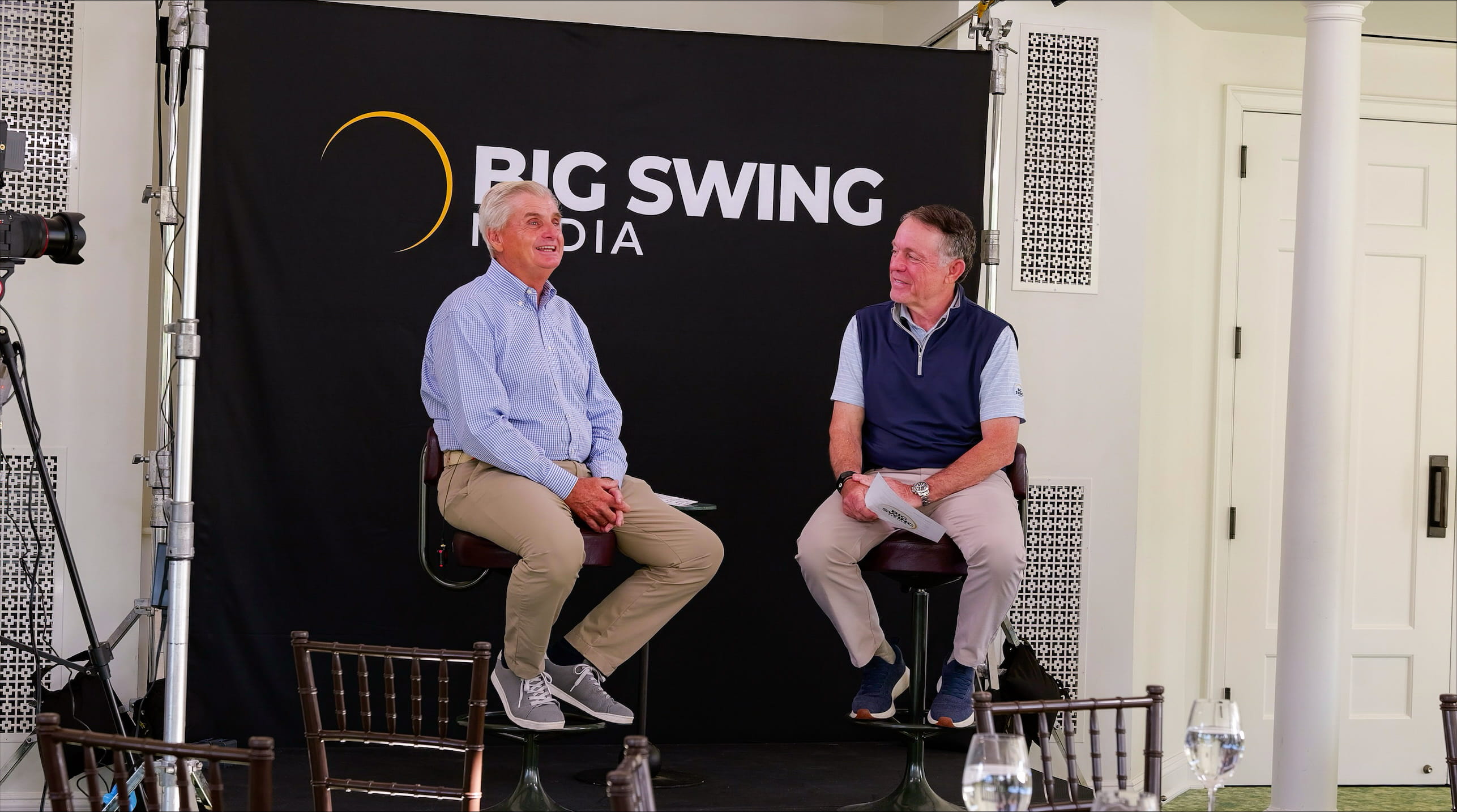
Versant's Mark Lazarus and dealmaker Jimmy Dunne don't agree on everything. On what LIV cost golf — and what the sport has to sell — they're remarkably close.
June 18, 2026
Professional golf has something most sports can’t replicate, but four years of executives arguing about money nearly buried it.
Golf is unique because so many people who watch it also play it, and that dual identity as fan and participant makes the golf consumer unlike many other sports consumers.
That was the subtext (and, at times, direct message) running through two conversations at Big Swing Media's first event this morning. In partnership with Old Tom Capital, we gathered more than 50 C-level leaders across golf, media, finance and PE near Shinnecock Hills, with an audience that included folks like president of NBC Sports Rick Cordella and broadcast talent Mike Tirico as well as former PGA of America CEO Seth Waugh.
Versant CEO Mark Lazarus and investment banker and golf power broker Jimmy Dunne sat down separately with Big Swing’s Jimmy Roberts. The pair came at it from different angles, but sketched the same problem.
Golf sells participation. The experience of being a golfer, of belonging to the game – that’s the product, and everything else flows from it, and losing sight of that core audience can damage the sport overall.
Lazarus made the case most explicitly: “The ability to connect golfers with golf is what we all want to do, right? The thing that makes golf different is that everyone can participate at a very active level and people who watch golf, most of us also play golf.”
It’s why Versant’s GolfNow service booked over 40 million tee times in 2025, why a driver endorsed by Notah Begay sold out on Golf Channel, and why sponsors continue to write checks with multiple zeros. Reaching a golf fan means reaching someone who will spend money on the game itself, including the travel, equipment, memberships and technology.
“It's a niche sport, but that niche is filled with incredible passion, incredible engagement, and people with discretionary income who want to spend both for the experience of golf, the lifestyle of golf, the travel [and] the destination,” said Lazarus.
He named the biggest challenge in nearly the same breath: get clubs in more people’s hands, make the game affordable and entertaining, and help it fit into modern life.
“The more we can put golf clubs in people's hands and make it fun, whether it's on a golf course or in an indoor facility that has amazing technology that gamifies it, I think there's a tremendous amount of opportunity,” said Lazarus. “Then we've got to give them fun content. We need the personalities of our stars to come out more too.”
Dunne didn’t frame growing the base as a business argument, but he didn’t need to. As a teenager, Dunne painted houses on Long Island, ended up at Shinnecock on a Thursday afternoon by chance, and found it to be the “greatest golf course in the world.” At 70, he still feels the same. He listed Seminole, Cypress Point, Pebble Beach and Montauk Downs. "I get really excited about coming in the parking lot," he said – the feeling Lazarus described when talking about participation.
Four Years of Turf Wars
Dunne, a former PGA Tour Policy Board member, helped broker the framework agreement with the Saudi PIF (though he has publicly expressed regret for his involvement).
The executive arrived at the PGA Tour policy board in 2023 as a true believer, convinced he could help unite the game. He was disabused of that quickly. “I was very naive,” he said. “I thought of the game of golf as this precious, valuable relationship-building wonderful thing, and that was wrong. That to them is their business. When you get in those rooms, everybody is worried about their turf."
Dunne was careful to say that the PGA Tour has every right to protect its interests, but between all the involved parties, four years of institutional self-interest, played out publicly, made the game feel like a negotiation.
Lazarus said it plainly: LIV was "a giant distraction" that turned every conversation toward money. "The game became all about money. I don't think the general population really wanted to hear athletes and business people who are all doing quite well talk about how much more money they can make or should be making."
“I don't like – as Mark pointed out – all this discussion about money,” said Dunne. “And if you are going to spend all that kind of money, why don't you put it in the Tour?”
For Dunne, the concern was the relationship between MbS [Crown Prince Mohammed bin Salman Al Saud], and Yasir Al-Rumayyan [governor of the PIF], and the possibility that Riyadh could sustain a disruptive presence outside the Tour long enough to do lasting damage. The liquidity problems came faster than anyone anticipated.
"I never imagined they could go through so much money and create such a stressful liquidity situation for them as quickly as it occurred,” said Dunne. “That surprised me, how quickly that came apart."
The Next Test
Now, the game faces a different kind of pressure. Earlier this week, we explored how the NFL reopening its media rights deal (with ambitions to roughly double its current $12 billion annually) could affect golf’s slice of the $30 billion sports media pie.
We were pleased to hear Lazarus speak directly to the speculation: companies will rebalance their portfolios, and golf will be in that conversation.
Brian Rolapp, who came from the NFL and now runs the PGA Tour, will be looking for more value from media partners. Lazarus said the Tour has to earn it. "The first thing they have to do is prove that they're creating more value," he said. Sponsors are already under pressure — a CEO signing off on $20 to $30 million for a single tournament week faces scrutiny from boards and shareholders.
Golf's argument in that environment runs directly through what Lazarus identified as the game's core asset. The audience participates, spends, and travels. The case to a network, sponsor, or rights negotiator isn’t built on raw ratings — golf isn't going to win that fight against the NFL — but instead on the depth of engagement of the people watching.
Lazarus wants the Tour's stars closing the distance between player and gallery — interacting with fans and building name brands. He told a Rusty Wallace story: the NASCAR driver who once said shaking one hand makes five fans, because they tell their friends. Golf already has the physical proximity built in, Lazarus noted. "The professional golfer is closer to their fans than any other athlete," Lazarus said.
Dunne, who watches “all” golf (but not LIV), said the real franchises are the events. People will turn on for Pebble Beach and for the majors. Stars matter, but "they're fairly fungible right now," he said — no dominant Tiger or peak Mickelson. What's durable is the attachment to the places and the occasions, like Shinnecock and Augusta, and the moment on the first tee.
That attachment is built by the people who play the game, and always has been.

One last thing... Jimmy Roberts
The Hamptons.
That’s a term you’re going to hear a lot this week. It refers to what is basically a sandbar between the Atlantic Ocean and the Peconic Bay that stretches for about 30 miles on the eastern most edge of Long Island.
I’ve been going out there pretty much all my life … and I honestly believe it’s the most beautiful place on earth, but it’s not QUITE that simple. As they say: if you know … you know.
The place is complicated: to start with, at the same time, it’s both an escape … AND … the very thing people are trying to escape FROM!
Between Memorial Day and Labor Day … Grand Central by the sea.There was a time the east end, as NYers call it … was something of a quaint and diverse social quilt. But once craggy old whaling towns like Sag Harbor and Montauk are now virtually indistinguishable from places like Southampton … where Jackie Kennedy summered and the people who owned the whaling fleets lived.
These days, the Hamptons is a social Petrie dish; abject wealth … the people who come to rub up against it … and oh yeah, in the midst of it, an Indian reservation that predates the entire carnival.For some, bringing your family here in the summer gives an entirely new meaning to being a “helicopter parent.”It’s odd that was once miles of potato fields … and the place where struggling artists came … because it was beautiful and they could afford it … is now a place of $100 chicken tenders, velvet-roped clubs, and people driving BMW convertibles who have car envy because the guy who just pulled up in front of him at the marina has a Ferrari.
And not unlike a lot of other places, it’s a civil war battleground between the visitors and the locals … who, by the way, were mostly once visitors themselves … until they bought their own places and then instantly wanted to pull up the ladder.
And there is of course … the single biggest topic of conversation all summer long: traffic … from the parking lot that is the Long Island Expressway … to the constipated automotive lurch that is the Hampton’s main artery: Montauk highway.
But despite all that, there are quiet pockets of tranquillity like Amagansett and Ditch Plains that make you understand why people came out here in the first place.And oh … the golf courses!At its core, this place remains a breathtaking piece of the earth - Magnetic in nature.
But it’s worth remembering that magnets do two things, don’t they? They attract … and they also repel. That’s the Hamptons.
Past Briefs
.jpg)
Become a member
*Available for a limited time only, subscribe to our twice-weekly newsletter for a discounted rate of $150 for your first year. Subscription renews at annual rate of $175 at the end of the first year.
Purchase Disclosure
By completing your purchase, you agree to enroll in an annual subscription to The Big Swing – Inside the New Golf Economy at the current rate of $150 for the first year (founding member offer). Your subscription will automatically renew annually at $175/year unless canceled prior to the renewal date.
You may cancel at any time through your account settings or by contacting customer support. All sales are final and non-refundable except where required by law.
Offer valid for a limited time and may not be combined with other promotions. Limit one per customer.
By subscribing, you agree to our Terms of Service and Subscription Terms.