
July 20, 2026
The Big Swing: Inside the new golf economy
Between the star-studded Fanatics Fest at the Javits Center and the World Cup final at MetLife Stadium (no, we will not call it the New York New Jersey Stadium), much of the sports world converged on the two states this weekend as the Open finished in England.
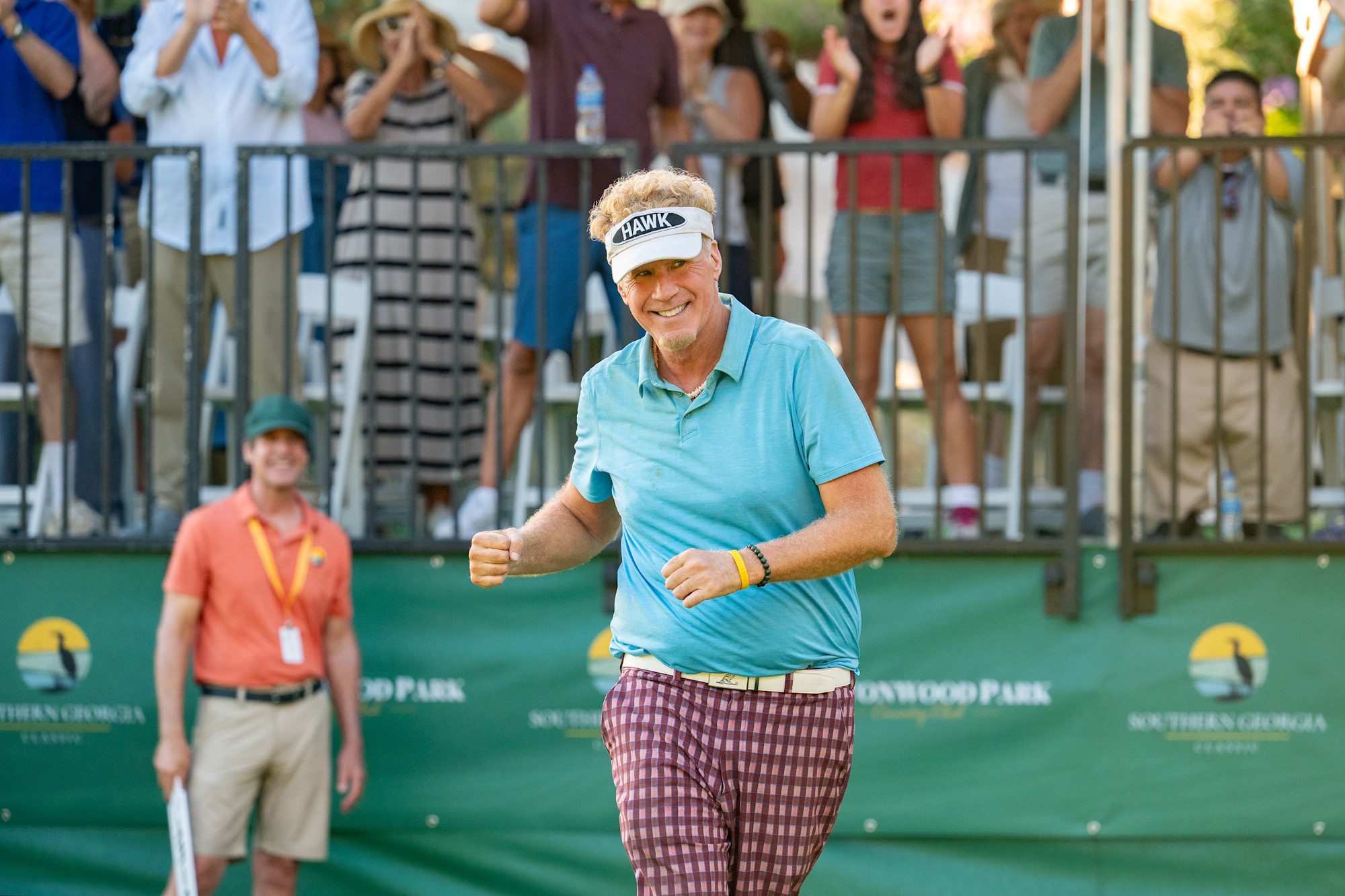
Will Ferrell has been busy with a press blitz for his new golf series “The Hawk,” and could be seen at Sunday’s soccer final wearing a visor promoting the show. The Netflix show is the latest example of golf’s collision with popular culture, something we dive into this week.
Have a great Monday!

This and that...
Two very different buyers bet on golf courses
The Walden Group closed on three Phoenix-area courses earlier this month — Dove Valley Ranch, Power Ranch and Longbow Golf Club for a combined $57 million. The New Jersey-based investment firm is keeping existing operator Thompson Golf Management on to operate all three as part of a multi-year agreement. Last week, Kygo’s lifestyle brand Palm Tree Crew partnered with Major Food Group and 8K Capital to buy River Valley Ranch, a 187-acre course near Aspen previously listed at $24.5 million, with terms undisclosed.
Our take: Walden is running a classic private equity roll-up playbook, keeping the existing operator in place while installing new ownership and debt-financed scale. On the other hand, Palm Tree Crew is buying a single trophy property to build a vertically integrated lifestyle brand around it. We’ll be watching which model outperforms as more capital chases golf real estate.
The R&A’s cash engine keeps humming with Ryan Fox’s Open win
New Zealand's Ryan Fox holed a 12-foot birdie on the 72nd hole at Royal Birkdale to win his first major, beating Cameron Young by a shot and taking home $3.2 million from a record $17.75 million purse. The Open alone generates roughly 80% of the R&A's £156 million in annual income across ticketing, hospitality, sponsorship, broadcasting and retail — the money that funds the governing body's grassroots programs, municipal course investment and access initiatives the rest of the year.
Our Take: The Open's business model is a reminder that a major's value isn't only the broadcast rights fee, but it also can bankroll an entire governing body's non-commercial mission for twelve months.
Golf’s Main Character Moment
Tiger built golf’s last boom by himself. The sport’s current convergence with pop culture is led by LeBron, Kevin Hart, Will Ferrell and a generation that doesn’t see the sport as exclusionary.
July 20, 2026
LeBron James is spending a chunk of his summer free agency on the fairway. Retired WNBA Diana Taurasi films her sports-talk-and-golf show from courses. Actor Kevin Hart went on Instagram this month to declare that “golf is life and life is golf” and he’s “got the bug real bad.”
None of these people are historically “golf people,” but in today’s world, where golf and popular culture have collided despite the absence of a singular superstar, does it really matter?
Will Ferrell’s Netflix golf comedy “The Hawk” premiered last week on the streaming service to a divided reception from critics (30% on review-aggregation website Rotten Tomatoes), but audiences didn’t get the critical memo. The show, which marks Ferrell’s first-ever scripted series regular role, debuted at No. 1 on Netflix in the U.S., Canada, Australia and Iceland and landed in the top three in several more markets, with a 70% Rotten Tomatoes audience score to match.
"You're seeing golf's popularity rising across every metric — consumption, participation, equipment sales, travel for golf, apparel — despite there not being a singular superstar," said Chad Mumm, an executive producer on Netflix's “Full Swing” and “Happy Gilmore 2,” and co-founder of golf media company Pro Shop, who's been watching the shift up close for the better part of a decade. “That convergence I'd say has happened. I think golf really is at this intersection with pop culture, and it's hard to see how it would slow down.”
No Tiger Required
Golf’s popularity has cycled before, but for most of the last century those surges could be tied to an athlete who transcended the sport itself — Bobby Jones, then Arnold Palmer and Jack Nicklaus, then Tiger Woods, whose gravity reshaped the sport’s economics for two decades.
While there’s no Tiger-scale figure carrying the sport (though the popularity of figures like Rory McIlroy, Scottie Scheffler and Bryson DeChambeau is nothing to scoff at), the numbers are moving anyway: rounds played hit an all-time U.S. high last year for the fourth time in five years, the golf equipment market is growing nearly 6% annually, and even municipal golf — long the sport’s least glamorous corner — has expanded 7% since 2006, even as overall course supply has shrunk. Something structural is happening, not just a star-driven spike.
When Mumm and his partners were raising money in 2023 around the idea that golf and mainstream culture were converging, Mumm's stated prediction was that the sport's long-standing stigma — that it's exclusionary, elitist, "for rich people" — would meaningfully dissipate by 2030. "That has fallen away way quicker than I even expected," he said.
Mumm credits social media as a major driver of the golf and pop culture convergence, and not just from golfers.
"If you're a 20-something and all your favorite athletes, the second their sports season ends, the next thing you see on their Instagram page is them playing golf and looking cool — that changes the popularity of the sport in a way that looks very different from how it's grown in the past," Mumm said. The effect builds on itself: once a critical mass of culturally relevant people signal that golf is cool, more follow. "It's opened the door — if you're a musician or an actor or an athlete, it's cool to talk about loving golf. It's cool to get obsessed and put on outfits and go on trips and travel, and I think that will lead to other athletes and superstars and other influential people from around the world jumping [on] the bandwagon."
Why Golf Makes Good TV
Scripted and unscripted golf content is the visible layer on top of that shift, and “Full Swing” (the Netflix docuseries built in the F1 “Drive to Survive” mold) is generally treated as the genre’s proof of concept. Golf, it turns out, is unusually well-suited to the format: an individual sport where, as Mumm put it, “the stakes felt much more personal than you’d see in a team sport,” populated by athletes who are, for structural reasons, unusually comfortable in front of an audience. Tour pros do CEO outings, play pro-ams with business leaders and spend real time each week with sponsors, clients and press — “a bit of a different exposure,” as Mumm put it, than most professional athletes get.
The tour format helps too: the same cast travels together every week, generating relationship arcs a producer would otherwise have to engineer. Because scoring is entirely self-contained, there’s no coach or teammate to blame. “There’s no place to run and hide, and it’s all on the individual,” Mumm said. That premise extended into other formats: “Happy Gilmore 2” kept its golf grounded underneath the absurdity, and “The Hawk” applies the same authenticity mandate to a show set on the PGA Tour and Korn Ferry Tour (while taking the opportunity to poke fun at LIV, with Ferrell’s character claiming the league isn’t “real golf”).
Turning Culture Into Cash
The commercial picture is still murkier than the cultural one, with Mumm describing it as “still early innings,” to borrow an analogy from baseball. Equipment and retail have benefited most visibly — look at Titleist parent Acushnet's first quarter sales growth ($753 million, up 7.1% year-over-year), driven by product launches across the Titleist, FootJoy and KJUS brands, alongside strength at Dick's Sporting Goods’ Golf Galaxy and PGA Tour Superstore.
The Tour itself is seeing rising engagement from the wider wave of interest, with “a lot of the action” sitting with media, including influencers, YouTube golf channels and companies playing in that space, as new audiences look for ways to go deeper into the sport.
Brands are finding new ways to play in the golf culture space as well, including first-time entrants. Alongside the premiere of “The Hawk,” Netflix partnered with Mike’s Hard Lemonade and Genesis for a pair of campaigns. Both are described as first-of-their-kind partnerships built with Ferrell's creative team rather than bolted on after the fact, evidence that scripted golf content is becoming its own ad-sales category, not just a distribution play for the sport underneath it.
“What I love about these two partnerships is how both brands used the opportunity as permission to take a swing at something new. For Genesis that was comedy, and for Mike's Hard Lemonade that was a bold step into golf,” said Magno Herran, vice president of global brand marketing and partnerships at Netflix.
Fad or Forever?
The obvious risk in any of this is overexposure — that comedy and drama treatments of golf eventually curdle into noise. The reception to “The Hawk” is arguably a preview of that ceiling: critics have already decided the format is repeating itself. But the audience reception suggests the wager isn't really about whether any one show is good, but rather about whether golf has become a lifestyle rather than fandom. Fandom is trend-driven and fragile, prone to collapsing if a star fades or a show underwhelms. Lifestyle becomes identity, and identity tends to be durable — the way "wellness" has stayed a defining consumer category even as individual brands within it rotate in and out of fashion — like Lululemon giving ground to Alo and Vuori. "People aren't just planning their trips around golf now," Mumm said. "They're planning their outfits around golf, how they work out around golf — they're making it a lifestyle."
Whether that holds is the multibillion-dollar question for every brand, broadcaster and private equity firm now circling the sport. Critics can keep arguing about the jokes, but audiences already made “The Hawk” a hit, and that’s what the people writing the checks are watching.
“The future of golf now looks a lot more demographically like the demographics of our country,” said Mumm. “The stakes of picking up a club and taking a swing have never been lower for people, and that is causing this really big consumer wave to come into the game.”

One last thing... Jimmy Roberts
Athletes as Heroes? My perspective
Maybe we’re just lazy or bad at the way we use our words, but I have a problem with some of the language we use describing sports. For instance: it’s not unusual at all to hear people call a sporting decision brave or courageous.
To quote Larry David:
“Eh.”
Are bravery and courage really about throwing a fastball when the hitter is - as they say - “sitting dead red” simply expecting it
Or a golfer maybe going for a tucked pin?
But what might be worse is calling athletes heroes. I’ve always thought we should reserve that term for people like soldiers or first responders. Those people risk their lives! Again, could be our linguistic laziness … which has always been a pet peeve of mine, but what got me heading down this rabbit hole was the calendar.
On July 21st 2013, Phil Mickelson shot a final round 66 at Muirfield and won the Open championship. He had come from five back and the win earned him the third leg of the career grand slam.
So 13 years ago today Mickelson was the toast of golf … not that many years later … he would seem to simply be … just toast.
There are a lot of people dancing on his grave. Not me. That’s not the point here. The point is that hero worship - even if the language we choose to use is a little off … is a dangerous thing.
It’s all well and good to admire what talented people accomplish, but when we somehow assign idolatry to the accomplishment we are headed down a dangerous path.
Do I really need to run through a laundry list of “heroes” who slipped on their capes? We could be here a long time.
What’s the point? We’re all imperfect, so it’d probably be a good idea to not confuse what people accomplish with who they are.
Our language isn’t always terribly precise, which makes me a little nuts …but sometimes, neither is our thinking.
Past Briefs

Become a member
*Available for a limited time only, subscribe to our twice-weekly newsletter for a discounted rate of $150 for your first year. Subscription renews at annual rate of $175 at the end of the first year.
Purchase Disclosure
By completing your purchase, you agree to enroll in an annual subscription to The Big Swing – Inside the New Golf Economy at the current rate of $150 for the first year (founding member offer). Your subscription will automatically renew annually at $175/year unless canceled prior to the renewal date.
You may cancel at any time through your account settings or by contacting customer support. All sales are final and non-refundable except where required by law.
Offer valid for a limited time and may not be combined with other promotions. Limit one per customer.
By subscribing, you agree to our Terms of Service and Subscription Terms.