
June 15, 2026
The Big Swing: Inside the new golf economy
Mollie Cahillane checking in here. I’ve been pretty lucky when it comes to championships, living in Chicago for Blackhawks and Cubs trophies, and inside Barclays Center in 2024 when the NY Liberty earned its first WNBA title in franchise history. But nothing – and I mean nothing – has come close to unified the feeling in New York City this weekend.
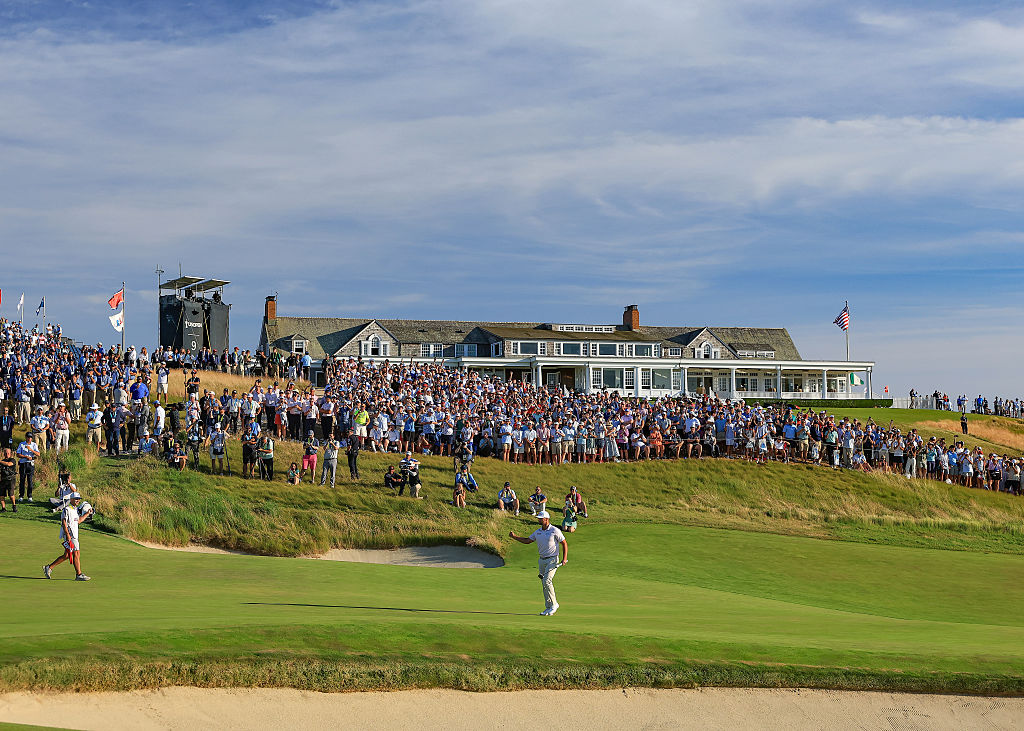
Speaking of New York, we’re ready for the U.S. Open coming to our neck of the woods this week. We’re also paying close attention to conversations around the PGA Tour’s media rights, which are particularly intriguing to me given my years as a media reporter and business journalist. This week, we take a deep dive into what the Tour is looking for, and how massive properties like the NFL and NBA could impact negotiations.

This and that...
LIV Funding Crisis Continues as PIF Withholds $400M
A bombshell report from the Financial Times has exposed the exact cash crunch threatening the remainder of LIV’s 2026 season. Out of the $600 million committed by Saudi Arabia’s Public Investment Fund before the group divests at the end of the year, the PIF has delivered just short of $200 million across May and June, and are actively withholding the remaining $400 million. Next month’s event in the UK and New Jersey are expected to proceed, the final two events in Indiana and Michigan are officially on the fence.
Our take: LIV’s safety net is entirely gone, with the league facing a literal race against time during its current summer gap to secure corporate or private equity capital, or risk structural collapse before the 2026 trophy can even be lifted. We’re keeping a close eye on possible ramifications for sponsors, brands and players as the situation continues to unfold.
NBC Sports Locks in 31 Live Broadcast Hours for Shinnecock
NBC Sports is set to air 31 live hours of coverage from the 126th U.S. Open Championship at Shinnecock Hills, starting on Thursday. The live coverage windows are distributed across USA Network, NBC, and NBCSN.
- Thursday, June 18: 6:30 a.m. – 5:00 p.m. (USA Network); 5:00 p.m. – 8:00 p.m. (NBCSN/Peacock)
- Friday, June 19: 6:30 a.m. – 1:30 p.m. (USA Network/NBCSN); 1:30 p.m. – 7:30 p.m. (NBC/Peacock)
- Saturday, June 20: 10:00 a.m. – Noon (USA Network); Noon – 8:00 p.m. (NBC/Peacock)
- Sunday, June 21: 9:00 a.m. – Noon (USA Network); Noon – 7:00 p.m. (NBC/Peacock)
Peacock will handle all-day “All Access” digital streaming and standalone, and there will be continuous featured groups coverage via Peacock, USOpen.com and the USGA App. Dan Hicks returns to anchor his 27th U.S. Open (and his 22nd as lead play-by-play announcer), flanked in the booth by analysts Kevin Kisner and Brad Faxon, with Jim “Bones” Mackay serving as the lead on-course reporter.
Our take: “I think that Shinnecock Hills is arguably the finest U.S. Open venue there is on the rotation,” Mackay said during an NBC Sports media call, as all of the company’s talent expressed enthusiasm for the event and location. This broadcast schedule represents the tail-end of NBC Sports’ current USGA contract before the newly signed extension with Versant kicks off in 2027. With heavily packed weekend afternoon windows on the flagship broadcast network and supplemented by Peacock, the company is likely aiming to demonstrate to corporate advertisers that legacy golf majors retain a unique ability to capture large live, linear impressions.
Big Swing Media, Old Tom Capital at the U.S. Open
We’ve partnered with the folks at Old Tom Capital for an intimate breakfast in the Hamptons on Wednesday. Big Swing co-founder and chief operating officer Jimmy Roberts will interview Mark Lazarus, CEO of Versant, and Jimmy Dunne, investment banker and golf power broker, from the stage. C-level leaders from across golf, media, finance and PE will attend, and the conversations will focus on golf’s continued rapid growth as an asset class for global investors, and how the changing media and global landscape is driving the industry’s future. The event will be the focus of The Big Swing with Jimmy Roberts’ June 23 episode, with supplemental full coverage right here in our newsletter.
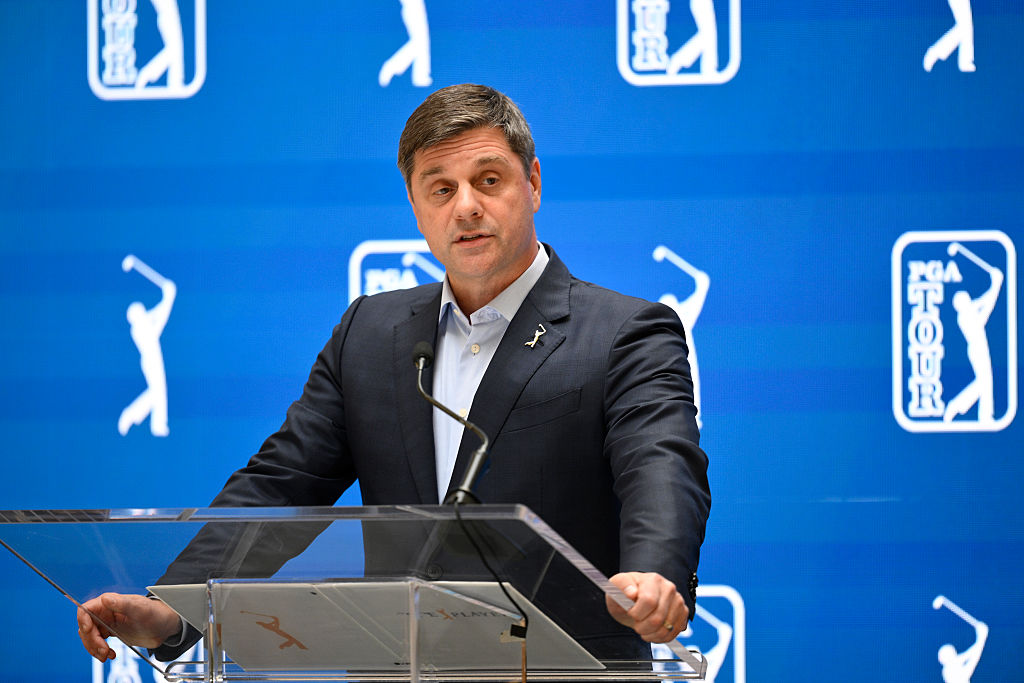
The $12 Billion Shadow: Why the NFL's Media Squeeze Has the PGA Tour Racing the Clock
With the NFL seeking a 50-60% rights increase from CBS alone, Brian Rolapp is betting the Tour's biggest restructuring in decades on getting to market first
June 15, 2026
For PGA Tour CEO Brian Rolapp, the leaderboards might not be the most important figures this month.
Later this month, the PGA Tour's policy board votes on the most significant competitive overhaul in the Tour's modern history — a hard two-tier system with promotion and relegation, an expanded slate of elevated events, and the kind of structural change that would have been unthinkable under his predecessor.
Rolapp has been publicly candid about why the timing matters. In addition to changing the scope of competition, the restructuring is largely about value — specifically, about what the Tour's media rights are worth heading into a negotiation window that's closing faster than most people in golf expected.
The Math of the Monopoly
"The media market is interesting right now for sports. It’s been on a 20-to-30-year run, and I still believe in it—it’s the strongest content out there,” said Rolapp earlier this year on CNBC’s “Squawk Box.” “But because of the changes in media, the pressures on the media business, consolidation, and ultimately because my old employer, the NFL, is going to go out and do a new deal, there is a little bit of uncertainty on the future of sports rights."
The numbers Rolapp has been citing since earlier this year are stark. The total U.S. sports media rights market sits at roughly $30 billion annually, growing only 1-2% a year. The NFL alone accounts for approximately $12 billion of that — and the league has said publicly it wants to roughly double its take in its next negotiating cycle.
"If that's true, that just doesn't leave a lot of money out for everybody else," Rolapp said.
That's no longer theoretical. The NFL has reportedly begun negotiations with Paramount Skydance over CBS's NFL package, with talks centered on a 50-60% increase that would push CBS's annual payment from roughly $2.1 billion to north of $3 billion. The trigger: Skydance's acquisition of Paramount activated a change-of-control clause in the NFL's existing media deal, giving the league an opening to renegotiate years ahead of its scheduled 2029–30 opt-outs. Fox is reportedly next in line, even without a similar contractual trigger.
The ripple effects are exactly what Rolapp has been warning about. NFL games accounted for 83 of the 100 most-watched U.S. telecasts in 2025. Olek Loewenstein, Univision's global president of sports, told Sports Business Journal that “every single non-premium right in the U.S. is going to struggle” as the NFL's renegotiated numbers ripple through network budgets. That creates a dynamic that puts even strong, growing properties like the PGA Tour in a tougher negotiating position than they'd otherwise be in.
The networks aren't waiting passively. Fox struck a new deal this month to bring an expanded NFL package, including Thursday Night Football, NFC playoff games, and the Super Bowl, to audiences in Mexico across its linear, streaming, and Tubi platforms. The deal is part of a broader pattern of deal-making between the NFL and U.S. media outlets as anxieties grow about the next slate of media rights the league will seek. Fox's math is straightforward: deepen the relationship and the footprint now before the renegotiation reshapes the price of admission.
The NFL's leverage also got an additional boost from an unexpected source: the NBA. The league’s relatively new 11-year, $76 billion media deal — a 164% increase over its previous contract — set a shockingly high new price point when it kicked in this past season.
By some measures, NBC and Amazon now pay the NBA more annually than they pay the NFL, despite the NFL drawing significantly larger audiences. Puck's Matthew Belloni has projected the NFL could seek as much as $16 billion annually in its next cycle (roughly $6 billion above its current take) with the league targeting September 2026 to finalize new agreements.
The Counter-Move: Get There First
The PGA Tour's current nine-year media rights deals with CBS, NBC, and ESPN run through 2030, but Rolapp has signaled a willingness to negotiate extensions far earlier than that, "perhaps over the next year or two," to lock in value before the NFL's renegotiated deals reset the market's expectations across the board. Financial terms were not released, but the package was believed to be worth significantly more than the prior $400 million annual rights fee.
Other major deals also don’t have public price tags, but have similar lengths and reported valuations.
- The USGA/U.S. Open, U.S. Women’s Open and U.S. Senior Open’s new deal through 2032 was announced in August 2025, when NBC extended its U.S. Open media-rights deal through 2032, reportedly valued around $95 million annually (close to the $93 million the USGA had been receiving under its prior 12-year, $1.1 billion deal).
- The PGA of America/PGA Championship has an 11-year deal running through 2030 with CBS/ESPN.
- The R&A/The Open Championship’s U.S. rights are with NBC in a 12-year deal through 2028, with a reported annual value of $50 million.
Maybe it’s the media reporter in me, but that’s what I’ll be paying the most attention to during this month's restructuring vote. The two-tier system, with its expanded Track 1 slate, promotion and relegation, and a fundamentally different in-season product, exists in large part to give the Tour something more valuable to sell.
Rolapp has framed it explicitly, saying the changes are designed in part to create urgency and improve the Tour's value heading into media negotiations, particularly given how his predecessor's handling of the LIV framework agreement left both players and broadcast partners blindsided in 2023.
The Tour has other cards to play, too. More than 65% of all advertising on PGA Tour broadcasts is purchased by the Tour's own title sponsors — FedEx, RBC, Wells Fargo, and others — making the Tour a lower-risk partner for CBS and NBC than leagues dependent entirely on open-market ad sales. Expanded streaming arrangements across ESPN+, Netflix's "Full Swing," and international deals with Warner Bros. Discovery add additional leverage. And new revenue streams like PGA Tour Live Betcast, PGA Tour Pass, and the Fan Forward initiative give the Tour a growing pile of chips that exist outside the traditional rights conversation entirely.
Complicating Factors
If the NFL gets anywhere close to doubling its $12 billion annual take, the math for everyone else gets brutal fast. The "remaining" capital across the NBA, MLB, NHL, and the PGA Tour could shrink from roughly $18 billion to as little as $5 billion, by Rolapp's own framing.
That's the shadow chasing Rolapp and the Tour. The restructuring matters to players and fans, but the real audience is the networks. The Tour’s current deals run through 2030, meaning whatever Rolapp negotiates next will be priced against a market the NFL has already reshaped.
Additionally, rising rights fees won’t stay within the networks. Title sponsorship typically runs 110-120% of an event’s purse, and the Tour’s 2022 media deal already jumped roughly 70% to more than $700 million annually. AT&T now pays north of $25 million a year for Pebble Beach, and Rocket Companies just ended its 13-year, $150 million partnership instead of absorbing the new Track 1 price tag.
That new two-tier product with bigger fields, marquee markets and a built-in narrative of stakes is designed to be worth more to a broadcaster than the Tour’s current format, but whether it’s enough to outrun a $16 billion NFL is the question Rolapp is racing to answer.

One last thing... Jimmy Roberts
Can you imagine where the puck might be going? I don't know that I can. But in this new explosive golf economy where participation is up and trending up, I can only imagine that what might be around the corner is something I actually can imagine.
When I think about how quickly technology and trends move, I always think about my father. He passed away in 2007. That was the year that Apple introduced the first iPhone. My dad would have thought I was an idiot for thinking that you could, A, change the temperature in your dining room, B, check a camera in your backyard, and C, get a reading on how much gas was left in your car—all of it while lying in a hotel bed in, say, Jakarta.
Think for a minute about how our lives have changed because of that development: the smartphone. Why should we think that golf isn't subject to the same type of cultural momentum? It's already happening.
One thing to think about though—where the puck is going, well, the puck glides on ice. Ice is slippery. So, when you're chasing it, you've got to be really careful or you just might end up on your ass and crashing into the boards.
Past Briefs

.jpg)
Become a member
*Available for a limited time only, subscribe to our twice-weekly newsletter for a discounted rate of $150 for your first year. Subscription renews at annual rate of $175 at the end of the first year.
Purchase Disclosure
By completing your purchase, you agree to enroll in an annual subscription to The Big Swing – Inside the New Golf Economy at the current rate of $150 for the first year (founding member offer). Your subscription will automatically renew annually at $175/year unless canceled prior to the renewal date.
You may cancel at any time through your account settings or by contacting customer support. All sales are final and non-refundable except where required by law.
Offer valid for a limited time and may not be combined with other promotions. Limit one per customer.
By subscribing, you agree to our Terms of Service and Subscription Terms.