
September 14, 2026

The Big Swing: Inside the new golf economy
Soak it all in Anna Nordqvist. The Team Europe captain who announced her retirement from golf ahead of the FM Championship a few weeks ago steps away from the game by hoisting the Solheim Cup as Team Europe defeated the U.S. Team 15-13 at Bernardus Golf in the Netherlands.
With the score tied 8-8 heading into Sunday singles, Team Europe won six of the first eight matches to take a significant advantage. Carlota Ciganda’s 4&2 win against Jennier Kupcho in the 11th match ultimately clinched it for the hosts.
History was on Team Europe’s side heading into Sunday as each of the prior six occasions that the Solheim Cup entered the final day tied, the cup was won or retained by the team playing on home soil.
The win extends recent European golf dominance after wins at the 2025 Ryder Cup and 2026 Walker Cup.

This and that...
TMRW Sports new funding doubles value to $1 billion: report
TMRW Sports, the parent company behind TGL, is finalizing a new funding round that will value the business at north of $1 billion, according to a report from Front Office Sports. Founded in 2022 by Tiger Woods, Rory McIlroy and former Golf Channel president Mike McCarley, TMRW Sports was reportedly valued at $650 million in a funding round in 2025. According to FOS sources, conversations between TMRW Sports and new investors have been taking place since at least around the 2026 FIFA World Cup Final in mid-July. Multiple sources also confirmed to FOS that Dynasty Equity, which co-led TMRW’s Series A in 2024, will participate in the new funding.
Our take: Despite having nearly flat viewership between its inaugural and sophomore seasons averaging 488,000 viewers per broadcast across ESPN platforms, the future looks bright for TMRW Sports, albeit outside of golf. TMRW Sports, which is also behind the upcoming WTGL launching in November, announced a partnership with the NFL in March to develop and operate a professional flag football league for women and men. A launch timeline for the new league is expected to align with the run-up to the 2028 L.A. Olympics, where the non-contact version of American football will make its Olympic debut.
Taco Bell announces inaugural Live Más Open
Taco Bell is expanding its reach in golf by announcing the inaugural Live Más Open. Hosted by Kevin Hart, the 36-player tournament unites celebrities, athletes, creators and qualifying fans for an unique competition at The Ranch in Laguna Beach, Calif., in November. From Sept. 10-27, fans can enter the Live Más Open Qualifier by playing the Shot Shuffle game at participating Topgolf venues or through a free online method of entry. One hundred candidates will be randomly selected to receive a one-month Topgolf Platinum Club Membership and an invitation to submit a player bio and video. Taco Bell will then evaluate the submissions and select nine fans to join the field at The Ranch. The winning team will receive a championship trophy, purple jackets and the opportunity to play a part in a menu item comeback to Taco Bell menus at participating locations nationwide for a limited time in 2027.
Our take: To outsiders, this may seem like a random collection of brands and celebrities, but to us, it’s very on brand for Taco Bell, Topgolf and the golf industry lately. Brands like Taco Bell, 7-Eleven, DraftKings and Chipotle have released golf collections, apparel and accessories to capitalize on the game’s mainstream popularity while Topgolf thrives on serving as an entry point for golf novices. With golf’s overall reach extending to an estimated 136 million Americans age 5+ in 2025, it’s no surprise everyone wants to get into the game. For Taco Bell, it’s an extension of a previous investment in golf, highlighted by last year’s Taco Bell x Bad Birdie Invitational that not only featured limited merchandise, but also opportunities for junior golfers.
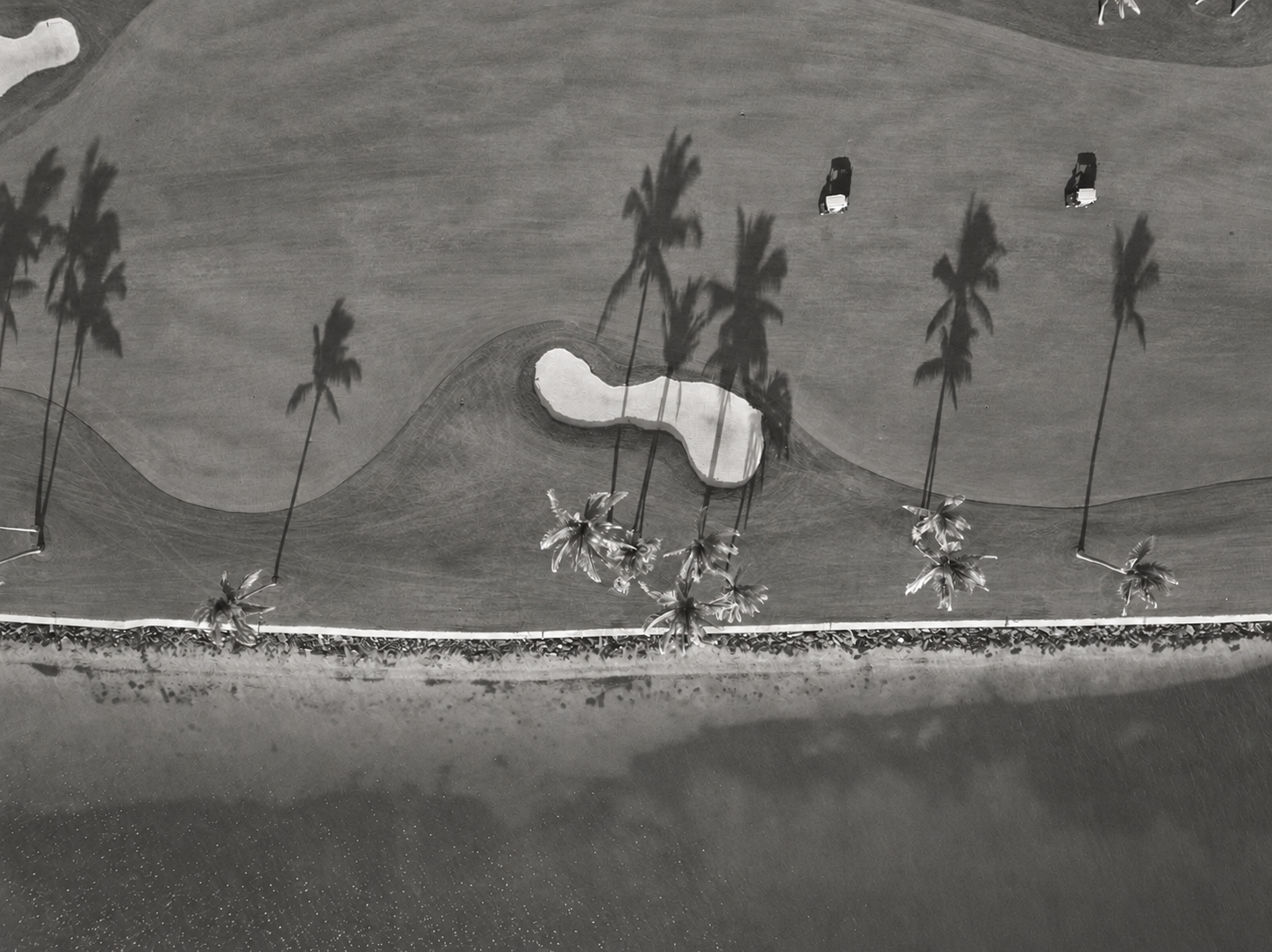
The Economics of The Golf Ball Rollback
The golf ball rollback looks like an equipment regulation. It is really a renegotiation of who pays for distance, one that could reprice land, legacy investment and adaptation businesses across the golf economy well before any new testing standard is finalized.
September 14, 2026
Matthew Erley & Evan Roosevelt | Old Tom Capital
Golf’s distance gains over the past three decades have imposed costs across several different parts of the industry. Manufacturers spent on research, tooling, tour validation and, increasingly, their own production capacity to keep producing a ball that traveled farther.Courses spent on land, tee construction and renovation to remain championship-relevant as that distance grew. Architects and contractors were paid to help courses adapt regardless of which of those dynamics was in motion. None of that spending has ever been booked as a single cost, which is exactly why it rarely comes up in the same conversation.
The golf ball rollback relocates that cost, and the relocation is still being negotiated: manufacturers argue a mandated redesign carries tens of millions of dollars in cost with no clear commercial return, while governing bodies and tournament organizers each maintain their own view of who should fund the adjustment. The useful question for capital is not simply who pays for the rollback. It is what happens to the assets that were built around the old distribution of that cost once the bill starts to move. Some of those assets become more valuable without any new capital being deployed. Others, built specifically to defend the standard now under review, become more exposed than they have been in decades.
Legacy Investment, Newly Exposed
The most visible cost sits inside a single, highly concentrated product line. Acushnet Holdings, Titleist's parent, generated $821.0 million in golf ball revenue in 2025, roughly 32 percent of its $2.56 billion in total net sales. Topgolf Callaway Brands reported $322.2 million in ball sales against $2.06 billion in total sales from continuing operations, about 16 percent.
Those figures are usually read as a cost line. They are more useful to read as a measure of accumulated investment in a specific performance standard. Acushnet's own research and development spending, disclosed in its fourth-quarter earnings release, reached $76.5 million in 2025, up from $67.8 million the year before, on top of decades of tour validation and manufacturing infrastructure, all built to support a premium tour ball retailing at $50 to $60 a dozen, whose real function is to serve as the credibility anchor for everything else a manufacturer sells, from irons to apparel, under the claim that it is "the ball the pros play." That installed base has functioned as a moat for as long as the underlying standard held still. A change to the standard does not erase the moat, but it does mean the companies with the most capital and brand equity built around the current standard also carry the most exposure to its revision. Incumbency built around the exact characteristic being regulated can turn from advantage to liability faster than incumbency built around anything else.
The contrast sits one tier down in the same product category. Kirkland Signature's contract-manufactured ball, sold exclusively through Costco, has captured an estimated 3 to 5 percent of U.S. golf ball unit volume since its 2016 launch at roughly one-third the price of a premium tour ball. Snell Golf, a direct-to-consumer brand founded by Dean Snell, who helped develop the original Titleist Pro V1 before a stint at TaylorMade, competes on comparable technology with no legacy tour-ball manufacturing footprint to protect. Neither business is exempt from compliance cost if the standard changes. What they lack is decades of capital and brand equity tied specifically to defending the standard as it exists today, which leaves them with materially less to lose in this particular fight than the flagship tier does.
Retooling the Line
Manufacturer exposure extends into R&D, production and inventory decisions. The $76.5 million research and development figure cited above is company-wide, and Acushnet has not disclosed what portion of current or future spending is earmarked specifically for compliance. Meeting a higher-speed distance standard can require new core compounds and cover materials, changes to molding and curing processes, and potentially new production equipment. Those costs can enter the manufacturing budget well before a redesigned ball reaches the shelf. Bridgestone has pointed to its more than 700 in-house polymer engineers as evidence of its ability to manage reformulation internally; manufacturers without comparable capabilities have fewer options and less control over the development timeline.
A universal standard for professionals and amateurs limits some of that complexity by allowing manufacturers to develop around one conforming standard rather than separate products for each market. Bifurcation is reportedly back under review as part of the current reevaluation, potentially requiring manufacturers to design, produce and inventory separate product lines for elite and recreational play. It could also reopen product-development questions within the professional market itself, including how manufacturers optimize ball characteristics for different player profiles under a new distance standard. The eventual rule therefore affects the number and complexity of products OEMs may need to develop and manufacture.
The transition creates a near-term inventory decision as well. Manufacturers can continue producing the current ball to meet a potential stockpiling wave, which the PGA of America's president has predicted, or begin winding down a product that would eventually become noncompliant. The first carries additional inventory exposure; the second risks leaving demand for the existing product unmet. In either case, the cost of adapting extends beyond ball design into manufacturing capacity, inventory and working capital.
Land That Becomes Sufficient Again
Courses have been paying for distance too, just in a different currency than manufacturers: land acquisition, hole lengthening and renovation capital spent to keep testing a professional field that kept hitting the ball farther. That cost is visible in how the USGA now allocates the U.S. Open. Golf historians count more than fifty courses that have hosted the championship since 1895; today, a small, named group of "anchor sites," Pinehurst No. 2, Oakmont Country Club and Pebble Beach among them, holds rights to roughly the next quarter century of it. Anchor status requires being historic and having, or being able to add, enough acreage and capital to keep testing the modern professional. Land-constrained clubs fall short of that second requirement not because of their architecture, but because of how far the ball currently travels. One recent host site was awarded two future Opens despite sitting on notably tighter acreage than most modern venues, and was itself described as undersized for championship infrastructure the last time it hosted. Golf media covering that same acreage constraint have separately noted that a shorter-flying ball could offset it directly, letting the course "play more challenging defensively" without adding an acre of land.
A rollback changes that calculus directly, not just by avoiding future spending. If the yardage a course must defend moves down, a land-constrained club's existing footprint can clear that bar again without acquiring or building anything new, a direct repricing of a fixed asset rather than a deferred expense. The yards a rollback removes from the ball are, in effect, the economic mirror of the yards courses have spent decades and tens of millions of dollars adding back through land and construction: a regulatory change on the manufacturing side can substitute for capital spending on the real estate side. The dollars at stake are real. An independent study conducted by EventCorp for the USGA put the 2025 U.S. Open's regional economic impact at $288.8 million, with roughly $200 million of that concentrated in the host county and average visitor spending near $1,200 over a three-night stay.
What that should do to the relative value of existing constrained acreage versus capital earmarked for expansion has not been quantified publicly and is a fair question for further diligence rather than a settled conclusion. But the direction follows from how anchor selection already works: a smaller distance requirement should make existing constrained acreage relatively scarcer and more valuable, while the premium on expansion capacity should compress.
Paid to Adapt, Either Way
Architects describe the current period as something close to a golden age of classic-course restoration. Renovation costs generally have been rising sharply for reasons that have nothing to do with the rollback: major projects that once ran about $4 million now typically cost $10 million to $20 million, according to the USGA's own Green Section Record, which quotes golf-course construction executive John McDonald II on a shift toward clubs that want to "spend it now and set yourself up for the next 20 years." Gil Hanse, the architect, puts the typical range for restoration work specifically at $500,000 to $15 million or more, with irrigation systems alone often running close to $2 million; one recent restoration of a single course reportedly cost $17 million, funded by the club without borrowing or member assessments. These are the businesses that physically rebuild courses, and they sit in a different position on the same ledger than manufacturers or courses, because their revenue does not depend on which direction the rollback goes.
A meaningful rollback creates one kind of work: reclaiming shorter, more strategically interesting routings that had been stretched thin to survive against modern distance. A diluted or delayed rollback keeps generating the opposite kind: lengthening, tee reconstruction and rerouting, the work that has funded this industry for decades. Either direction requires capital spending measured in the millions per project. The business functions less as a directional bet on the rollback's outcome than as a claim on the certainty that courses will keep adapting; it gets paid because they have to keep changing, not because it correctly guessed which way that change would run.
The Bet
Manufacturer brand equity, manufacturing capacity, course acreage and renovation capital are not four separate stories. They are four positions on the same ledger, priced for three decades on the assumption that distance would keep increasing and that whoever needed to respond to it would keep paying to do so on their own side of the business. The rollback tests that assumption directly. It does not just decide whether a golf ball gets redesigned. It reopens the question of which assets were quietly built to absorb a cost that a single regulatory change can now move somewhere else.
The more useful investment question is not which testing standard the USGA and R&A eventually adopt, or how many yards ultimately come off the ball. It is which assets appreciate without proportional new capital once that bill moves, and which assets, built to defend the old arrangement, become exposed instead. On the evidence here, that favors land-constrained courses whose existing acreage was built for an earlier distance standard, since a lower bar makes what they already own sufficient again rather than something they need to spend to defend. It favors renovation and architecture businesses paid to help courses adapt, since that revenue does not depend on guessing the direction of the adaptation. It is more ambiguous for the manufacturers and brands with decades of capital and brand equity built around the standard now under review, who now face a materials and production retooling bill layered on top of that exposure, and for the value-priced alternatives that carry comparatively little of either to defend. None of this requires forecasting the outcome of a testing-standard debate that has already been delayed once. It requires recognizing that a rule governing how far a golf ball travels sits upstream of land values, manufacturing capacity and renovation demand that collectively run into the hundreds of millions of dollars, and that whichever way the rule moves, that value has to land somewhere. The relevant opportunity is identifying assets that become more productive or valuable without proportional new capital when the economic burden of distance shifts, as well as legacy assets that become newly exposed when the assumption they were built around changes. A regulation governing the performance of a golf ball can reprice assets far beyond the equipment category itself.

One last thing... Jimmy Roberts
We just passed the 25th anniversary of 9/11. Somewhere near a third of the American population wasn’t alive yet on that horrible day.
That means 30 percent of us know it only as a YouTube clip, or a topic in a history class.
Of course if you were around that day, you know it differently - and if you lived in NY or Washington DC, or Shanksville Pa, it probably lives in your soul.
Around here, we all have stories. We all know people that died or narrowly escaped. My sister in law was in the south tower. She got out, but those six hours between when the planes hit and when we found out she was alive were a special kind of terror.
The lasting impressions for me, the ones which I still can’t shake are mostly two;
Arriving at my golf club a few days later, and seeing American flags draped over the lockers of members I would never again see in the gym or on the first tee …
And getting off a commuter train at Grand Central Station in the following weeks where there were posters everywhere with pictures which had the same sad titles. Have you seen my husband? My wife … my father … my brother?
Of course that was in the confused and chaotic immediate aftermath. So many missing … and maybe the hope that one of those people would walk through the door … like my sister in law did.
Very few did.
Every day for weeks, it seemed in my small community, there were funerals …
with empty we caskets.
It was hard to sleep. It felt like we were waiting for what might be next.
I say all of this not to be dramatic, but to make a point.
You might like to try and not remember something so horrible. But it’s really important that we never forget.
It’s not just a chapter in a history book.
As the Spanish philosopher George Santayana said more than a century ago:
“Those who cannot remember the past are condemned to repeat it.”
May the memory of all those we lost be a blessing.
Past Briefs
.jpg)
%20(1).jpeg)
Become a member
*Available for a limited time only, subscribe to our twice-weekly newsletter for a discounted rate of $150 for your first year. Subscription renews at annual rate of $175 at the end of the first year.
Purchase Disclosure
By completing your purchase, you agree to enroll in an annual subscription to The Big Swing – Inside the New Golf Economy at the current rate of $150 for the first year (founding member offer). Your subscription will automatically renew annually at $175/year unless canceled prior to the renewal date.
You may cancel at any time through your account settings or by contacting customer support. All sales are final and non-refundable except where required by law.
Offer valid for a limited time and may not be combined with other promotions. Limit one per customer.
By subscribing, you agree to our Terms of Service and Subscription Terms.