
September 8, 2026

The Big Swing: Inside the new golf economy
Don’t call it a comeback. Great Britain & Ireland won seven of 10 points in Sunday singles to complete an epic rally to win the 2026 Walker Cup, 13.5 to 12.5, hoisting the trophy for the first time since 2015.
While the winners won’t bring home any financial prizes given their amateur status, GB&I’s Walker Cup victory follows Team Europe’s win in the 2025 Ryder Cup.
Will the Europeans complete the trifecta this week by winning the 20th Solheim Cup?

This and that...
Charlie Woods signs NIL deal with TaylorMade
Like father, like son. Charlie Woods continues to follow in his father’s footsteps by signing an NIL deal with TaylorMade, the company announced on Sept. 4. The 17-year-old high school senior, who verbally committed to Florida State University, joins the company that has been supplying his father with clubs and equipment since 2017. Tiger Woods and TaylorMade furthered their relationship in 2024 with the launch of apparel brand Sun Day Red following Woods’ shock split with Nike after a 27-year relationship. Charlie Woods is the latest high-profile teenage golfer to sign with TaylorMade after the OEM signed Kai Trump, President Donald Trump’s granddaughter, to an NIL deal in 2025.
Our take: There was a 0.00000 percent chance Charlie Woods would sign with another OEM given his father’s nearly decade-long relationship with TaylorMade. While that’s obvious, what’s becoming even more apparent is TaylorMade’s plan to position itself with the next generation of golfers by signing Woods and Trump. Whether or not they can live up to the immense expectations they carry with their respective last names and pedigrees is to be seen, but what TaylorMade immediately unlocks is name recognition. Large social media followings and famous surnames mean that Woods and Trump rank Nos. 1 and 2 in NIL valuation at $3 million and $2.25 million, respectively, according to Golf NIL. With more juniors getting into the game than ever before, TaylorMade is betting that it can speak to the game’s next generation through two of its most prominent and followed faces.
UK-based The Club Company acquires historic Yorkshire course
The UK’s largest owner and operator of country clubs got a little bigger as The Club Company acquired Moor Allerton Golf Club in Leeds. Originally established in 1923 on a course designed by the Dr. Alister MacKenzie, the club relocated in 1970 to its current Robert Trent Jones Sr.-designed 27-hole golf course spanning 220 acres of Yorkshire countryside. The exact financial terms of the acquisition were not publicly disclosed.
Our take: The Club Company continues to expand with its 18th acquisition in the UK, spanning from Woodbury Park in Exeter in the southwest to High Legh Park in Cheshire between Liverpool and Manchester. Prioritizing “exceptional clubs with strong heritage,” the growing club owner/operator aims to be the UK’s premier collection of country clubs while creating exceptional experiences for members and visitors based on each property’s unique heritage and history. We see this playbook in the U.S. with the likes of course owners/operators like Invited Clubs, Troon, KemperSports and Arcis Golf, so it’s no surprise a similar model is being deployed in the UK as well despite having significantly less properties available.
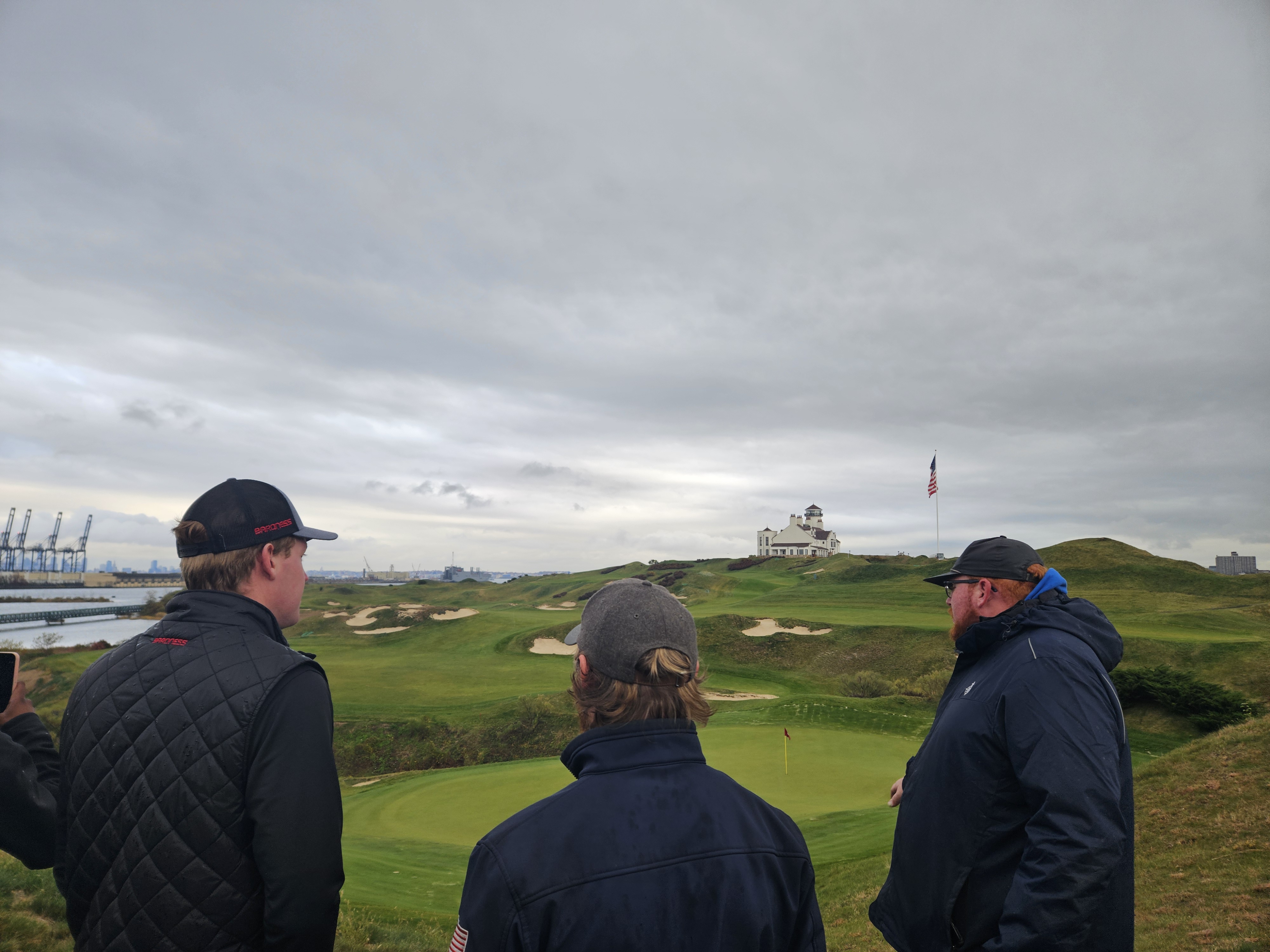
Agronomy and Turfgrass Management Programs Offer Students Opportunity to Grow in Golf
Programs at Penn State, Michigan State and Rutgers seeing increased interest given golf’s current popularity, but acknowledge field isn’t for everyone.
September 8, 2026
Scott Hebert typically sets his alarm for 3:30 a.m.
Arriving at the golf course an hour later, Hebert and his team start their shift with a morning meeting at 5 a.m. to discuss and divide the day’s tasks—the most pressing of which needing to be accomplished before the first tee times a few short hours later.
As Director of Agronomy at Grass Clippings Rolling Hills, Hebert is responsible for leading all turfgrass care, landscape maintenance, and facility management operations to ensure optimal playing conditions at the first fully lit 18-hole golf course in Arizona.
Whether serving as a director of agronomy, superintendent, greenskeeper or groundscrew, the men and women responsible for the upkeep, maintenance and quality of a golf course are a rare breed—and they’ll be the first to admit it.
“It does take a special individual who’s driven and detail-oriented, is willing to get their hands dirty and wake up at odd hours,” Hebert said. “It’s not for everyone.”
That’s why Dr. John “Trey” Rogers, Professor of Turfgrass Management at Michigan State University, recommends the same thing to anyone interested in exploring a job in the field or enrolling in the school’s program.
“The very first thing we’ll say is, ‘Go get a job on a golf course this summer and see if you like it,’” Rogers said. “And then if they do, there’s no turning them back. You catch that turf bug—it is a mean one. It is a lifetime turf club.
“It’s a place where a perfectionist can toil, and never get bored. And so they found their calling.”
Rogers, himself, has been bitten by the bug as he enters his 38th year teaching turf at Michigan State’s College of Agriculture and Natural Resources.
The university’s turfgrass legacy can be traced to the late 1800s and professor William James Beal, who taught at the school from 1871-1910 and is considered by many as the first turfgrass researcher in the U.S. Michigan State created two short courses for greenskeepers in the 1930s, and by the 1960s founded a two-year turfgrass management program that would evolve into its current program offering two- and four-year degrees.
Unlike English, finance or computer science students, turfgrass management students spend the majority of their time in the field, literally.
Students get hands-on experience at MSU’s Hancock Turfgrass Research Center, a facility encompassing 56 acres of cool-season turfgrass species managed as high- and low-input home, sports and golf course systems. The center also features a fully equipped on-site laboratory, the latest and greatest in turfgrass management technologies, and state-of-the-art computerized irrigation systems.
“The hands-on (experience) is extensive and it’s critical,” Rogers said. “It doesn’t matter whether we’re talking about the idea of establishing turfgrasses or calibrating spreaders or putting irrigation pipe together.”
Similar to Rogers’ recommendation for budding turfgrass management students to get a summer internship at a golf course, some schools like Rutgers University offer a three-week online preparatory course ($2,495 tuition fee) to get a feel for the field and weed out those who can’t cut it.
The New Jersey-based university’s Professional Golf Turf Management Program is highlighted by its two-year certification program. The two 10-week sessions take place at the school’s New Brunswick (N.J.) campus during Fall or Winter with a 200-hour paid internship in between sessions. Those enrolled also benefit from field trips to courses including Baltusrol Golf Club, Bayonne Golf Club and Liberty National Golf Club, typically interacting and networking with program predecessors in charge of or working on those courses’ respective agronomy and turfgrass staffs.
Prerequisites for the two-year certificate program are a high school diploma/GED and at least one season of work experience on a golf course or sports field. Tuition costs $6,495 for each 10-week session, plus application fee, books and housing/travel expenses.
The investment can pay immediate dividends with an average base salary of $123,333 for golf course superintendents boasting two-year certificates, according to a 2025 report from the Golf Course Superintendents Association of America (GCSAA).
The mean salary for golf course superintendents in New Jersey is $147,312—the fourth highest in the U.S. after California, Rhode Island and Florida—while New York ranks fifth at $140,543. The lowest mean superintendent salary is $83,373 in Iowa.
“We try very hard to have a combination of the hard sciences, the soft skills, and the hands-on training that you really can’t get elsewhere or at least packaged in a way that minimizes their time away from their commitment for the price,” said Elizabeth Coogan, Program Coordinator at
Rutgers’ Professional Golf Turf Management Program. “We are about a quarter of what tuition would cost for a four-year bachelor’s program, and our certificate holds, honestly, as much weight in the industry.
“A two-year certificate—whether it’s from us or not—managers and hiring people understand that a certificate is just as good as a bachelor’s.”
Tuition for in-state residents for a four-year bachelor’s degree at Rutgers is currently estimated at $61,524, while non-N.J. residents will pay $147,324 in tuition over four years; both also feature $4,008 in annual fees and even more costs depending if students are commuters or living on campus.
Like Michigan State and Rutgers, Penn State University offers a variety of flexible turfgrass programs to accommodate those interested in the field.
Since 1957, Penn State has offered its Golf Course Turfgrass Management Professional Certificate Program. Boasting more than 1,500 graduates from its two-year certificate program, Penn State also offers a four-year Bachelor of Science degree, a Master of Professional Studies in Turfgrass Management and five online programs for remote learners.
Students not only benefit from hands-on experience at the 17-acre Valentine Research Center—home of A1/A4, the Penn State-developed turf used at Augusta National—but also through study abroad programs at courses in Scotland and Italy, internships and career opportunities from an extensive network, as well as clubs and competitions including Turfgrass Club and Turf Bowl Team.
Penn State boasts 17 turfgrass titles from competitions among university students held by the Sports Field Managers Association (SFMA) and the Golf Course Superintendents Association of America (GCSAA) at their annual conferences and trade shows.
“We’re defending national champions for Turf Bowl for both sports turf and turfgrass,” said Dr. Ben McGraw, Associate Professor of Turfgrass Science and academic advisor to the GCSAA Turf Bowl. “... We’re kind of a powerhouse in that regard.”
Golf’s current record participatory popularity, mainstream acceptance and overall consumption is positively impacting every aspect of the industry, including interest in golf course careers and jobs.
Rogers was happy to share interest in Michigan’s State turfgrass program is at levels he hasn’t seen since the golf boom in the late 1990s spurred by Tiger Woods’ professional debut.
Coogan confirmed Rutgers’ program is ahead of enrollment at this point of year compared to recent years.
“Our numbers are back up,” Rogers said. “I’m very encouraged.”

One last thing... Jimmy Roberts
All In The Family
Essay originally published in The Met Golfer, November 2025. Special thanks to the Metropolitan Golf Association.
We sent our little guy – who’s bigger than me – off to his final year of college a few months back. On the second day of classes, he called me around 10 in the morning – WAY early for him, by the way – and although there was an urgent tone in his voice, I was a little distracted.
“Dad (thwack!),” he said. “When you (thwack!) and mom come out for (thwack!) parents’ weekend next month (thwack!), I need you to bring me a few things (thwack!).”
“Where are you?” I asked him.
“I’m at the driving range (thwack!). Why?”
This is what I’ve wrought, I suppose.
I have to smile.
My son is now officially obsessed with golf. He dabbled with it as a kid and a teen, but he was really much too busy with a lot of other sports… and music. At his first-grade recital, the program listed most kids playing songs like “Mary Had a Little Lamb.”
But there, next to Daniel Roberts, was listed “Slow Ride” by Foghat.
I should’ve known at that moment that my then little man would eventually gravitate back to the game that owns his rock ‘n’ roll dad.
I think it runs in the family.
As I detailed in the space last year, my wife has now taken up the game. My oldest son has been on board for years. Right now, he’s the leader in the clubhouse for “Best Swing in the Family.”
The only one of our brood who’s (aggressively) chosen NOT to play is the middle one (of course.) His role is to make fun of the rest of us for pouring ourselves into what he sees as a carny game designed to allow you only to get close to winning, all the while encouraging you to put down another dollar(s) to play. He may be the smartest.
But the youngest, I get a real kick out of how he’s suddenly so all in.
All those logo’d shirts, hats, and quarter zips I brought back from tournaments for him – which had mostly been gathering dust in his closet (“Dad, I’m sorry, but they’re kinda uncool.”) are suddenly just about all he wears.
And I so envy the sound his club makes when it compresses the ball.
I came home one day last month, and I couldn’t find my youngest or my wife anywhere. Turns out my boy wanted to play nine holes after he got home from his summer internship, but he didn’t want to go alone, so he dragged my wife along with him. I loved it. (Note: moms will generally do anything for their babies.)
But careful what you ask for. I went out to play the other day, reached into my bag for my range finder, and POOF! It had disappeared! Shocking, it had been borrowed. (“Sorry, Dad, I forgot.”)
And coincidentally, his summer vacation has corresponded to a frightening elevation of the bills we’ve gotten from our club.
I know at times, our family seems like some kind of stereotypical bad sitcom, or a hokey public service announcement for the game, but I’ll take it all.
I love playing with my friends, but watching my kids is better than I ever thought I could be – and knowing they haven’t scratched the surface of their obsessions yet is terribly cool.
And for all the places in my life I’ve searched for “the perfect wave,” clearly, I’ve found it far from the ocean… walking alongside a pair of sweet swings to the never-ending and wonderful refrain of:
“Oh, yeah, sorry, Dad, that was me. I didn’t think you’d mind if I borrowed your _____” (Fill in the Blank).
Past Briefs
.jpg)
.png)
Become a member
*Available for a limited time only, subscribe to our twice-weekly newsletter for a discounted rate of $150 for your first year. Subscription renews at annual rate of $175 at the end of the first year.
Purchase Disclosure
By completing your purchase, you agree to enroll in an annual subscription to The Big Swing – Inside the New Golf Economy at the current rate of $150 for the first year (founding member offer). Your subscription will automatically renew annually at $175/year unless canceled prior to the renewal date.
You may cancel at any time through your account settings or by contacting customer support. All sales are final and non-refundable except where required by law.
Offer valid for a limited time and may not be combined with other promotions. Limit one per customer.
By subscribing, you agree to our Terms of Service and Subscription Terms.