
August 20, 2026
The Big Swing: Inside the new golf economy
It’s probably not a stretch to say everyone in the sports world has felt the impact of Bill Rasmussen, who co-founded ESPN with his son Scott in 1979 and served as the company’s founding president. Rasmussen died Tuesday, Aug. 18 at 93 from complications of Parkinson’s disease. What started as a scrappy Connecticut cable venture became the model for 24-hour sports television, and golf was a key element from early on. The sport’s steady supply of live, abundant broadcast hours made it a natural fit for a network that needed programming to fill a round-the-clock schedule, and ESPN went on to carry the U.S. Open, early-round Masters coverage and, for years, the Open Championship, helping build golf audiences well beyond the sport’s traditional broadcast partners.
It’s easy to treat golf’s media boom — Fox, NBC, CBS, Golf Channel, Netflix, TGL, streaming deals, etc. — as a story with no real starting point, but Rasmussen was one. Before ESPN, golf’s TV exposure was largely limited to majors and a handful of Tour stops on the big three networks. ESPN’s appetite for a voluminous supply of live content, and Rasmussen’s vision, are a big part of why golf got a year-round television presence at all. It’s worth a beat of gratitude before the next media rights whirlwind kicks in.

This and that...
Paralo raises £270K pre-seed
On Thursday, UK golf technology startup Paralo closed an oversubscribed pre-seed round, mostly through the UK's Seed Enterprise Investment Scheme, to build an operating layer for golf clubs — unifying membership, tee sheets, competitions, payments, EPOS, food and beverage and agronomy, which currently run across 20-plus disconnected software products at a typical club. The company is valued at £3 million pre-money and was founded this year by a healthtech veteran and a former Cisco/Webex engineer.
Our Take: It’s a small check by golf-investment standards, but it's a reminder that the industry's back-office plumbing hasn't kept pace with the money flooding into the front end. Institutional capital wants to buy up courses and roll up management companies, but the software running day-to-day operations at most clubs is still fragmented and dated. Whoever solves that becomes infrastructure for every buyer in the space, not just one club at a time.
TMRW Sports expands its golf business by hiring Rufus Hack
TMRW Sports (Tiger Woods, Rory McIlroy and Mike McCarley’s league-building venture) named Rufus Hack president of golf. The newly-created role oversees TGL, the incoming WTGL (launching this fall with the LPGA), SoFi Center and other golf projects in development. Hack was most recently the CEO of Sony Sports (with a portfolio including Hawk-Eye, STATSports, Pulselive, Beyond Sports and KinaTrax), and before that spent years as COO of the DP World Tour and Ryder Cup Europe. Elevate Talent ran the search.
Our take: TMRW Sports just added a president of golf (McCarley remains CEO) as the company plans to double its league footprint — TGL is heading into its third season and WTGL is on the way — and it picked someone who knows how to run a mature tour and commercialize its media rights. That suggests to us that the company’s next phase is less about further innovation, and more about turning two green leagues into durable, monetizable businesses.
Golf Ranch acquires Mulligan's Island
Golf Ranch, a Dallas-based network of tech-driven driving ranges positioning itself as a Topgolf alternative, is buying the 64-acre Mulligan's Island Golf & Entertainment property in Cranston, Rhode Island. The current operation's last day is Sept. 20, the deal closes Sept. 21, and Golf Ranch plans a full renovation before reopening in spring 2027.
Our Take: Topgolf built the entertainment-golf category and now owns the brand recognition, but it doesn't own the format — every regional operator with tech-enabled bays and a growth plan is smart to treat that as an opening. Golf Ranch buying up an aging local venue and gutting it for a modern build is the low-cost version of the same land grab private equity is running on traditional courses: find underperforming real estate, apply a proven operating model, reopen at a premium.
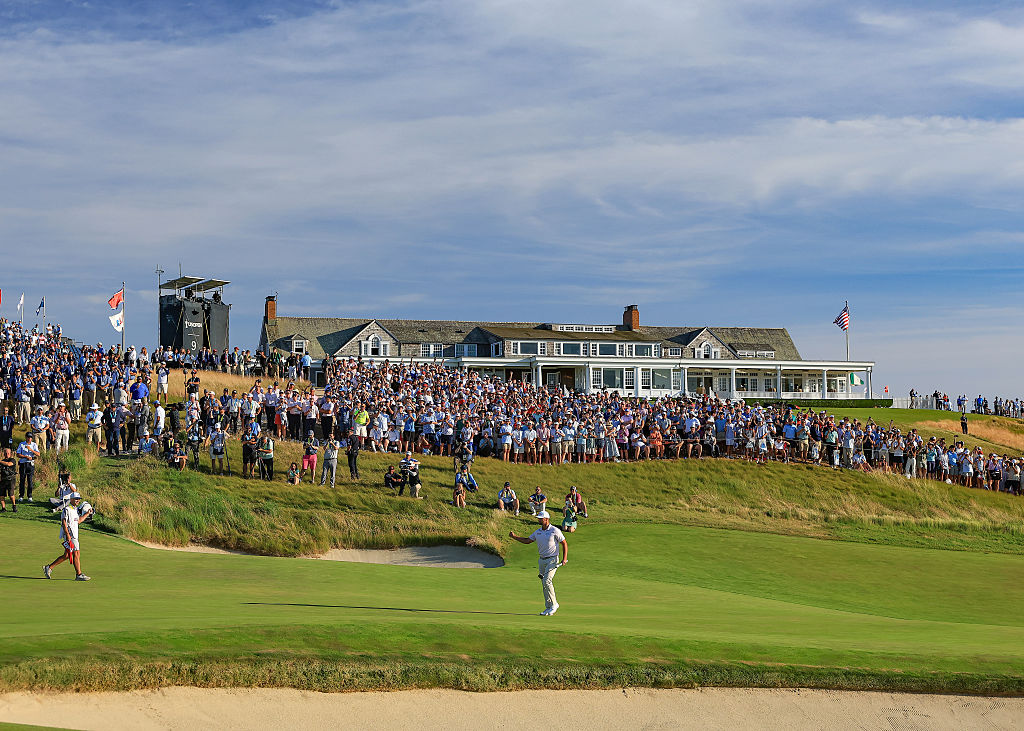
Why Would a Private Club Host a Tour Event? The Money Says They Shouldn’t.
Private clubs spend months absorbing construction, lost amenities and disrupted access to host a Tour event or a major — and the rights fee often barely covers it. So why do they keep saying yes?
August 20, 2026
Mollie Cahillane | mollie@bigswingmedia.news
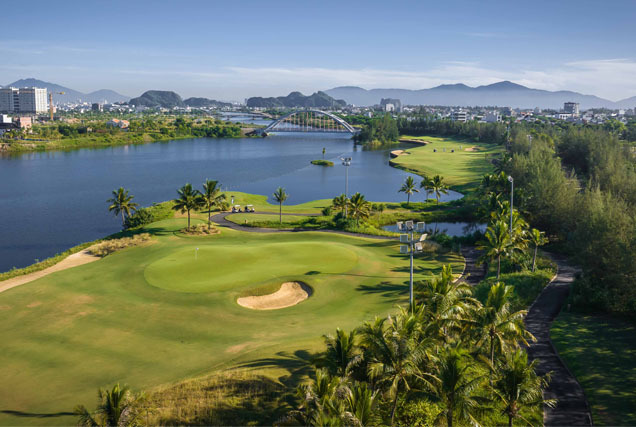
This week, Bellerive Country Club in St. Louis is transformed for the BMW Championship: grandstands rising over fairways, hospitality structures where members usually park, and a private golf course converted into a small city for a few days of made-for-TV golf. By Sunday night, the tents will be down, the corporate suites dismantled and thousands of attendees on flights back home. Left behind? Turf that won’t fully recover for months, and dozens of smaller repair jobs and renovations.
It’s a scene playing out at private clubs across the country every year, and it raises a question without an obvious answer. Why would elite, high-profile clubs that don’t need additional cash agree to any of this?
The cost before the check
Let’s start with what hosting a PGA Tour event, or a more elusive major, actually costs a private club before dollars begin changing hands. Private clubs typically spend somewhere between $500,000 and $1.5 million per year on course maintenance, with the average closer to $1.1 million — labor alone eats up 55% to 70% of that budget, according to industry benchmarking data from the Golf Course Superintendents Association of America.
A club with tournament-caliber conditioning standards likely sits at or above the top of that range even in a normal year. Toss in a Tour event or a major championship, and that number climbs further — tournament organizers bring in their own agronomy teams to take over a course’s conditioning in the weeks before and after, layering additional cost and disruption onto a club’s existing operation.
Then there’s the buildout and cleanup itself, which stretches far longer than the tournament week suggests. At one recent U.S. Open host club, the last turf repair vehicle didn’t leave the property until October 1, more than three months after the tournament wrapped in June, according to a longtime head professional who lived through the process. This year's U.S. Open host is on a similar timeline: As of mid-August, more than two months after the tournament ended, the temporary structures had come down, but turf repair work on the course itself had not yet begun. Guest play is curtailed weeks in advance, and golf carts are banned entirely for long stretches, cutting off access for older members and others who can’t easily walk 18 holes.
At one longtime Tour stop, the host club lost its tennis courts and parking lot to corporate hospitality for roughly a month before the event and another month after. At the U.S. Open host club, an entire nine-hole par-3 course — a fixture for the club’s junior program — was out of commission for the better part of a year.
Not every hosting commitment carries the same weight, though. Sources were clear that a regular PGA Tour stop and a major championship are not comparable asks. The USGA and the R&A hold host courses to a materially higher standard than a typical Tour event does, and a major draws somewhere in the range of 25,000 to 30,000 spectators a day — well above most Tour stops — which means a larger buildout, more infrastructure and more of a club's grounds handed over to hospitality and corporate space for longer. That scale cuts both ways on the revenue side, too: Majors and marquee international events like the Ryder Cup also pull in considerably more corporate spending, since companies are willing to pay a premium simply to be associated with golf's biggest stages.
What’s actually on the ledger?
Given the massive disruption, the direct financial payout can look thin. Private clubs hosting a major or PGA Tour event typically negotiate a flat rights fee — let’s call it rent, for simplicity — sometimes paired with a share of corporate hospitality sales. That split varies by contract, and some clubs opt to skip the revenue-sharing complexity entirely in favor of a lump sum.
What clubs don’t get: merchandise sales, food and beverage, and media rights, which by most accounts represents the single largest revenue line in the entire event and remains with the governing body or tour. Resort properties like Pinehurst or Pebble Beach operate under a different model altogether, since they aren’t member-owned clubs to begin with.
For a private club, there is real money involved — U.S. Open hosts usually rake in somewhere between $5 million and $10 million for hosting, per several sources with direct knowledge of arrangements. But set against the cost of agronomy takeover, construction, lost amenities and a disrupted membership experience for the better part of a year, several people who’ve been on the inside of these deals describe the math as close to a wash, if not a net loss, once every cost is tallied.
What’s the real return?
So, why do it? The answer depends on who you ask.
“There’s an absurd amount of hubris in the golf membership space,” said a private investor with experience in sports and hospitality businesses.
Clubs in the U.S. Open or Open Championship rotation (places with the kind of institutional wealth that makes a rights fee close to irrelevant) often say yes because maintaining that status, generation after generation, is core to how the membership sees itself. Most clubs pursuing a major or Tour event, the same source added, “quite frankly, don’t need the money.”
The longtime head pro sees it in far less cynical terms.
“I don’t view it as a burden at all,” the pro said. “I view it as an honor to be working at a club, or being a member of a club that's hosted a major.” That framing extends to the membership too — for every member who questions the cost of disruption, there are two who are thrilled to say they belong to a club that’s hosted one of golf’s most prestigious events.
The clearest financial version of that return shows up in pricing power. A club that has hosted a U.S. Open can charge a real premium for corporate outings afterward. "If you want to have an outing at a U.S. Open course, it's going to cost you more than if it's a non-U.S. Open course," the same head professional said, describing it as a genuine trickle-down benefit.
Beyond that effect, though, the return is less concrete than club leadership might hope or the public expects. At one recent U.S. Open venue, hosting didn't meaningfully move membership demand or the waitlist — the club was already exclusive enough that a major championship didn't change who wanted in. What the tournament proceeds funded instead was renovation work the club likely would have done anyway, just with the USGA effectively subsidizing a chunk of the bill.
A shrinking pool
Whatever the mix of motives, fewer private clubs are choosing to be part of it. A handful still host a Tour event nearly every year — Riviera and Colonial among them — but that list is short and getting shorter. Most of the country’s storied private clubs have settled into something closer to a once-a-decade rotation for majors, taking their turn in the spotlight and then stepping back for years at a time.
It’s an unusual arrangement compared to the rest of pro sports. Franchises in other leagues own their stadiums and venues outright. In golf, tours and governing bodies mostly don't own their venues. The PGA Tour's own TPC network is a partial exception: the Tour holds direct ownership stakes in some TPC courses (81% of TPC Deere Run, 62.5% of TPC Boston, among others) while licensing the TPC name to other, independently owned courses — but that network still represents a small fraction of where Tour events are actually played.
The majority of tournament golf, and virtually all major championship golf, happens on courses the Tour and USGA don't own at all, which means the sport's biggest media events depend entirely on private clubs voluntarily absorbing months of disruption for a payday that, by several accounts, barely covers the cost of hosting.
As the Tour's 2028 restructuring narrows the competitive calendar and interest in golf keeps climbing, that dynamic is unlikely to get simpler: fewer clubs willing to host, more demand for the ones that still are, and a private-club economy that will keep saying yes for reasons that have very little to do with the number on the check.

One last thing... Jimmy Roberts
The Future Is Here. Now What?
A couple of weeks ago in our show - of all things - the “Jetsons” randomly found its way into a discussion.
I don’t know about you, but that show was one of my all-time favorites growing up.
It was an animated sitcom that was about life in the future.
The fun part was the life it depicted was so fantastically futuristic that it was supposed to be absurd.
Video phone calls, moving sidewalks, autonomous machines that did everything from cook to drive to clean. In short … all the things that a couple of generations later are fairly commonplace.
It got me to thinking that if what we once thought to be impossible - even farcically - futuristic, was now real … then what might be next?
… and more important, what might the IMPACT be?
Forget about waiting 'til the halfway house to get a beer, we’ve now got drones and robots that will come … TO YOU!
But if a robot can replace a cart girl - or guy … when it comes to the way we get around … How long before ALL we have is self-driving cars? And if ALL the cars are driving themselves, then theoretically, nobody is going be cutting anybody off … or driving on the shoulder …or going too slowly. You know what that could mean?
We might not be far from the point where technology could eliminate … road rage!
I mean think about it; Is your Waymo gonna flip the bird at my Waymo?
As my son says: getting rid of road rage could be the first step toward world peace.
And forget about getting angry at someone in ANOTHER car … technology could do more for marital harmony than we ever imagined - even if that wasn’t the original idea. The GPS now tells us “the best” way to get to where you’re going … not your partner in the other seat. Talk about world peace!
And as technology makes human cashiers less necessary, speeding you through checkout, you also now don’t have to be shamed into adding a gratuity to purchase a garden hose or a fast food burger.
By the way … I saw a joke cocktail napkin the other day that said: “how long before my electric bill is going to have a line that says: would you like to add a tip?”
For people like me though, maybe the best application of technology has to be AI. It’s great for research, but if you get writer’s block, it can work wonders and actually put an entire essay together for you … AND IT CAN DO IT IN YOUR OWN STYLE! Wow! Who saw that coming?
But that would be kind of like driving on the shoulder, wouldn’t it? Doesn’t feel right.
Who would ever do that?
Past Briefs


Monthly and Annual Membership Options Available.
Member Pricing
$9.99 per month, OR $99 for one year.
Cancel Anytime.
Available for a limited time only, subscribe to our twice-weekly Golf Business Intelligence Brief for a discounted rate of $9.99/month or $99/year. Subscription renews at the same price each month or year, depending on the subscription selected.
Purchase Disclosure
By completing your purchase, you agree to enroll in a monthly or annual subscription to The Big Swing Golf Business Intelligence Brief at the current rate of $9.99 a month or $99 a year.Your subscription will automatically renew monthly at $9.99 or annually at $99 unless canceled prior to the renewal date.
You may cancel at any time through your account settings or by contacting customer support. All sales are final and non-refundable except where required by law.
Offer valid for a limited time and may not be combined with other promotions. Limit one per customer.
By subscribing, you agree to our Terms of Service and Subscription Terms.